Work Report of Public Institutions under the Ministry of Land, Infrastructure and Transport
Expressway Corporation Proposes Establishing AI Data Centers on Idle Land
Korea Expressway Corporation has proposed to the government the idea of incorporating a logistics transportation system alongside the construction of underground expressways. While the government evaluated the proposal positively, it also pointed out that a cautious approach is necessary, as no specific design plans for the underground expressways have been released yet.
On January 14, Ham Jingyu, President of Korea Expressway Corporation, presented a plan for "Establishing a Transportation System Linked to Underground Expressways" during a work report session for public institutions under the Ministry of Land, Infrastructure and Transport. He cited the fact that over 90% of domestic freight transportation relies on roads, and that major cities around the world are building underground transportation systems.
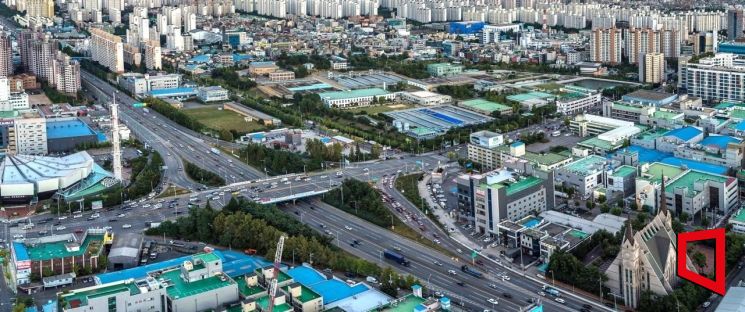
The underground expressway is a road that connects the Seoul metropolitan area and certain high-traffic expressways by tunneling beneath the surface. These roads not only alleviate traffic congestion but also improve the utilization of urban space and resolve regional disconnection. The project is being promoted for sections that are frequently congested, such as the Gyeongin Expressway and the Seoul-adjacent section of the Gyeongbu Expressway.
The corporation is considering allocating separate space within these underground roads to implement an automated logistics transportation system or to create logistics-only roads using unmanned vehicles. President Ham stated, "In Spain, they used the TBM (Tunnel Boring Machine) construction method to build underground expressways, but only half of the total underground space is used for roads," adding, "In Korea, underground expressways will also become more active in major cities through the TBM method, but we should not follow the same approach."
Korea Expressway Corporation noted that Korean construction companies are already building and operating roads abroad, and that if this business model is activated, Korea could secure a preemptive competitive edge in the field of underground expressway construction. The corporation requested the Ministry of Land, Infrastructure and Transport to implement this concept as a pilot project.
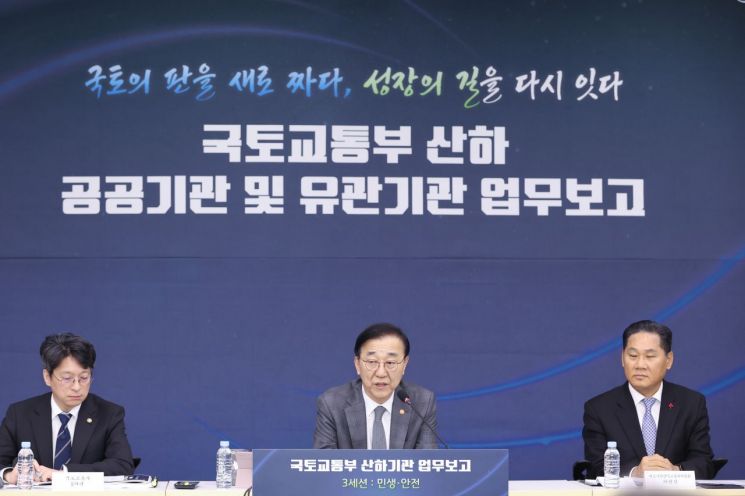 Yoon-duk Kim, Minister of Land, Infrastructure and Transport (center), is speaking at the subordinate agency's work report on the 14th. Provided by the Ministry of Land, Infrastructure and Transport
Lee Uje, Director of the Road Bureau at the Ministry of Land, Infrastructure and Transport, commented on the proposal, saying, "It could enhance road user safety and be a positive direction for logistics systems where timeliness is critical," but also assessed, "The specific business model and approach must be thoroughly reviewed, taking into account the overall logistics transportation system patterns." According to the Ministry, it has not yet been decided whether the underground expressway will be placed at a deep depth of more than 50 meters below the surface, similar to the Greater Seoul Metropolitan Express Railway (GTX). If the expressway is constructed deep underground, it would be less affected by surface obstacles and could be built in long straight sections. However, accessibility to the underground road could become more difficult. The fact that usage patterns differ from those of railways is also a factor to consider.
The corporation also proposed building artificial intelligence (AI) data centers on idle land. President Ham anticipated that, since fiber optic networks are already in place and the centers could be linked to power generation projects such as solar and fuel cells, this could create synergy. He requested that the Ministry provide institutional support, such as amending relevant laws. Director Lee stated, "Since the new government is pursuing AI leadership as a core policy, this seems desirable," but also pointed out, "If the corporation pursues this project, it is likely to charge usage fees at the level of private operators, so we need to consider whether the corporation can play a role in enhancing public interest."
Korea Railroad Corporation (KORAIL) proposed the concept of an "Energy Train," which would physically transport renewable energy using the railway network. Jeong Jeongrae, Acting President of KORAIL, said, "We will establish the basic framework by April this year," adding, "This will become a new blue ocean for revitalizing rail logistics."
Incheon International Airport Corporation requested that the fifth phase expansion project be included in the 7th Comprehensive Airport Development Plan. Incheon Airport completed its fourth phase expansion project in December 2024. While the airport can accommodate 106 million passengers per year, it is expected to reach capacity by 2033. Lee Hakjae, President of Incheon International Airport Corporation, said, "The fifth phase expansion project was not included in the 4th Basic Aviation Policy Plan, but considering that expansion projects take a long time, we need to prepare in advance." Korea Airports Corporation argued that airport facility usage fees, such as passenger airport usage fees and landing fees, should be raised to secure funding for facility investments aimed at revitalizing regional airports.
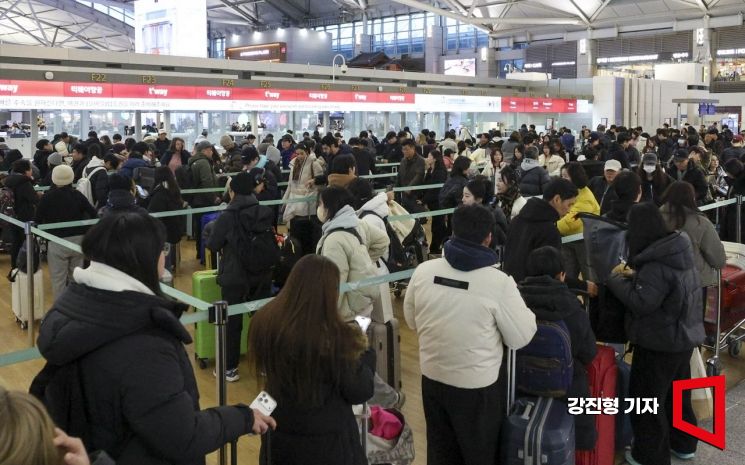 On the 31st, ahead of the New Year's bridge holiday, Incheon International Airport Terminal 1 is crowded with travelers. 2025.12.31 Photo by Kang Jinhyung
© The Asia Business Daily(www.asiae.co.kr). All rights reserved.
![Clutching a Stolen Dior Bag, Saying "I Hate Being Poor but Real"... The Grotesque Con of a "Human Knockoff" [Slate]](https://cwcontent.asiae.co.kr/asiaresize/183/2026021902243444107_1771435474.jpg)

















