Wegovy Patent Expires in March
"Price Cuts Are Faster and Deeper Than Expected"
Following the emergence of 'half-price Wegovy' in the Chinese obesity treatment market, local companies have also started lowering their prices, intensifying the competition to secure market share.
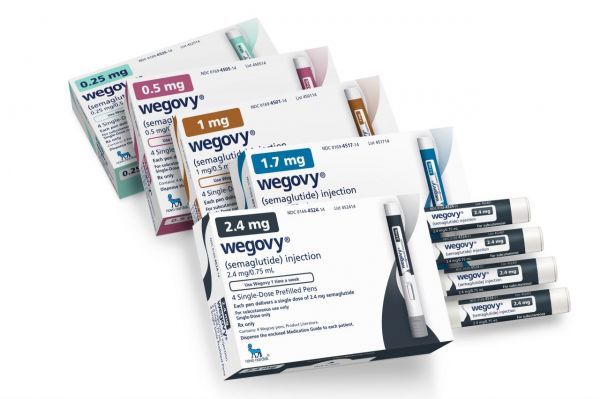
On January 13, the South China Morning Post (SCMP) reported that major obesity drug companies have been slashing product prices in Yunnan and Sichuan provinces since last month, spreading price competition in the obesity treatment sector. Novo Nordisk lowered the price of its weekly high-dose semaglutide injection, Wegovy, from 1,900 yuan (about 400,000 KRW) to the 900-yuan range (about 200,000 KRW). Eli Lilly's Mounjaro, for a 2.4mL monthly dose, is now priced at about 500 yuan (about 100,000 KRW), an 80% reduction from its original price.
This is seen as a 'last resort' by companies to maintain their market share ahead of the anticipated appearance of local generic drugs following the expiration of Wegovy's patent in China this March. In China, more than 60 GLP-1 (glucagon-like peptide-1) candidate substances that could compete with Wegovy and Mounjaro are reportedly in late-stage clinical trials. Additionally, at the beginning of this month, Chinese drug developer Innovent Biologics cut the price of its new drug Mazdutide by about 40%. Mazdutide, approved in June last year, is the first Chinese-made obesity treatment. Furthermore, obesity treatments from Chinese pharmaceutical companies CSPC Pharmaceutical Group and Jiangsu Hengrui Pharmaceuticals are in late-stage clinical trials, and Huadong Medicine has completed Phase 3 clinical trials for its oral therapy.
Zhang Zhaolin, Head of China Healthcare Research at global investment bank Nomura, analyzed, "Multinational companies have lowered prices faster and more aggressively than expected to compete in the market," adding, "Chinese local companies are following suit."
The price competition in China's pharmaceutical industry is closely tied to the rapid increase in the country's obese population. According to the medical journal The Lancet, the number of obese people, which stood at around 400 million in 2021, is projected to reach 630 million by 2050.

Tony Ren, Head of Asia Healthcare Research at Macquarie Capital, stated, "Chinese pharmaceutical companies will have to lower prices even further due to a lack of global research results proving efficacy," and added, "Ultimately, the Chinese obesity drug market could evolve into a consumer-oriented entertainment and beauty sector."
© The Asia Business Daily(www.asiae.co.kr). All rights reserved.
![Clutching a Stolen Dior Bag, Saying "I Hate Being Poor but Real"... The Grotesque Con of a "Human Knockoff" [Slate]](https://cwcontent.asiae.co.kr/asiaresize/183/2026021902243444107_1771435474.jpg)
















