Gwangju Chamber of Commerce and Industry Surveys 120 Local Manufacturers on Business Outlook
70% Expect Slight Improvement or Similar Conditions to Last Year... 29% Predict Deterioration or Worsening
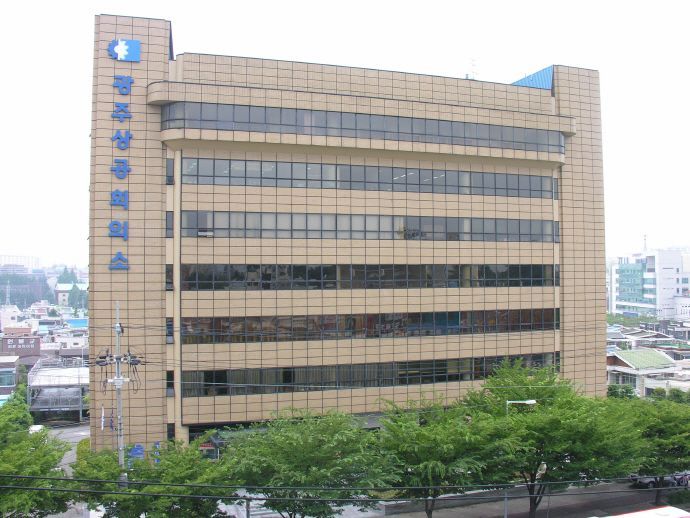
Manufacturing companies in the Gwangju region expect only a slight recovery or continued stagnation in this year's economic conditions.
On January 13, the Gwangju Chamber of Commerce and Industry announced the results of its "2026 Economic and Business Outlook Survey from the Perspective of Companies," which was conducted to assess the 2026 economic and business outlook of local manufacturers. The survey targeted 120 manufacturing companies located in Gwangju and South Jeolla Province.
According to the results, 70.0% of responding companies predicted that this year's economic trend would be "slightly improved compared to last year" (35.0%) or "similar to the previous year" (35.0%). This was followed by "slightly deteriorated" (19.2%) and "significantly worsened" (10.0%). The analysis indicates that companies expect a gradual recovery or stagnation rather than a sharp economic rebound.
Regarding this year's business targets, the largest share of respondents, 47.5%, set their domestic sales targets at "the same level as last year's performance." Similarly, 44.2% set their export targets at "last year's level," the highest proportion. This suggests that most companies are establishing their business plans based on maintaining current levels rather than aggressively expanding their scale.
In fact, when asked about the key principle of their business plans, 72.5% selected "stability (maintenance) management," while only 18.3% chose "expansion (growth) management." The factor that had the greatest influence on business planning was "economic and demand outlook" (49.2%), followed by "cost and profitability factors" (31.7%).
As for positive factors for economic growth (multiple responses allowed), "interest rate cuts and easing of financial conditions" was cited most frequently (42.5%), followed by "expansion of domestic corporate investment" (32.5%) and "continued strong exports" (30.8%).
On the other hand, as downside risks, "volatility in oil and raw material prices" (45.8%), "high exchange rates and increased volatility" (40.0%), and "trade uncertainty stemming from Trump" (35.8%) ranked highest. This suggests that worsening external conditions are likely to increase management burdens for local manufacturing companies.
In terms of policy tasks they expect from the government, "policies to promote domestic investment" (44.2%) were identified as the most urgent, followed by "policies to stimulate consumption" (38.3%), "strengthening responses to trade issues such as tariffs" (37.5%), and "policies to stabilize exchange rates" (36.7%). These indicate a strong desire for policy support in these areas.
Chae Hwaseok, Executive Vice President of the Gwangju Chamber of Commerce and Industry, stated, "Local manufacturing companies are focusing on sound management and risk control rather than expansion, amid a complex crisis of global trade uncertainty and rising costs. Proactive government responses to trade issues and effective policy support to boost private sector vitality will be key factors in improving the regional economy, so that companies' investment sentiment is not dampened."
© The Asia Business Daily(www.asiae.co.kr). All rights reserved.
![Clutching a Stolen Dior Bag, Saying "I Hate Being Poor but Real"... The Grotesque Con of a "Human Knockoff" [Slate]](https://cwcontent.asiae.co.kr/asiaresize/183/2026021902243444107_1771435474.jpg)















