A Battle of the Real Masters, Defined by Attitude, Not Just Taste
The Depth of Life Outshines Technical Brilliance
Chefs' Life Philosophies Fill the Void Left by Flavor
The Value of Labor and Skill Shines in an Age of Efficiency
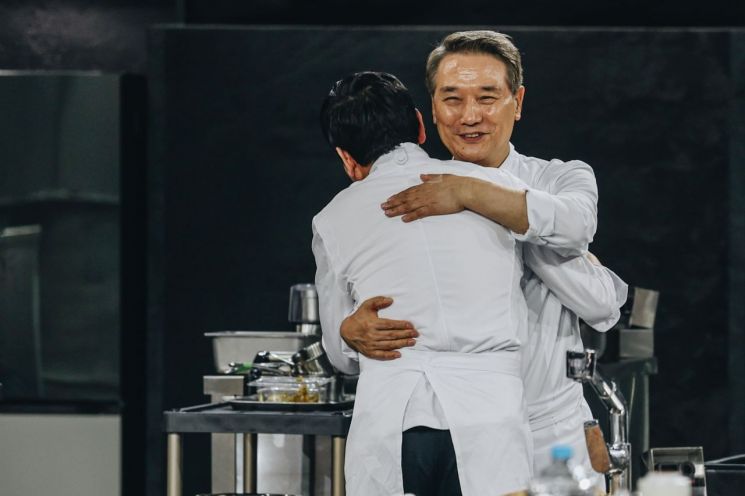
Cooking survival shows are inherently lacking in one crucial aspect: viewers cannot actually taste the food. Audiences are left to infer flavors through the visual presentation and the judges' elaborate descriptions. Netflix's "Black and White Chef: Culinary Class War" Season 2 cleverly filled this gap. The absence of taste was compensated by delving into the chefs' life stories and philosophies, their teamwork, and above all, their attitude toward their craft.
In the Digital Age, the Sweat of a Seventy-Six-Year-Old Veteran Proves What It Means to Be a True Adult
In an era where artificial intelligence and digital technology are encroaching on human domains, this show re-examined the most analog values: labor and mastery. In a world where ChatGPT can generate plausible recipes in a second, no matter how advanced technology becomes, it cannot replicate the "physical intuition" acquired through decades of wielding a knife over a hot flame. This "language of the body" was most dramatically embodied in the kitchen of Hudukjuk, the oldest contestant. The intensity radiating from the seventy-six-year-old's shoulders as he kneaded dough spoke louder than any words. True masters are those who survive the daily battle with themselves. Their honest sweat, aligned with the unforgiving rules of the kitchen where luck and rhetoric hold no sway, offered a powerful catharsis to modern viewers yearning for fairness.
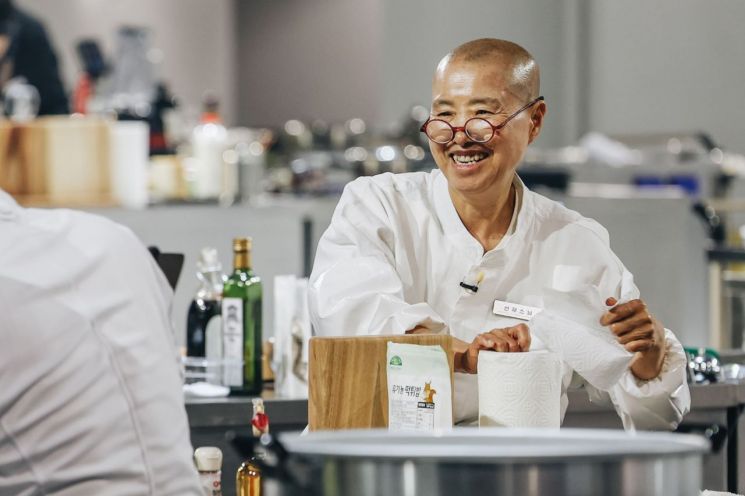
This "value of labor" was ultimately elevated to dignity. When Hudukjuk's team lost, he embraced his younger teammate, saying, "We lost because I wasn't good enough," prioritizing responsibility over his own comfort. Seonjae Monk, a master of temple cuisine, folded his hands in a respectful gesture and bowed to his opponent immediately after his victory. Their willingness to shoulder the consequences and not be consumed by the desire to win left a deep impression in an era often described as lacking true adults.
Leadership Through Coordination, Boldness, and Intuition
If the individual rounds were about self-discipline, the team rounds were a test of leadership. Sohn Jongwon, the leader of the "Silver Spoon" team, was a meticulous coordinator. He never imposed his own ideas on the plate, instead conducting his team so that each member's unique style blended harmoniously. His gentle charisma, drawing out the best through consensus rather than hierarchy, reminded those weary of top-down orders that a true leader is not someone who pulls from the front, but someone who supports from behind.
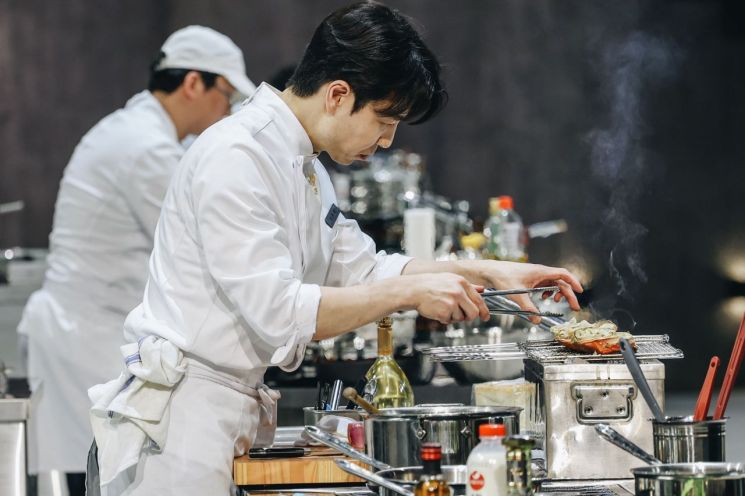
If Sohn Jongwon was the conductor, Choi Kangrok was the strategist. Behind his unpolished speech, there was always a sharp edge. He read not only the properties of the ingredients, but also the flow of the competition and the judges' psychology. His bold moves-like turning the tables with a single phrase, "It's me, perilla oil"-proved that cooking is not just a series of techniques, but a sophisticated strategy for seizing decisive moments.
In the midst of the intense competition, Lim Seonggeun's composure stood out. With his signature wit, he lightened the pressure of the contest, sometimes seeming boastful, but always delivering a decisive "punch of flavor." Without complex calculations or theories, he instinctively pinpointed exactly where the palate would respond. This was intuition honed over decades of catering to the public's demanding tastes, and the mark of a true master who could even disarm the solemnity of fine dining.
The 'Art of Slowness' and the Standards Set by Ahn Seongjae
Even in an age where efficiency is the ultimate answer, there were those who stubbornly clung to the essence. Brewmaster Jumo Yoon, for example, advocated for slowness in the midst of the race for speed. Just as rice and nuruk (fermentation starter) must endure time to develop their aroma, he quietly demonstrated on each plate the truth that results require patience. In a world obsessed with speed, his willingness to wait was a philosophy in itself.
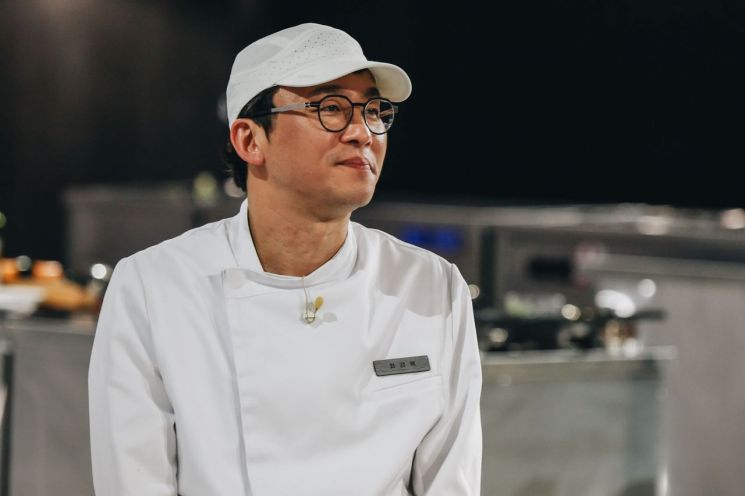
The final word in the narrative belonged to judge Ahn Seongjae. He was more than just an observer tasting the food; he was a relentless inquirer, constantly probing the chefs' intentions. While dissecting details with a microscope-like precision, he also showed deep respect for the chefs' life journeys. This was the perfect coexistence of the "high standards" and "warm dignity" that define a true professional.
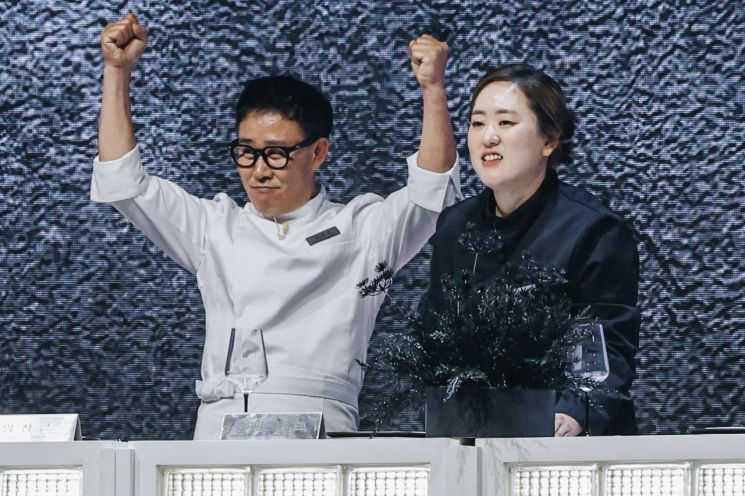 Chef Seonggeun Lim (left) and brewmaster Jumo Yoon in Netflix's Black and White Chef: Culinary Class War Season 2
In the end, what "Black and White Chef: Culinary Class War" Season 2 left behind was not a record of victory or defeat. It was a chronicle of individuals who faced each other stripped of class distinctions, relying solely on skill and attitude. Whether a Michelin-starred chef or an unknown cook from a market, everyone was equal before the fire. Sohn Jongwon's consideration, Choi Kangrok's strategy, Lim Seonggeun's intuition, Jumo Yoon's patience, and Ahn Seongjae's insight-these diverse ingredients finally came together at one table. Though wrapped in the guise of a cooking survival show, at its core, it was a tribute to all professionals who quietly dedicate themselves to their work every day.
© The Asia Business Daily(www.asiae.co.kr). All rights reserved.
![Clutching a Stolen Dior Bag, Saying "I Hate Being Poor but Real"... The Grotesque Con of a "Human Knockoff" [Slate]](https://cwcontent.asiae.co.kr/asiaresize/183/2026021902243444107_1771435474.jpg)

















