456 Lawsuits Filed to Revoke Missing Person Declarations in Five Years
Urgent Need for Preventive Management to Stop People from Falling Through the Administrative Cracks
In 2021, during the COVID-19 pandemic, a man in his 60s, identified as Mr. A, visited a local administrative welfare center to apply for government disaster relief funds, only to be shocked by what he heard. On official documents, he had been recorded as deceased for many years. In the late 1980s, Mr. A had left his family and lived on the streets for decades. To restore his legal status, he needed to gather various official documents and file a petition with the court to have his missing person declaration revoked, but the process was far too complicated for an individual to handle alone. Ultimately, with the help of a private support organization, Mr. A was able to proceed with the lawsuit and eventually regain his legal status, albeit belatedly.
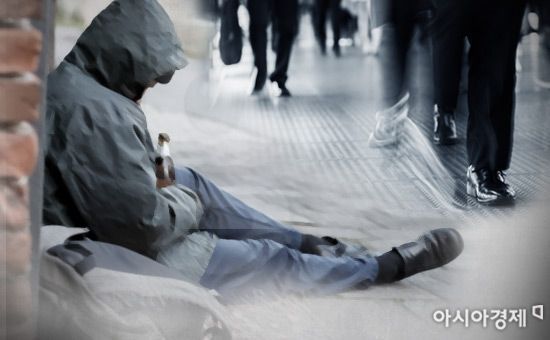
Cases in which people who are very much alive are classified as 'deceased' in administrative records continue to occur every year. Critics say this exposes the harsh reality of the current system, which is trapped in administrative convenience.
According to the Supreme Court’s statistical yearbook, there were a total of 456 lawsuits filed to revoke missing person declarations over the past five years, from 2020 to 2024. On average, 91 people each year have had to file so-called 'resurrection lawsuits' to reclaim their lives.
A significant number of these individuals are vulnerable people, such as long-term homeless individuals who have lost contact with their families. Under current law, if a family member files a missing person report and the person’s whereabouts remain unknown for a certain period (five years for ordinary cases, one year for special cases), the court can declare them legally dead. This is followed by administrative procedures such as recording the death in the family registry and deleting their resident registration.
The problem is that once someone is declared legally dead, the process of reversing this status is extremely harsh for the living individual. In order to be recognized as alive, they must file a lawsuit to revoke the missing person declaration, but proving their identity without any form of identification is a major obstacle. In particular, many long-term homeless individuals fell out of the administrative system before the computerization of resident registrations, so there is often no basic identification data such as fingerprints left on record. As a result, most are unable to handle the process alone and must seek assistance from private support organizations or the Korea Legal Aid Corporation.
Lee Donghyun, an executive activist at Homeless Action, said, "Even local government officials have never experienced the process of revoking a missing person declaration, so there are countless trial-and-error issues even when trying to obtain a single document." He added, "Sometimes, we have to go back to the person’s hometown to obtain a 'testimonial guarantee' from neighbors who remember what they looked like as a child, or struggle to prove the identity of someone whose fingerprints have worn away due to years of living on the streets and manual labor." He continued, "The practice of deleting resident registration after a missing person declaration and presuming death is skewed toward administrative convenience for statistical management. We need to strengthen preventive support systems and preemptive management so that vulnerable people in missing status do not completely disappear from the administrative system."
© The Asia Business Daily(www.asiae.co.kr). All rights reserved.
![Clutching a Stolen Dior Bag, Saying "I Hate Being Poor but Real"... The Grotesque Con of a "Human Knockoff" [Slate]](https://cwcontent.asiae.co.kr/asiaresize/183/2026021902243444107_1771435474.jpg)















