Miran: "Policy Remains Restrictive... More Than 1 Percentage Point Cut Needed"
Barkin, Kashkari: "Rates Already Neutral"
Emphasize Data-Driven Approach
Federal Reserve (Fed) officials in the United States are expressing divergent views on the direction of future monetary policy from the very start of the year. As the difficulty of managing monetary policy increases due to the simultaneous slowdown in the labor market and persistently high inflation, opinions are split between those advocating for additional rate cuts and those calling for a more cautious approach.
In addition to differing perceptions within the Fed regarding current economic conditions, multiple variables-including the scheduled change in the Fed chairmanship in May-are compounding uncertainty surrounding this year’s monetary policy, according to analysts.
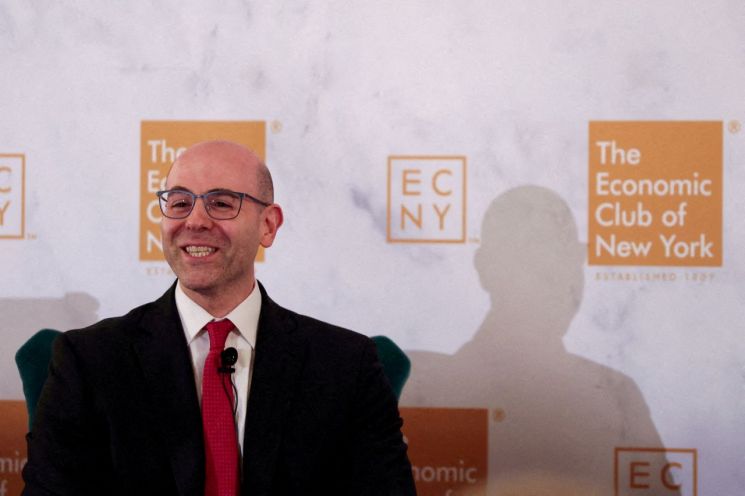
Fed Governor Stephen Miran stated on January 6 (local time) that the current benchmark rate of 3.5-3.75% is clearly restrictive, adding, “A rate cut of more than 1 percentage point is needed this year.”
In an interview with Fox News on the same day, he said, “It is very difficult to argue that monetary policy is neutral,” and insisted, “The policy is clearly constraining and restraining the economy.” The neutral rate refers to the theoretical interest rate level that neither stimulates nor restricts the economy.
Miran projected that, since core inflation is already close to the Fed’s target of 2%, the U.S. economy will find it difficult to maintain robust growth without further rate cuts. Last month, he also described the current inflation figures as “phantom inflation,” arguing that, if temporary and distorted factors such as the housing sector are excluded, core inflation is only around 2.3%.
Miran, known as the “economic advisor” to former President Donald Trump, has advocated for a 0.5 percentage point rate cut at every meeting since joining the Federal Open Market Committee (FOMC) in September last year. This stance aligns with the White House’s pressure on the Fed for monetary easing.
However, Miran’s position differs significantly from the Fed’s official rate outlook. At last month’s FOMC meeting, the Fed’s dot plot suggested the possibility of a single 0.25 percentage point rate cut this year.
Meanwhile, within the Fed, there have been a series of assessments that the current benchmark rate is already close to neutral.
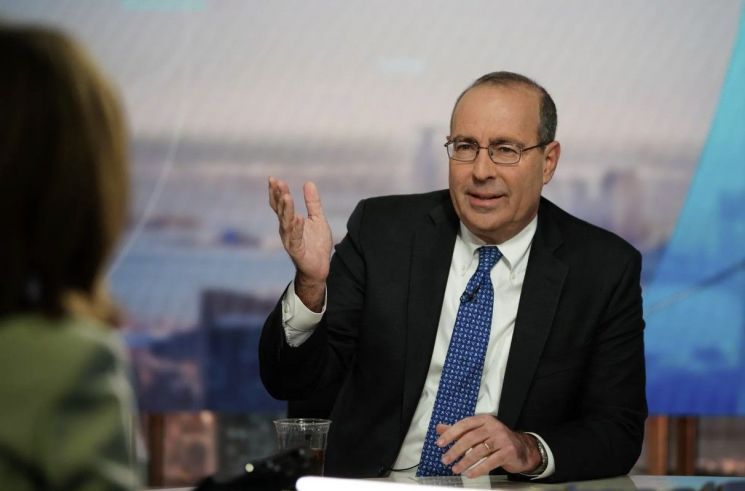
Thomas Barkin, President of the Richmond Federal Reserve Bank, stated in a speech at the Raleigh Chamber of Commerce in North Carolina that the current rate has reached a neutral level, emphasizing the need for a more cautious approach to the future path of monetary policy. He assessed that, amid conflicting macroeconomic pressures-rising unemployment and persistently high inflation-monetary policy is maintaining a delicate balance. He said, “No one wants to see the labor market deteriorate further when employment is already low, nor does anyone want inflation expectations to become entrenched after nearly five years of inflation above target,” adding, “Policymakers must maintain a delicate balance.”
The view that the benchmark rate is close to neutral is echoed by other Fed officials. Neel Kashkari, President of the Minneapolis Fed, also stated in a recent CNBC interview that the current rate is “very close to neutral,” and assessed that “monetary policy is not putting excessive downward pressure on the economy.”
As these differences in perspective on monetary policy persist within the Fed, policy uncertainty is likely to continue for the time being. In addition to macroeconomic conditions such as a slowdown in employment and high inflation, the scheduled change in the Fed chairmanship in May, as Jerome Powell’s term comes to an end, is considered another major variable. Depending on the policy stance of the new chair-who is expected to be dovish (favoring monetary easing)-and the response from existing board members, divisions within the Fed could deepen further.
© The Asia Business Daily(www.asiae.co.kr). All rights reserved.
![Clutching a Stolen Dior Bag, Saying "I Hate Being Poor but Real"... The Grotesque Con of a "Human Knockoff" [Slate]](https://cwcontent.asiae.co.kr/asiaresize/183/2026021902243444107_1771435474.jpg)
















