President Lee and President Xi Hold 90-Minute Korea-China Summit, 30 Minutes Longer Than Scheduled
"A Significant Milestone for the Full Restoration of Korea-China Relations"... Xi: "Firmly Upholding the Direction of Friendly Cooperation"
Proposal t
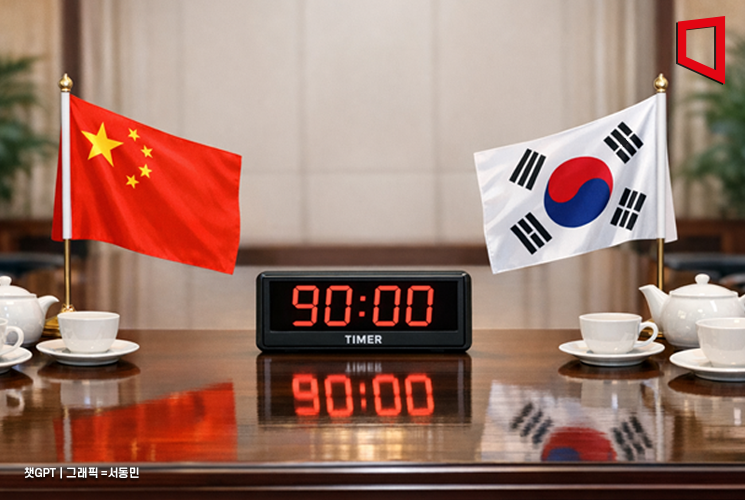
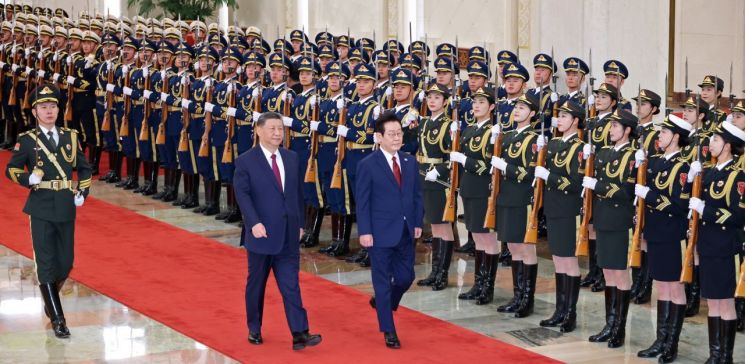
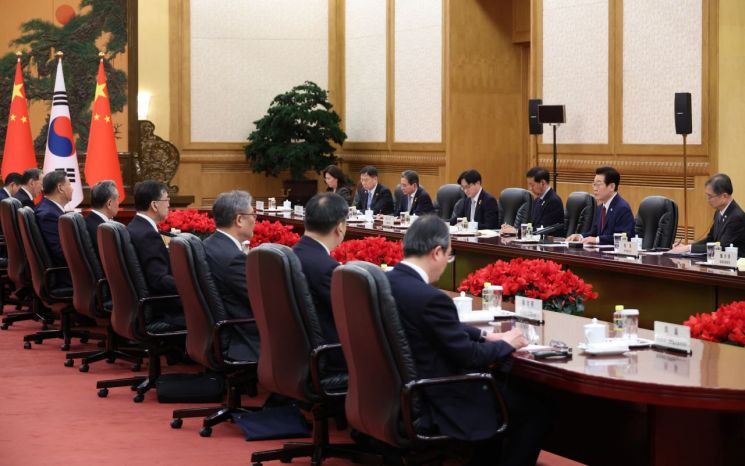
President Lee Jaemyung, who is on a state visit to China, emphasized during his summit with Chinese President Xi Jinping at the Great Hall of the People in Beijing on the afternoon of January 5 that this meeting marks an important milestone, making 2026 the inaugural year of a full restoration of Korea-China relations. He also proposed that the two countries work together to seek viable alternatives for peace on the Korean Peninsula. This state visit by a Korean president to China is the first in over eight years since December 2017. The summit, which began at 4:47 p.m., lasted 90 minutes, exceeding the scheduled time by 30 minutes.
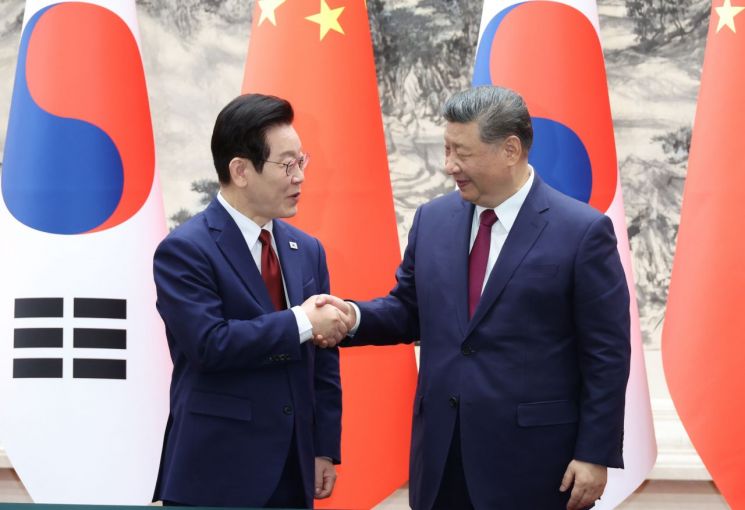
Both leaders agreed on the need to strengthen cooperation between Korea and China. In his opening remarks, President Lee stated, "This Korea-China summit will serve as a crucial turning point, making 2026 the inaugural year for a full restoration of bilateral relations. I hope to open a new chapter in Korea-China relations together with President Xi, in line with the trends and changes of the times." President Xi responded by saying, "China must steadfastly uphold the direction of friendly cooperation with Korea," and added, "The cooperative partnership between our two countries must develop on a healthy trajectory."
President Lee also referenced the shared history of anti-Japanese resistance, proposing that the two countries open a new chapter in their relationship. He said, "The roots of Korea-China relations run very deep. For thousands of years, we have maintained friendly relations as neighboring countries, and during the period when our sovereignty was lost, we joined hands and fought together to restore it." He continued, "Since the establishment of diplomatic ties, we have developed an inseparable, mutually beneficial cooperative relationship. I hope to open a new chapter in Korea-China relations together with President Xi, keeping pace with the trends and changes of the times."
In particular, President Lee called for joint efforts to find viable alternatives for peace on the Korean Peninsula. He stated, "Based on the trust between myself and President Xi, I will firmly build the political and emotional foundations of Korea-China relations. We will continue horizontal and mutually beneficial cooperation in areas directly related to people's daily lives, and strengthen efforts to resolve livelihood issues." Regarding peace on the Korean Peninsula, he added, "We must seek realistic alternatives together and ensure that both countries can jointly contribute to peace, which is the fundamental basis for prosperity and growth." President Xi responded, "As the international situation becomes more chaotic, our two countries must inject positive energy into maintaining regional peace and promoting global development."
There were also remarks that appeared to reference sensitive issues such as China-Japan tensions and the U.S.-China trade dispute. President Xi stated, "With our broad common interests, we must stand on the right side of history and make correct and proper strategic choices." According to China's state-run Xinhua News Agency, he further commented, "We must jointly oppose protectionism, practice genuine multilateralism, and contribute to balanced and orderly multipolarization of the world and universal, inclusive economic globalization." This is interpreted as a statement directed at the U.S. administration, which has been strengthening protectionism through tariffs.
Kang Yoojung, spokesperson for the presidential office, said in a written briefing after the summit, "The two leaders agreed that, for the stable and long-term development of Korea-China relations, it is important to make the West Sea a 'peaceful and prosperous sea,' and they decided to continue constructive discussions on the issue of maritime structures in the West Sea." She added, "At this summit, both sides reaffirmed that peace and stability on the Korean Peninsula are in the common interest of Korea and China, and confirmed China's commitment to playing a constructive role in this regard."
In addition, Spokesperson Kang said regarding the issue of illegal fishing in the West Sea, "We requested that the Chinese side take improvement measures, such as strengthening guidance and crackdowns on fishermen," adding that related communication will continue. On the issue of cultural exchange, which included the highly anticipated easing of the 'Korean Wave ban,' she explained, "Both sides agreed to gradually and incrementally expand exchanges of cultural content in areas that are mutually acceptable, and will advance consultations on detailed matters under this consensus."
Signing Ceremony for 15 MOUs Held Immediately After Summit... Regularization of Trade Ministers' Meetings, etc.
After the summit, a signing ceremony was held for 15 memoranda of understanding (MOUs) aimed at strengthening exchanges between the two countries, with both leaders in attendance. The two sides signed an "MOU on the Establishment of a Trade Cooperation Dialogue," which regularizes Korea-China trade ministers' meetings, and an "MOU on Strengthening Industrial Park Cooperation" to promote investment between industrial parks and solidify cooperation in industry and supply chains.
They also signed an "MOU on Cooperation in SMEs and Innovation" to expand cooperation in the field of small and medium-sized enterprises to the venture and startup sectors and to strengthen the innovation ecosystem. Both sides signed an "MOU on Cooperation in Digital Technology" to enhance cooperation in the digital economy, an "MOU on Environmental and Climate Cooperation" to broaden the scope of environmental cooperation from a focus on air quality to climate change, and an "MOU on Cooperation for the Protection of Children's Rights and Welfare Promotion" to address the shared challenges of low birth rates and aging populations.
Additionally, the two countries signed an "MOU on Hygiene for the Export and Import of Wild (Natural) Marine Products" to expand the export scope of Korea's wild marine products, and an "MOU on Food Safety Cooperation" to support the rapid entry of Korean food companies into the Chinese market. They also signed an "MOU on Deepening Cooperation in Intellectual Property" and an "MOU on Mutual Cooperation for IP Protection at the Border" to strengthen intellectual property protection and enhance the competitiveness of Korean companies entering China.
Pair of Stone Lion Statues Donated by Korea... "Hoping to Foster Goodwill Between the Peoples of Korea and China"
Meanwhile, Spokesperson Kang introduced the "pair of stone lion statues" that Korea has decided to donate to China, explaining that they are Chinese artifacts purchased in Japan in the 1930s by Jeon Hyeongpil, who was dedicated to the protection of Korean cultural heritage. She said, "In accordance with Mr. Jeon's wish that 'since these are Chinese artifacts, it would be good to return them to their homeland someday,' Kansong Art Museum began pursuing the donation to China in 2016, but the process was halted due to various difficulties. With this Korea-China summit as an opportunity, the National Museum of Korea has now signed a donation agreement with the National Cultural Heritage Administration of China."
In China, stone lion statues are traditionally believed to ward off bad luck and bring wealth, and are usually placed at the main entrance of homes or in front of tombs. As it is winter, the statues are expected to be delivered to China around April or May. After the MOU signing ceremony, President Xi confirmed once again that the stone lion statues provided by Kansong Art Museum had been brought from Japan, and discussed this with President Lee. The presidential office expressed hope that the donation of the stone lion statues would help foster goodwill between the peoples of Korea and China.
© The Asia Business Daily(www.asiae.co.kr). All rights reserved.
![Clutching a Stolen Dior Bag, Saying "I Hate Being Poor but Real"... The Grotesque Con of a "Human Knockoff" [Slate]](https://cwcontent.asiae.co.kr/asiaresize/183/2026021902243444107_1771435474.jpg)

















