Notification of 2024 Regular Inspection Results
Concerns Over NongHyup Bank's Agricultural Support Expense Burden
FSS Points Out Omission of Financial Impact of Agricultural Support Expenses in Dividend Discussions
Calls for Improvements in Governance, Including Outside and Non-Executive Directors
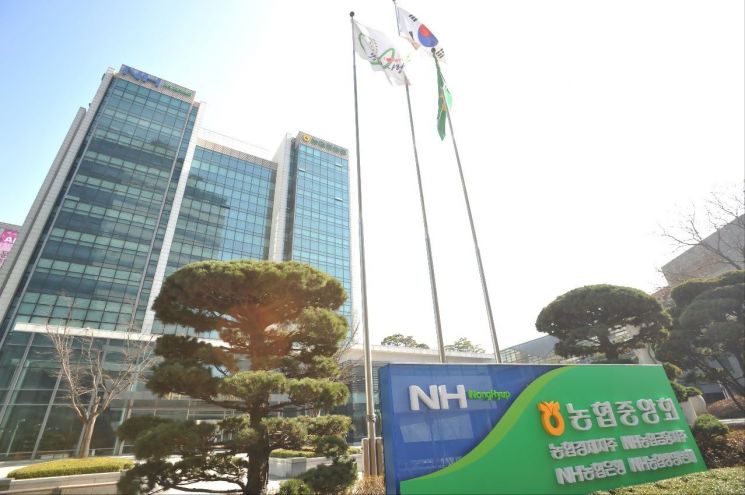
The Financial Supervisory Service (FSS) has issued a management advisory sanction to NongHyup Financial Group regarding its agricultural support project expenses. The FSS cited the group's failure to analyze the financial impact of project expenses incurred by subsidiaries such as its bank, and its omission of related matters during dividend discussions with its major shareholder, the National Agricultural Cooperative Federation (NACF).
Recently, the FSS notified NongHyup Financial Group of one management advisory action and six improvement items. These measures are based on the results of a regular inspection of NongHyup Financial conducted in April 2024. The FSS explained that the inspection was carried out because the regular inspection cycle (every two years) had arrived, and because internal control weaknesses were exposed during the investigation of a financial incident at NongHyup Bank, prompting a comprehensive review. Additionally, the FSS stated that it also examined matters related to the NACF and the overall governance structure as stipulated by the relevant governance laws.
The FSS pointed out that capital plans should take into account the support projects of subsidiaries such as the bank. NongHyup Financial Group has a structure in which it receives dividend income from its key subsidiary, NongHyup Bank, and then pays dividends to its major shareholder, the NACF. The FSS noted that while NongHyup Bank engages in support projects such as derivatives trading, it also pays agricultural support project expenses to the NACF and bears the necessary internal reserves (capital) requirements.
The FSS stated, "Nevertheless, the holding company does not separately identify or analyze the financial impact of agricultural support project expenses and required internal reserves arising from support projects of its subsidiaries, including the bank. Furthermore, these matters are not addressed during dividend discussions with the major shareholder, the NACF. There is also a problem in that these factors are not considered during the process of establishing mid- to long-term capital plans."
Accordingly, the FSS pointed out that the financial impact of agricultural support project expenses and required internal reserves related to support projects for the NACF or member cooperatives should be analyzed, and that these findings should be regularly reported through NongHyup Financial Group's risk management council to appropriately support decision-making by the board of directors and other bodies. The FSS also required the group to establish a system that allows it to provide opinions to the NACF regarding dividend amounts (payout ratios), and to ensure that related matters are included when formulating mid- to long-term capital plans, thereby establishing a rational dividend policy framework.
The need to improve governance was also emphasized. The FSS pointed out that the "expertise" criteria set as a requirement for the appointment of outside directors remain only declarative, and that the absence of a process for narrowing down the candidate pool raises concerns about the fairness and objectivity of the nomination committee's selection process. Although minutes of the nomination committee are prepared, the lack of detailed discussion records makes it difficult to verify the candidate narrowing and final selection process after the fact. The FSS therefore stated that specific qualification criteria and an expertise scoring system should be established, and that the overall executive appointment process should be strengthened.
For non-executive directors, the FSS noted that their roles are overly concentrated on key personnel and performance evaluations within the group, and instructed that they should instead fulfill their primary role of monitoring and overseeing the operations of the board of directors.
In addition, NongHyup Financial Group was found to have failed to properly review multiple omissions in financial incident reports by its affiliate, NongHyup Bank, and to have no procedures in place to determine whether reported incidents qualify as financial incidents. The FSS also pointed out that, because the NACF manages the holding company's internal whistleblowing system (Red Whistle), internal whistleblowing information related to the holding company and its affiliates could be exposed to the external body, the NACF. Furthermore, the FSS stated that improvements are needed in the management disclosure work related to internal transactions.
© The Asia Business Daily(www.asiae.co.kr). All rights reserved.
![Clutching a Stolen Dior Bag, Saying "I Hate Being Poor but Real"... The Grotesque Con of a "Human Knockoff" [Slate]](https://cwcontent.asiae.co.kr/asiaresize/183/2026021902243444107_1771435474.jpg)
















