From the Sorrows of Ordinary People to the Joy of 10 Million Viewers
A Mirror Reflecting the Times, Now Resting Among the Stars
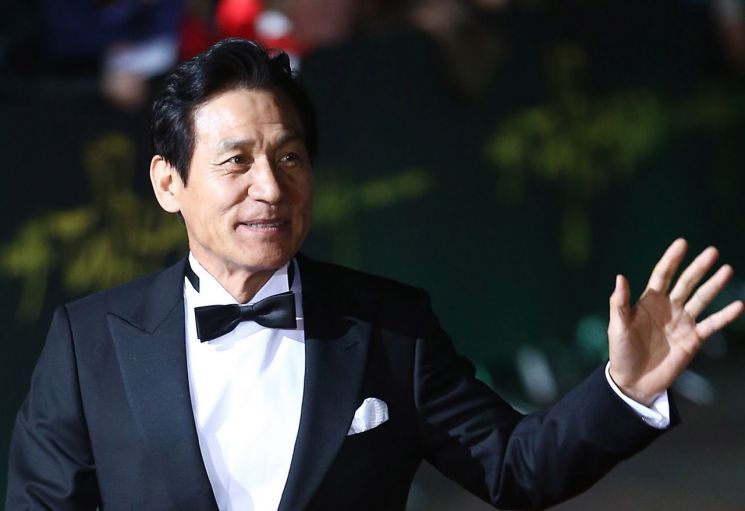
The history of Korean cinema is divided into before and after Ahn Sung-ki. Ahn, who passed away on January 5, was not merely a star. He was the 'persona of an era,' embodying the ups and downs of modern Korean history and the film industry with his entire being.
Debuting at the age of five in 1957, the late actor left behind a filmography of over 170 works. The greatness of this number lies in its 'unbroken vitality.' In the Korean film industry, Ahn Sung-ki is the only example of a child actor who successfully transitioned into an adult actor. He starred through the dark period of the 1970s, the 'Korean New Wave' of the 1980s, the era of project films in the 1990s, and the age of 10-million-viewer blockbusters in the 2000s.
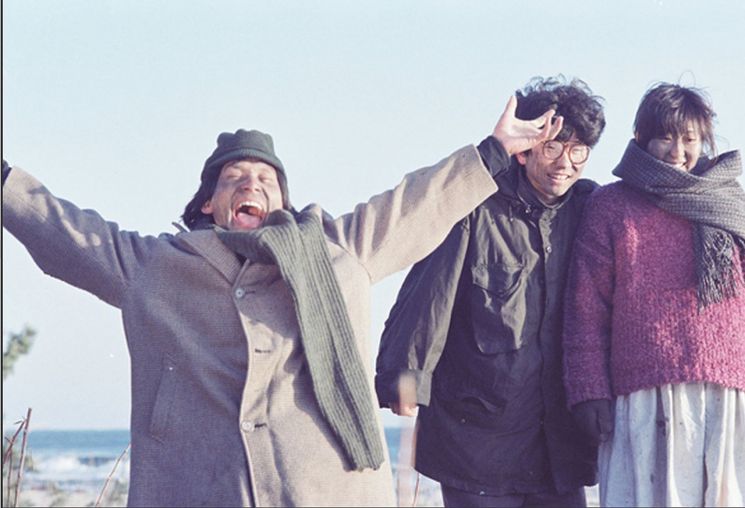
The 1980s: 'A Sad Self-Portrait' of a Repressed Era
It was in the 1980s that Ahn Sung-ki rose to the status of 'national actor.' Teaming up with directors Lee Jang-ho and Bae Chang-ho, he represented the faces of repressed youth and ordinary citizens during the military regime. From the Chinese restaurant deliveryman in 'The Day the Wind Blew,' to the homeless man in 'Whale Hunting,' to the signboard worker in 'Chil-su and Man-su.' The characters he portrayed were all poor and na?ve, yet each carried a sharp truth that pierced through the contradictions of the era.
Bae Chang-ho, who collaborated with the late actor on 13 films and dominated the 1980s, recalled during a special exhibition talk in 2017, "There is no calculation in Ahn Sung-ki's acting. His face simultaneously reflects the poverty and sorrow we experienced in that era, as well as the hope we never lost," adding, "He wasn't acting-he became that person and stood before the camera."
"I Want to Grow Old with the Audience"... A Master Who Even Acted with His Wrinkles
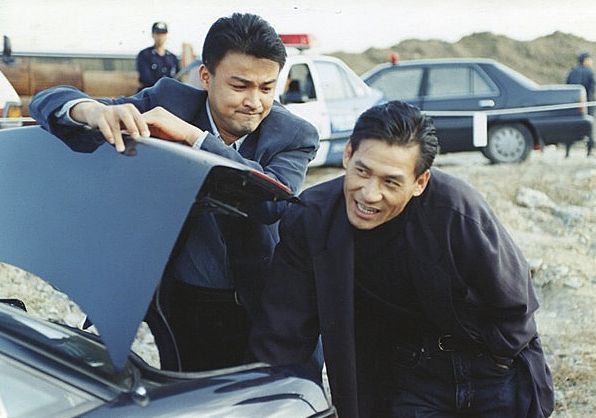
In the 1990s and 2000s, he was unafraid of change. He reached the peak of comic acting as a corrupt detective in 'Two Cops,' and moved the hearts of 10 million viewers in 'Silmido.'
What sustained Ahn Sung-ki was not dazzling star power, but a profound philosophy regarding his profession as an actor. In a past interview, the late actor calmly explained his theory of acting: "I dream of being an actor who remains on set even after turning seventy. As my wrinkles increase, as my hair turns gray, I want to grow old together with the audience. That is my life and my acting."
Even Off Screen, a 'True Adult'
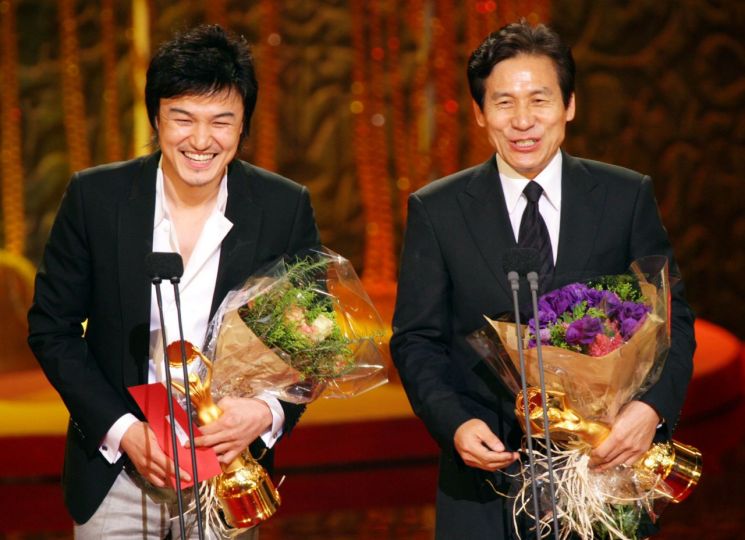
He was a steadfast pillar of the film industry. The evaluation of actor Park Joong-hoon, who worked alongside him in films such as 'Two Cops' and 'Radio Star' and regarded him as an older brother, hints at the late actor's character. At the Korean Film Centennial Forum, he said, "Ahn Sung-ki was a great person to me even before he was an actor. Even under the brightest lights, he was never arrogant, and he always humbled himself before his juniors," adding, "He was the 'big brother' to all of us."
Ahn Sung-ki stood at the forefront of the fight against the reduction of the screen quota and never shied away from difficult tasks to improve the welfare and rights of film industry workers. Until his final moments, he was determined to "return to the set," burning with passion as an eternal working actor. Though this towering figure has fallen, the 170 faces he left behind will be forever remembered in the name of Korean cinema.
© The Asia Business Daily(www.asiae.co.kr). All rights reserved.
![Clutching a Stolen Dior Bag, Saying "I Hate Being Poor but Real"... The Grotesque Con of a "Human Knockoff" [Slate]](https://cwcontent.asiae.co.kr/asiaresize/183/2026021902243444107_1771435474.jpg)

















