Average New Car Price in the U.S. Surpasses $50,000
Ultra-Long-Term Loans Emerge Amid Rising Financial Burdens
Ultra-long-term auto installment plans of up to 100 months have emerged in the United States. This is because, as vehicle prices have soared, an increasing number of consumers are finding it difficult to afford monthly payments under the traditional 48- to 60-month installment plans.
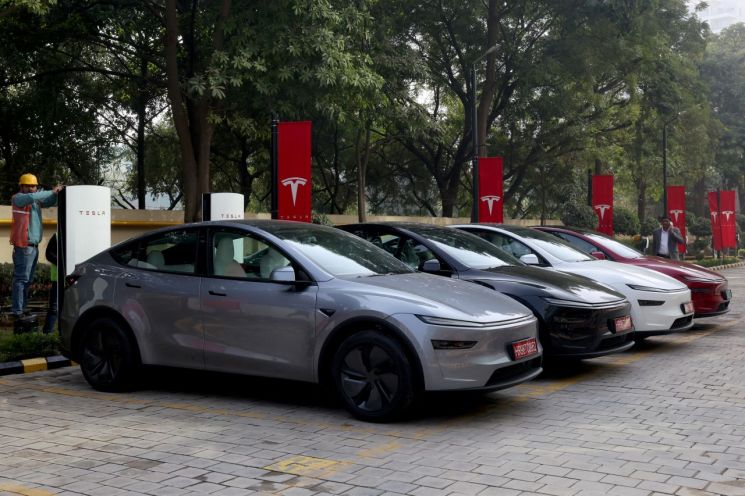 Reference photo to aid understanding of the article. Tesla vehicles are parked outside the 'Tesla Center' in Gurugram, India. Photo by Reuters Yonhap News
According to a recent report by The Wall Street Journal (WSJ), new car prices in the United States have surged by 33% since 2020. As of this fall, the average price of a new car has exceeded $50,000, which is more than $12,000 higher than before the pandemic.
$760 a Month Becomes the 'Average'... The $300 Era Is Gone
With the burden of higher prices, consumers are increasingly opting for long-term loans of 72 months or more instead of the traditional 48 to 60 months. According to consumer credit information company Experian, one-third of car buyers in the third quarter of this year used loans of six years or longer, and installment plans of up to 100 months have appeared, especially for large pickup trucks.
Market research firm JD Power estimated that, as of November, the average monthly installment payment for a new car reached $760. David Kelleher, who operates a Jeep dealership in Glen Mills, Pennsylvania, said that many American households are now struggling to afford new car installment payments, adding, "The era when you could pay $300 a month for a new car is over."

Low-Priced New Cars Disappear... Consumers Left With No Options
The problem is that there are virtually no alternatives to lower prices. New car models priced below $30,000 are now extremely rare in the market. Heath Byrd, Chief Financial Officer of Sonic Automotive, pointed out, "With no low-priced models available, consumer burdens are bound to increase," and added, "The issue of car prices is a structural risk for the entire industry."
Within this structure, the outstanding balance of auto loans in the United States continues to grow. According to the Federal Reserve Bank of New York, the total amount of auto loans held by Americans has reached $1.66 trillion, an increase of more than $300 billion compared to five years ago. The combination of high living costs and rising interest rates has also led to an increase in delinquencies among some consumers.
Regulatory Easing Begins... A Short-Term Reversal Seems Unlikely
As rising vehicle prices place a greater burden on households, the U.S. government has begun to respond. President Donald Trump recently instructed federal regulatory authorities to consider easing regulations for automakers seeking to sell small, low-priced vehicles in the United States that do not meet current government safety standards. The intention is to encourage the entry of affordable microcars into the market to help reduce the price burden.
However, most in the industry believe that the upward trend in vehicle prices is unlikely to reverse in the short term. As technological advancement, environmental regulations, and consumer preference for larger vehicles all converge, it is expected that consumers will continue to own cars by "taking on debt for longer periods" in the future.
© The Asia Business Daily(www.asiae.co.kr). All rights reserved.
![Clutching a Stolen Dior Bag, Saying "I Hate Being Poor but Real"... The Grotesque Con of a "Human Knockoff" [Slate]](https://cwcontent.asiae.co.kr/asiaresize/183/2026021902243444107_1771435474.jpg)
















