Sharing Workspace with Key Aides
Main Building Reserved for Major Events
Attention on Whether 'Imperial Palace' Image Will Fade
Further Expansion of Online Live Broadcasts
Presidential Residence Relocation Expected to Take Several More Months
The era of Yongsan, marked by the '12·3 Martial Law' and the 'Presidential Impeachment,' has come to an end, ushering in the return of the Blue House era. The most notable feature of the Blue House under the Lee Jaemyung administration is that the president and key aides work together in the 'Yeomin Building 1,' which serves as their main workspace.
The main office was established in 1991 when former President Roh Tae-woo rebuilt the main Blue House building, symbolizing the president's status and authority. However, since it is about 500 meters away from Yeomin Building, where most aides work, face-to-face briefings required either a car ride or a walk of more than 15 minutes. This led to criticisms of low work efficiency and contributed to the image of the Blue House as an 'imperial palace.'
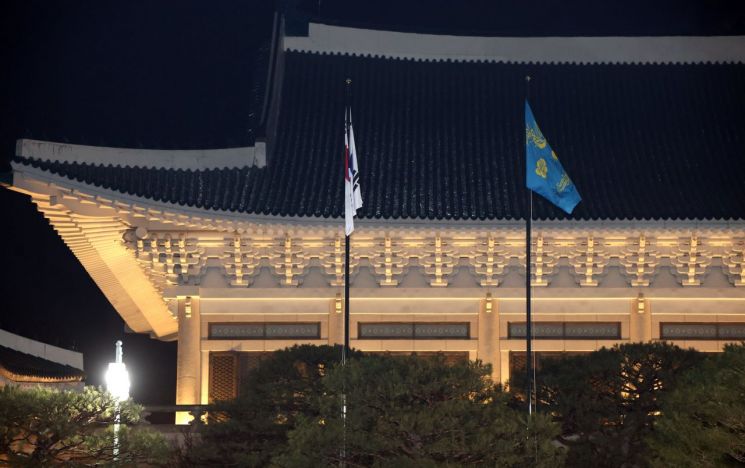
In response, President Lee plans to primarily use the office in Yeomin Building 1. The main building will be reserved for high-profile events such as summits, state functions, and meetings with foreign dignitaries.
Key aides will also be gathered in one space. In Yeomin Building 1, all three chiefs-Kang Hoonshik, Chief of Staff; Kim Yongbum, Chief Policy Officer; and Wi Sunglak, Chief National Security Advisor-will work together. This move brings together chiefs who were previously dispersed across Yeomin Buildings 1, 2, and 3 to improve work efficiency.
In addition to the three chiefs, Yeomin Building 1 houses the Protocol Secretary's Office and the Speech Secretary's Office, which are close to the president, as well as Woo Sangho, Senior Secretary for Political Affairs; Ha Jungwoo, Senior Secretary for AI Future Planning; and Ha Junkyung, Senior Secretary for Economic Growth. Yeomin Building 2 contains the National Situation Room and the Civil Affairs Office, while Yeomin Building 3 is home to the National Security Office and the Public Relations Office. Some departments continue to operate from the annex in Changseong-dong.
The Blue House plans to maintain its commitment to transparent governance by further expanding online live broadcasts and other initiatives. To enhance communication with the public, the 'open studio' previously located inside the Yongsan Presidential Office will be relocated to the Sarangchae, an area accessible without a separate entry application. The Presidential Security Service also intends to uphold its principles of open and low-profile security. The 'Daengdaeng Run' course for dog lovers, which runs from Gwanghwamun through Gyeongbokgung, the Blue House, and Samcheong-dong, will remain unchanged.
The Blue House has set 'Korea’s Great Leap Forward: Presenting the National Vision for 2026' as the first major theme of the new era. Earlier, on the 24th, Chief of Staff Kang appeared on the Roh Moo-hyun Foundation’s YouTube channel and stated, "Returning to the Blue House is a symbol of recovery and normalization."
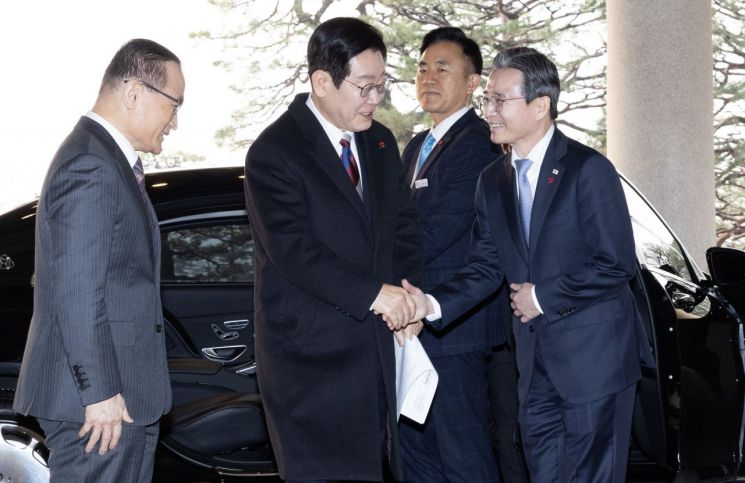
However, the relocation of the presidential residence is expected to take several more months. This is due to significant damage sustained during the process of opening the Blue House to the public under former President Yoon Sukyeol. Chief of Staff Kang explained regarding the damage to the Blue House residence, "When I visited, I saw that the walls were almost one meter thick and reinforced with steel, so it seems that remodeling will take a long time."
Meanwhile, President Lee is expected to commute between Hannam-dong and the Blue House, a distance of about 8 to 9 kilometers, for the time being. The Presidential Security Service has announced plans to minimize inconvenience to citizens by reducing the length of traffic control sections as much as possible.
© The Asia Business Daily(www.asiae.co.kr). All rights reserved.
![Clutching a Stolen Dior Bag, Saying "I Hate Being Poor but Real"... The Grotesque Con of a "Human Knockoff" [Slate]](https://cwcontent.asiae.co.kr/asiaresize/183/2026021902243444107_1771435474.jpg)
















