Wage Hikes from Labor Negotiations and a Weak Yen Drive Corporate Performance Improvement
Companies Actively Raise Wages and Bonuses to Secure Talent and Prevent Attrition
The bonuses for employees at major Japanese companies have exceeded 1 million yen (approximately 930,000 won) per person.
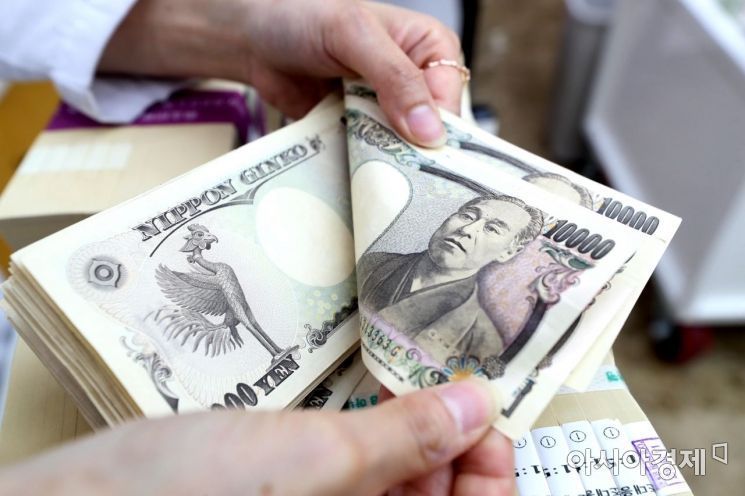
On December 25, Japanese media outlets such as the Mainichi Shimbun reported that Keidanren (Japan Business Federation), an economic organization in Japan, surveyed the winter bonuses at 164 large companies with more than 500 employees. The results showed that the average bonus paid was 1,004,841 yen (about 935,447 won), an increase of 8.57% compared to last year. This is the first time since statistics began in 1981 that the average winter bonus at major Japanese companies has surpassed 1 million yen.
By industry, the increase was most significant in the manufacturing sector. The average bonus for manufacturing workers was 1,056,966 yen (about 983,491 won), up 10.09% from last year. In the non-manufacturing sector, the average was 896,495 yen (about 834,244 won), an increase of 5.79%. However, the gap between manufacturing and non-manufacturing sectors has widened.
Previously, Keidanren's survey of summer bonuses also showed an increase at large companies. In a survey of 107 large companies with more than 500 employees across 18 industries, the average summer bonus was 990,848 yen (about 922,036 won), up 4.37% from the previous year. In the manufacturing sector, the average was 986,369 yen (about 917,558 won), an increase of 3.55%. In the non-manufacturing sector, the average was 836,150 yen (about 778,710 won), an increase of 7.57%. The manufacturing sector's bonus was at its highest level since 1997.
The background for this increase in bonuses is interpreted as the result of both wage hikes and improved corporate performance. Local media explained that the base salary increases agreed upon during the spring labor-management negotiations were reflected in the bonus calculations, and the improved performance of export-oriented companies due to the weak yen also contributed to the expansion of bonuses.
Additionally, the labor shortage played a role. Japan's baby boomer generation, known as the "Dankai generation" (born 1947-1949), has largely retired,and due to the issues of low birth rates and an aging population, labor shortages are becoming a structural problem. As a result, Japanese companies are reportedly focusing on improving employee treatment, actively raising wages and bonuses to secure talent and prevent employee turnover.
Hidetoshi Nitta, Director of the Labor Policy Bureau at Keidanren, emphasized, "If last year was a year of transition, this year has clearly seen not only the maintenance but also the acceleration of wage increases," adding, "It is important to continue this trend next year and achieve structural wage increases."
© The Asia Business Daily(www.asiae.co.kr). All rights reserved.
![Clutching a Stolen Dior Bag, Saying "I Hate Being Poor but Real"... The Grotesque Con of a "Human Knockoff" [Slate]](https://cwcontent.asiae.co.kr/asiaresize/183/2026021902243444107_1771435474.jpg)















