Sang Eun Park Saves Passenger with Emergency Aid on the Subway
The story of a nurse who saved a man's life by providing emergency aid after he collapsed on the subway during Friday evening rush hour is warming hearts at the end of the year.
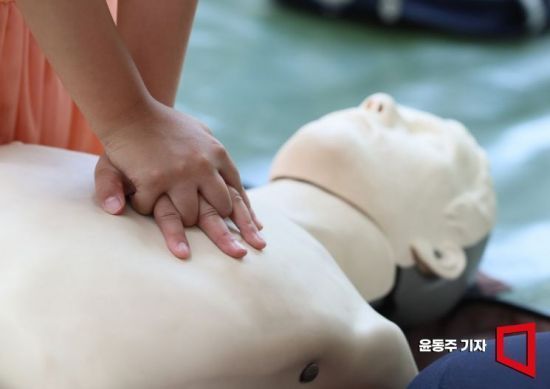
According to Yonhap News on the 27th, at around 6:10 p.m. the previous day, a young man suddenly collapsed, foaming at the mouth and vomiting blood, while on Line 6 heading from Wolgok Station to Korea University Station in Seongbuk-gu, Seoul.
The man appeared to be in a critical emergency, seemingly unconscious. Several passengers approached him, including Sang Eun Park (25), a third-year nurse at Korea University Anam Hospital. Passengers alerted the fire authorities and subway staff, and some shouted, "We need to perform CPR!"
A woman volunteered to perform CPR first, and Park assisted by securing the airway right beside her. However, the woman performing CPR soon became physically exhausted and asked for help, but no one immediately stepped forward. At that moment, Park herself secured the airway and performed CPR with the correct technique for about one minute. Thanks to Park's swift and professional actions, the man who had collapsed eventually regained consciousness.
The man was handed over to subway staff at Korea University Station and was safely transported to a hospital.
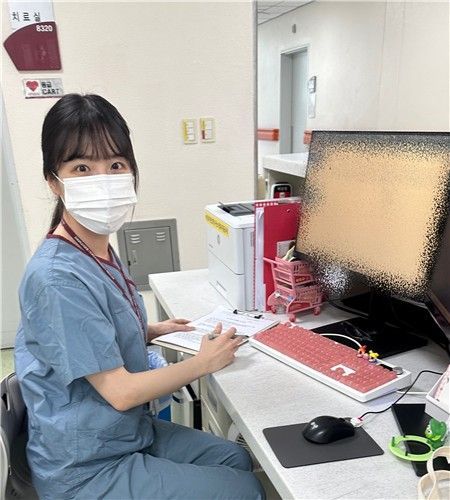
Park told Yonhap News, "At first, I was flustered, but when I faced the situation, I couldn't just stand by, so I stepped in," adding, "I thought, 'I have to do it.'" She continued, "This became an opportunity to reflect on the roles and responsibilities I should fulfill as a citizen in unexpected situations," and stated, "Through this experience, I hope to become a healthcare professional who can provide meaningful help in a wide range of areas, not only in clinical settings but also in research and the community."
Meanwhile, brain damage begins to occur four minutes after cardiac arrest, and the probability of death becomes extremely high after ten minutes. Therefore, when cardiac arrest occurs in public places, the initial response by bystanders is a critical factor in determining survival rates. It is known that if CPR is performed before emergency responders arrive, the patient's survival rate is about two to three times higher than if CPR is not performed.
© The Asia Business Daily(www.asiae.co.kr). All rights reserved.
![Clutching a Stolen Dior Bag, Saying "I Hate Being Poor but Real"... The Grotesque Con of a "Human Knockoff" [Slate]](https://cwcontent.asiae.co.kr/asiaresize/183/2026021902243444107_1771435474.jpg)
















