Focusing on Four Key Areas: Livelihoods, Transportation, Welfare, and Carbon Neutrality
Accelerating the Leap to a Top Self-Sufficient City of 500,000 in the Metropolitan Area
Soaring as a Core Hub City in the Metropolitan Area by 2026
Prioritizi
Gwangju City in Gyeonggi Province has designated 2026 as a turning point to become a core self-sufficient city in the southeastern metropolitan area and will focus its administrative capabilities by investing a total budget of 1.597 trillion won.
Recently, through the 321st regular session of the Gwangju City Council, Gwangju City finalized its 2026 budget plan and announced its mid- to long-term administrative direction centered on 'stabilizing livelihoods, transportation innovation, welfare realization, and carbon neutrality.' This budget represents an increase of approximately 127.7 billion won (8.7%) compared to the previous year, and despite economic uncertainties, fiscal soundness has been maintained, with priority allocated to areas that have a tangible impact on citizens' lives.
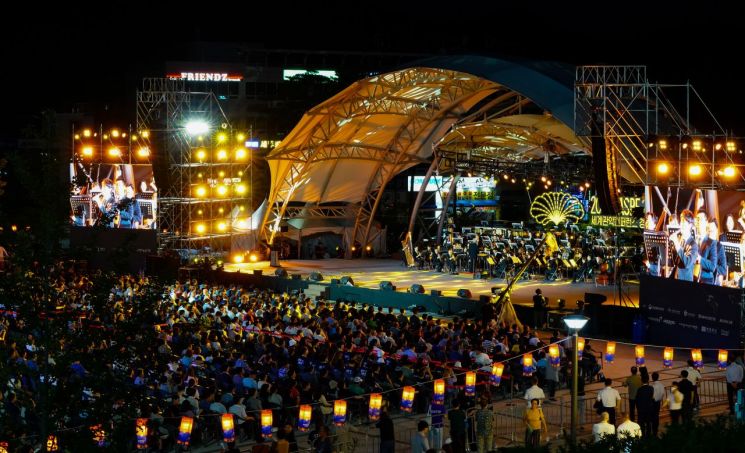
Turning Crisis into Opportunity... The 8th Popularly Elected Administration Proves Urban Competence
Soon after the launch of the 8th popularly elected administration, Gwangju City suffered significant damage due to record-breaking torrential rains. However, it demonstrated urban resilience through swift recovery and systematic response. Subsequently, Gwangju became the first basic local government to successfully host a state visit event for the President of Vietnam, earning recognition as a city capable of managing international events.
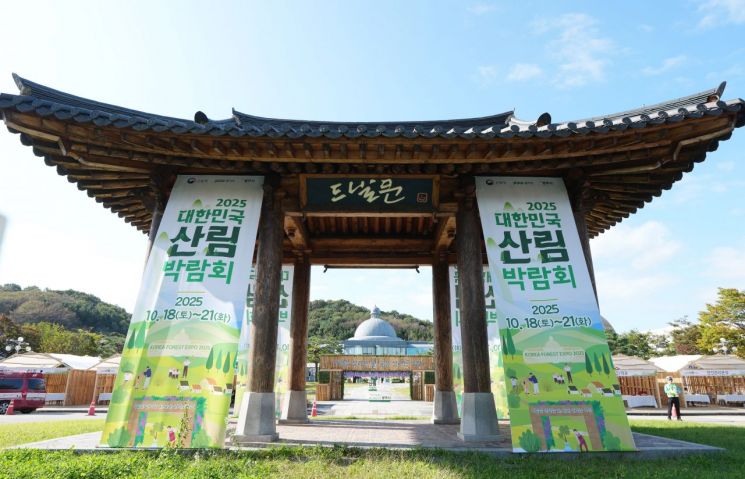
Notably, by uniting the aspirations of its 420,000 citizens, Gwangju succeeded in securing the 'Gyeonggi Province Comprehensive Sports Competition' for the first time in 72 years. The city also garnered nationwide attention in the fields of culture, tourism, and forestry by consecutively hosting the '2024 WASBE World Wind Music Conference' and the '2025 Korea Forest Expo.' The Forest Expo, which attracted more than 200,000 visitors, is regarded as an opportunity to confirm the industrial and tourism potential of Gwangju's forest resources.
The city's achievements in regulatory reform also stand out. Through continuous consultations with the central government, Gwangju legalized and expanded the Cheongseok Park Park Golf Course to 27 holes and facilitated the establishment of Namhansanseong, Toechon, and Namjong Sports Towns, resolving long-standing community projects that had been pending for over 30 years. These are cited as exemplary cases of overcoming overlapping regulations.
2026 Gyeonggi Province Comprehensive Sports Competition... A Model of Sports, Economy, and ESG Integration
Gwangju City is promoting the 2026 Gyeonggi Province Comprehensive Sports Competition as a comprehensive project to elevate the city's status, going beyond a simple sports event. All events except shooting will be held in Gwangju, showcasing its identity as a sports city, and the entire competition will be operated as an ESG-practicing sports festival.
The city has completed construction on a total of 11 sports facilities, including the Bandabi Sports Center for the Disabled, and is nearing completion of the Gwangju G-Stadium with a certified 50-meter swimming pool and a tennis dome stadium. At the opening ceremony, a 'Dalhangari Holy Water Platform' performance, which brings together water from all 31 cities and counties in Gyeonggi Province, will deliver a message of unity and coexistence.
The arrival of more than 20,000 athletes and spectators is expected to have a positive ripple effect across the local economy, including accommodation, dining, and tourism.
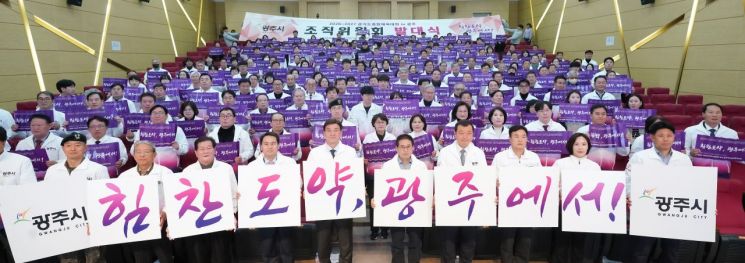 2026~2027 Gyeonggi Province Comprehensive Sports Competition Organizing Committee Launch Ceremony. Photo by Gwangju City, Gyeonggi Province
Recovery of the Livelihood Economy and Gwangju-Style Job Policies
In 2026, Gwangju City has set the recovery of the livelihood economy as its top priority. The strategy is to increase the purchase rate of local products through public investment projects and to spread a culture of local consumption.
Tailored support policies will continue, including management stabilization funds for small business owners, strengthening the competitiveness of small and medium-sized enterprises, improving the business environment, and pioneering overseas markets. Through Gwangju-style job policies that encompass youth, middle-aged, and senior citizens, the city will expand employment opportunities across all life stages and protect workers' rights through the establishment of multi-purpose rest areas for mobile workers, free labor counseling, and labor safety initiatives.
In the agricultural sector, the city will respond to the crisis of rural extinction by establishing a 'Basic Plan for Rural Spatial Restructuring and Regeneration.' The Jayeonchae Food Farm Center has become a direct transaction hub for consumers in the metropolitan area and will be developed as a core facility for local food distribution in the future.
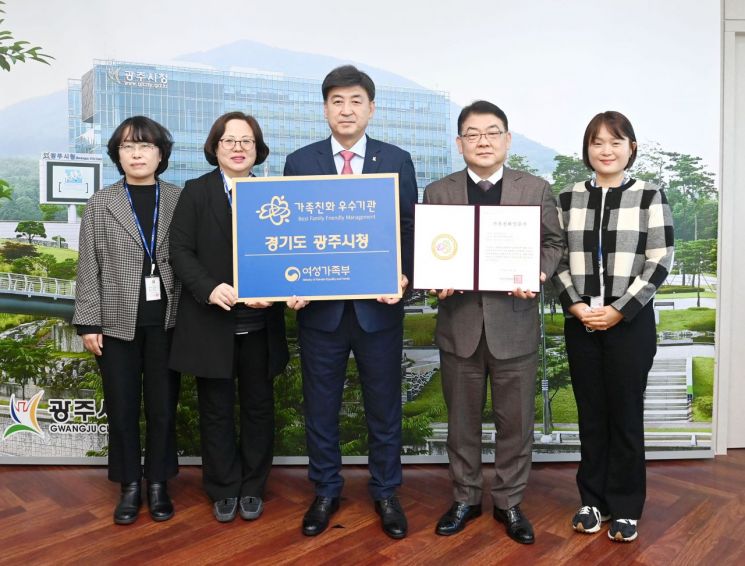 Family-Friendly City Re-Certification Certificate Presentation Ceremony. Provided by Gwangju City, Gyeonggi Province
"Up Close and Thorough"... A Welfare City Where Three Generations Are Happy
For 2026, Gwangju City has allocated a welfare budget of 583.7 billion won, an increase of 30.5 billion won from the previous year. The focus is on building a strong welfare safety net and providing seamless protection for vulnerable groups through integrated management of medical, nursing, and care cases.
The Gwangju City Welfare Administration Town, currently under construction on the site of the old city hall, will be completed in February 2026 with a total investment of 173.1 billion won. This complex will house welfare facilities for people with disabilities, women, multicultural families, children, and seniors, and will also feature the city's first welfare center for the disabled and a lifelong learning center for people with disabilities.
The city will enhance the quality of public childcare by expanding support for child growth, increasing long-term service allowances for childcare teachers, and establishing more public daycare centers for children with disabilities. Welfare infrastructure for seniors will also be strengthened with the opening of the Opo Center for Senior Welfare and the promotion of an Eastern Region Senior Welfare Town.
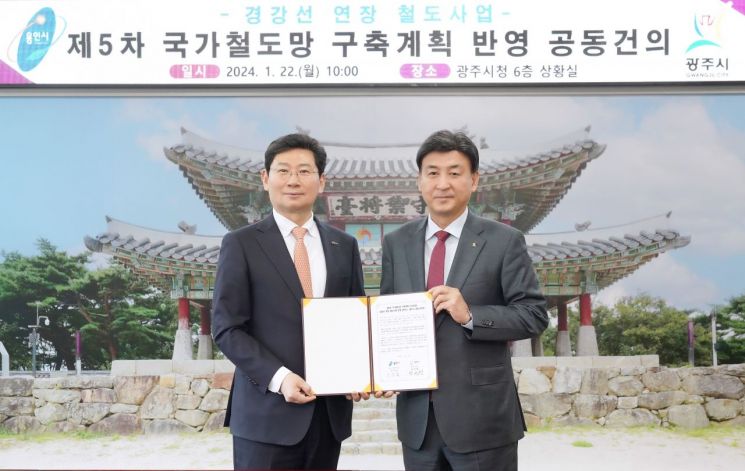 Joint Proposal for Inclusion of the Gyeonggang Line Extension Railway Project in the 5th National Railroad Network Construction Plan. Provided by Gwangju City, Gyeonggi Province
Railway-Centered Transportation System... Accelerating the Era of Railways in Gwangju by 2030
Under the principle that 'transportation is the flow of the city and the daily life of citizens,' Gwangju City is accelerating the establishment of a railway-centered transportation system. The Suseo-Gwangju double-track railway has led to the commencement of the Seongnam-Gwangju section, and the Jamsil-Cheongju central region metropolitan express railway has entered the feasibility study stage for private investment.
The Gwangju-type demand-responsive 'Ddok Bus' service has been expanded to 29 vehicles, and for the first time in the nation, eco-friendly medium-sized low-floor buses have been introduced to enhance mobility rights for transportation-vulnerable groups. The utilization rate of student-only school buses has also increased significantly.
To alleviate chronic traffic congestion, the city is actively proposing to the central government the construction of entry and exit ramps for the Seongnam-Janghowon expressway, the expansion and creation of major roads, the Gwangju IC grade-separated interchange, and the construction of bypass roads for National Routes 43 and 45.
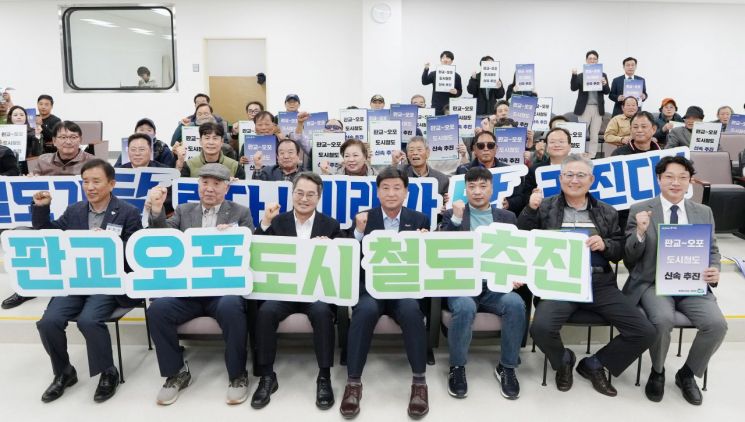 Gyeonggi Livelihood Economy Field Tour (Pangyo~Opo Urban Railway Project). Provided by Gwangju City, Gyeonggi Province
Completion of a Self-Sufficient City and a Carbon-Neutral Future City
Through the '2030 Urban Management Plan Revision,' Gwangju City is laying the foundation for a self-sufficient city of 500,000 people and strengthening the residential environment and urban functions through the second phase of Gwangju and Gonjiam station area development and the Samdong and Chowol urban development projects.
Sustainable carbon neutrality is a core task for future generations. The city is promoting a transition to a green industry city by installing integrated bio-gasification facilities, restoring ecological streams, and establishing the Gwangju-style Forest Welfare Master Plan. The Carbon Neutral Wood Education Center and the Neoreungol Natural Recreation Forest are considered flagship projects symbolizing the competitiveness of Gwangju's forest resources.
Gwangju City defines 2026 as the turning point where the vision of the 8th popularly elected administration will bear fruit. The plan is to become the most livable city in the metropolitan area through stabilization of livelihoods, future growth, and balanced urban development. Attention is focused on what results will emerge from the city's choices and actions.
© The Asia Business Daily(www.asiae.co.kr). All rights reserved.
![Clutching a Stolen Dior Bag, Saying "I Hate Being Poor but Real"... The Grotesque Con of a "Human Knockoff" [Slate]](https://cwcontent.asiae.co.kr/asiaresize/183/2026021902243444107_1771435474.jpg)

















