Goyang's Ecological Conservation Model:
Completed Through Drones, Participation, and Circulation
Where Mudflat Crabs Hibernate and White-naped Cranes Gather:
The Ecological Links of Janghang Wetland
Ramsar Convention Highlights
Urban Wetland Management Where Cities and Nature Coexist
Zero Cases of Avian Influenza and Increased Bird Populations
Since Korea’s First Drone-based Feeding Program
In the bitter winter winds above the Han River estuary, dozens of drones take flight over the Janghang Wetland in Goyang Special City. As the drones pass, golden rice seeds are scattered below, and soon after, a flock of white-naped cranes with gray bodies and red eye-rings descends to peacefully feed. This is the scene of Goyang Special City's unique 'smart ecological conservation,' where human presence is minimized and technology brings warmth to nature.
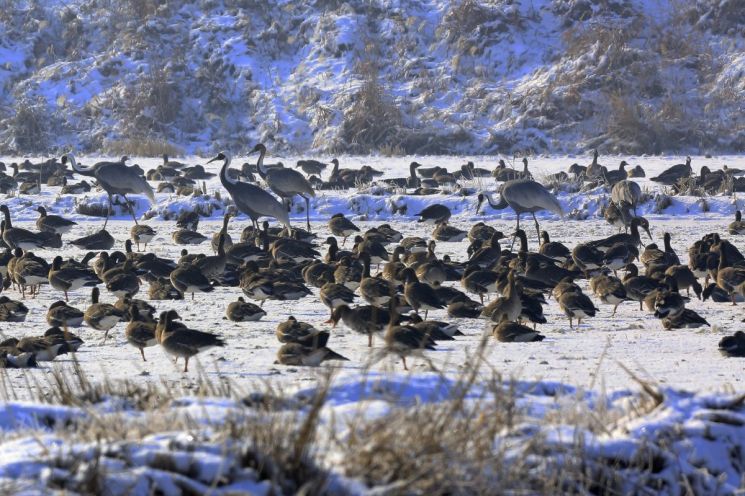
With the arrival of winter, Janghang Wetland becomes a hive of activity. Tens of thousands of migratory birds land in the rice paddies, tidal flats, and willow forests of the Han River estuary, searching for food and rest.
The white-naped crane, an endangered wild species and designated natural monument, is the iconic winter guest of Janghang Wetland, recognized by its gray body and red eye-ring. Feeding on mudflat worms and fish, as well as grains and plant roots from rice paddies, these cranes sleep in flocks in flooded fields, signaling the start of winter in the wetland.
The swan goose, a migratory bird that uses Janghang Wetland as a stopover in winter, boasts the longest bill and neck among geese. Feeding on glasswort colonies in the tidal flats and grains, the swan goose demonstrates the stable food environment of Janghang Wetland. In addition, other large birds such as the greater white-fronted goose and whooper swan visit the area annually.
Having been preserved as a civilian-controlled zone for a long time, Janghang Wetland has maintained its natural state, providing habitat for a variety of mammals including raccoon dogs, leopard cats, water deer, and field mice. The unique brackish water environment, where freshwater and seawater mix, forms the foundation for sustaining biodiversity.
The mudflat crab, which scurries across the wetland floor in summer, retreats into its burrow and becomes inactive during winter. However, the burrows, soil structure, and nutrients left behind support the growth of the willow forest, which in turn becomes a haven for migratory birds and wildlife.
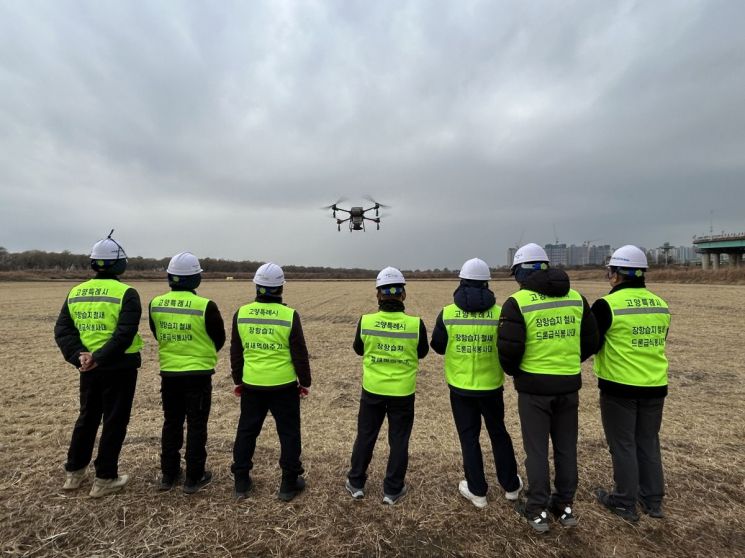
The ecosystem of Janghang Wetland is sustained through interactions that transcend the seasons. During the food-scarce winter, the city focuses on a sophisticated habitat management strategy that ensures a stable feeding environment and safe roosting sites for migratory birds by implementing a bird feeding program.
From December 6 of this year through March of next year, Goyang Special City will supply a total of 64 tons of feed to Janghang Wetland. The key is the use of drones. In the past, people entered the wetland to distribute feed manually, which caused stress to the birds and increased the risk of avian influenza (AI) transmission.
However, since the nationwide introduction of drone feeding in 2023, the situation has changed dramatically. Over the course of a year, 25 feeding sessions supplied about 23 tons of feed. Since then, there have been zero cases of avian influenza, and the population of endangered species such as the white-naped crane has actually increased. By utilizing idle drones owned by farmers, the city has reduced costs and accumulated precise monitoring data, achieving a dual benefit. Additional effects include reduced habitat disturbance, decreased entry into hazardous areas, and lower carbon emissions. These combined benefits have led other local governments across the country to benchmark this approach.
Each feeding session involves 8 to 10 volunteers and 2 to 3 farmers or public officials with drone pilot licenses. The city has strengthened its management system through pre-training on safety and ecology, as well as disinfection procedures. By utilizing farmers' idle drones and agricultural technology center equipment during the off-season, costs have been further reduced.
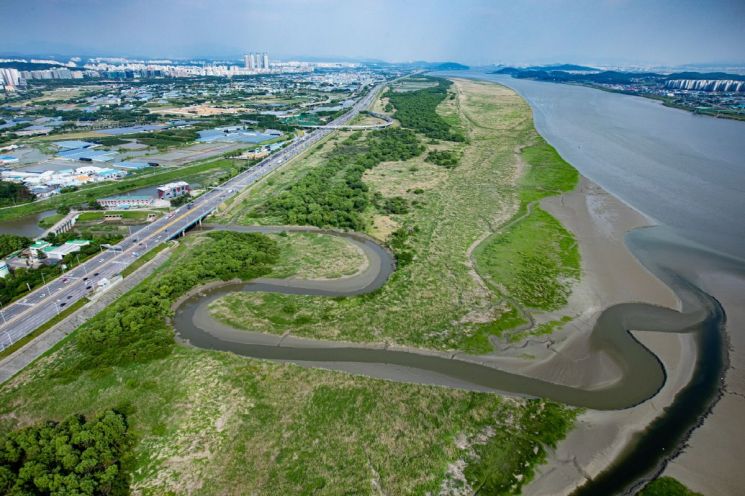
The feeding system at Janghang Wetland goes beyond the simple execution of a city budget.
Thirty-one tons of grain confiscated by the Incheon Main Customs Office have been repurposed as food for migratory birds. In addition, 8 tons of resources donated by private companies for environmental protection have contributed to the effort. Fish species caught by local fishermen that would otherwise be discarded are now used as nutrients for the ecosystem. By realizing the value of 'circulation' beyond mere 'protection,' this initiative is opening a new chapter in urban wetland management.
On-site management is also becoming more sophisticated. Drones are used to continuously monitor changes in bird populations and habitat conditions, and potential risks such as avian influenza and environmental pollution are monitored around the clock to maintain the wetland's health. The data accumulated in this process serves as a foundation for analyzing ecological changes in Janghang Wetland.
Furthermore, the city plans to turn 23 tons of rice seeds secured through contracts with local farmers under the ecosystem service payment program, 31 tons of grain confiscated by Incheon Main Customs Office, 8 tons of corporate ESG donation resources, and discarded fish species provided by local fishermen into feed for migratory birds. Conservation efforts at Janghang Wetland are expanding beyond protection to encompass resource circulation.
The achievements of Janghang Wetland have already gained international recognition. In July, the city was officially invited to present its ecological model at the 15th Conference of the Parties (COP15) to the Ramsar Convention held in Zimbabwe. In September, experts from 10 countries visited Janghang Wetland to observe its management system firsthand.
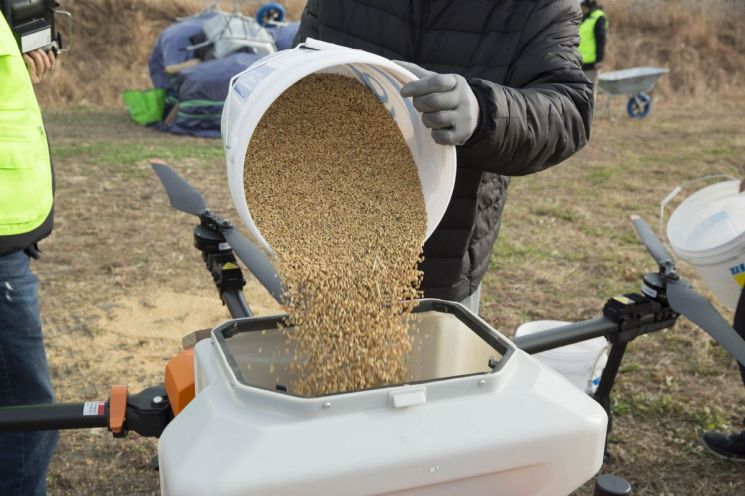 A volunteer group loading rice seeds and grains onto drones for feeding distribution. Provided by Goyang Special City
Thanks to its unique status as a civilian-controlled zone, the symbiotic relationship between the mudflat crab and the willow forest has been preserved and is now being further strengthened through advanced technology and citizen participation.
Lee Donghwan, Mayor of Goyang Special City, stated, "Janghang Wetland is a living textbook that demonstrates how cities and nature can coexist," adding, "We will continue to advance our ecological city model so that it can be shared with the international community."
© The Asia Business Daily(www.asiae.co.kr). All rights reserved.
![Clutching a Stolen Dior Bag, Saying "I Hate Being Poor but Real"... The Grotesque Con of a "Human Knockoff" [Slate]](https://cwcontent.asiae.co.kr/asiaresize/183/2026021902243444107_1771435474.jpg)

















