Responding to the Crisis in the Recycling Industry Amid the Surge of Low-Priced Plastics
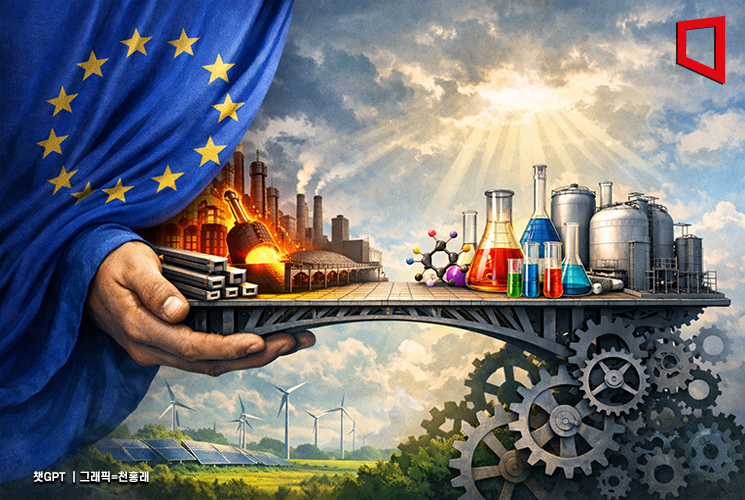
The European Union (EU) announced on December 23 (local time) that it will expand support for companies in energy-intensive industries-such as steel and chemicals, where electricity accounts for a large portion of production costs-in order to prevent their relocation overseas.
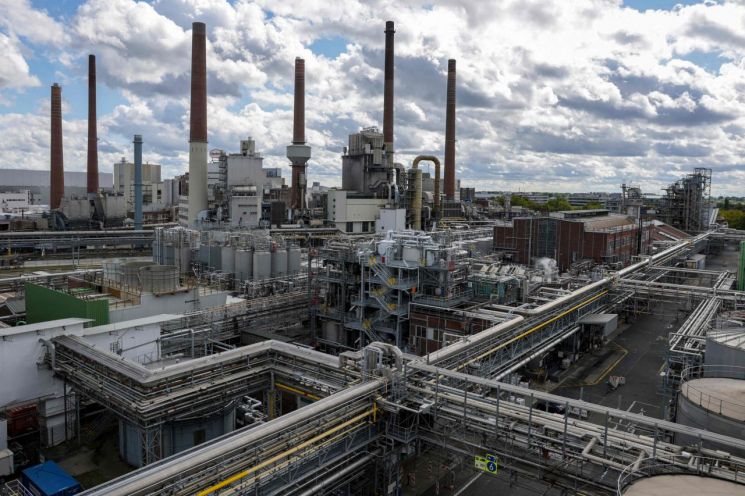
The European Commission has decided to provide additional state subsidies to companies in industries like steel and chemicals that already receive support, and to include other sectors such as batteries and glass as eligible for assistance. Specifically, the government will subsidize the carbon emission costs included in electricity bills, thereby indirectly reducing the burden of carbon emission trading costs for companies. For companies that are already eligible for support, the subsidy for indirect electricity costs will be increased from a maximum of 75% to 80%.
The EU is concerned that the price of carbon emission allowances-a tool for putting a price on greenhouse gases to encourage carbon reduction-has risen in recent years, increasing the risk that energy-intensive industries may relocate to countries outside the EU where emission regulations are less strict. The Commission stated, "These guidelines aim to reduce the risk of 'carbon leakage,' which occurs when companies move production facilities to countries with weaker regulations or when EU products are replaced by imports with higher carbon emissions."
In addition, the EU will strengthen controls on low-priced plastic imports, particularly from third countries such as China, to support the domestic recycling industry, which has been struggling due to an influx of cheap plastics. As domestic recycling plants have been shutting down amid weak demand for recycled plastics and a surge of inexpensive imports, six countries-including France, the Netherlands, and Spain-sent a joint letter to the EU last month urging measures such as expanding incentives for the use of recycled materials and responding to the influx of low-cost imported plastics.
The EU also plans to harmonize waste recycling regulations across its 27 member states to boost recycling trade and to increase investment in technologies that recycle plastics by heating them at high temperatures. Jessica Roswall, the EU Commissioner for the Environment, noted that the domestic recycling industry is in a serious crisis, stating, "It is important to make changes now. There is simply too much plastic coming in from third countries."
Commissioner Roswall pointed out that 10 recycling plants in the Netherlands have closed over the past year and a half. Across the entire EU during the same period, approximately 1 million tons of recycling facility capacity has ceased operations, which is equivalent to France's annual recycling output.
© The Asia Business Daily(www.asiae.co.kr). All rights reserved.
![Clutching a Stolen Dior Bag, Saying "I Hate Being Poor but Real"... The Grotesque Con of a "Human Knockoff" [Slate]](https://cwcontent.asiae.co.kr/asiaresize/183/2026021902243444107_1771435474.jpg)
















