Supreme Court: "Consistent with the Truth and for Public Interest"
Case Overturned and Remanded
The Supreme Court has ruled that a cleaning worker who was sued for damages after exposing that a site manager was given a bottle of whiskey in exchange for cleaning equipment training cannot be held liable for damages if the disclosure was made for the public interest.
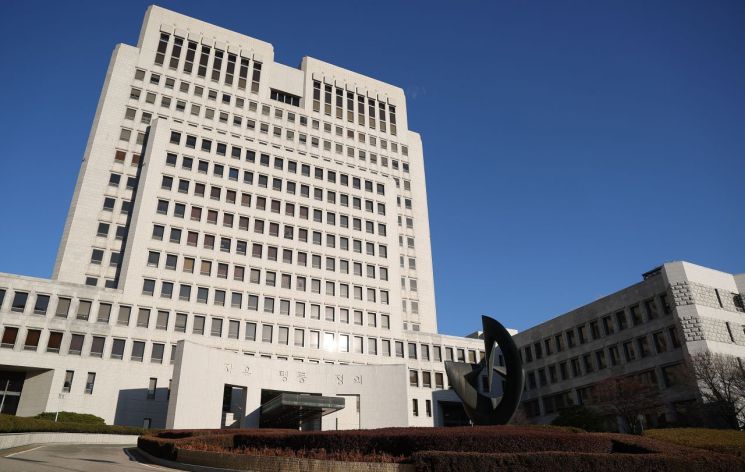
On December 24, the Supreme Court’s Third Division (Presiding Justice Lee Heungku) announced that it had overturned a lower court ruling that partially sided with the plaintiff in a damages lawsuit filed by Mr. A, a site manager at the National Museum of Korea responsible for cleaning work, against worker Mr. B, and remanded the case to the Seoul Central District Court.
In July 2020, while on duty, Mr. A received a bottle of whiskey worth about 150,000 won from Mr. B. The day before handing over the whiskey, Mr. B called Mr. A and said, "I'll leave a bottle of whiskey, so please leave the locker open in advance," to which Mr. A replied, "Don't tell anyone else." Mr. B responded, "I'll sneak over and put it in the locker," and added, "You don't have to teach me how to use the dolldoli (cleaning equipment)." At the time, it was reported that Mr. B was considering paying 1.5 million won to an outside institution to learn how to use the dolldoli.
Later, at the labor union office, Mr. B stated that "Mr. A demanded a bottle of whiskey as a bribe in exchange for training on how to use the dolldoli, so I complied." Following a petition from union officials, both Mr. A and Mr. B were disciplined in November 2020 with a three-month pay reduction for violating their duty of integrity.
Mr. A then filed a damages lawsuit, claiming that Mr. B's allegedly false statement about being asked for a whiskey bribe had defamed him.
The first trial dismissed Mr. A's claim, but the appellate court ruled partially in favor of the plaintiff, stating, "Mr. B defamed Mr. A by making it known as if he provided the whiskey at Mr. A's request, even though that was not the case."
However, the Supreme Court overturned the appellate ruling and sent the case back to the Seoul Central District Court. The bench stated, "The fact that money or valuables were provided in connection with cleaning equipment training relates to the illegality or morality of a public officer at the museum, which concerns the public interest of the organization."
The court further explained, "Even if Mr. B had a personal motive stemming from dissatisfaction at not receiving the training, if the main purpose or motive was for the public interest, it should be viewed as serving the public interest. It is difficult to conclude that Mr. B’s statement was false, and there is considerable possibility that it corresponds to the truth, so the illegality is negated."
© The Asia Business Daily(www.asiae.co.kr). All rights reserved.
![Clutching a Stolen Dior Bag, Saying "I Hate Being Poor but Real"... The Grotesque Con of a "Human Knockoff" [Slate]](https://cwcontent.asiae.co.kr/asiaresize/183/2026021902243444107_1771435474.jpg)















