Five-Year Longitudinal Study of Children, Adolescents, and Adults
No Continuous Excessive Immersion in Gaming Found
No Link to Academic Decline
A recent study has found no direct causal relationship between prolonged gaming and the onset of addiction disorders or specific diseases. This suggests that the World Health Organization (WHO)'s diagnostic criterion for "gaming disorder," which relies on the "persistence of excessive immersion," lacks real-world validity.
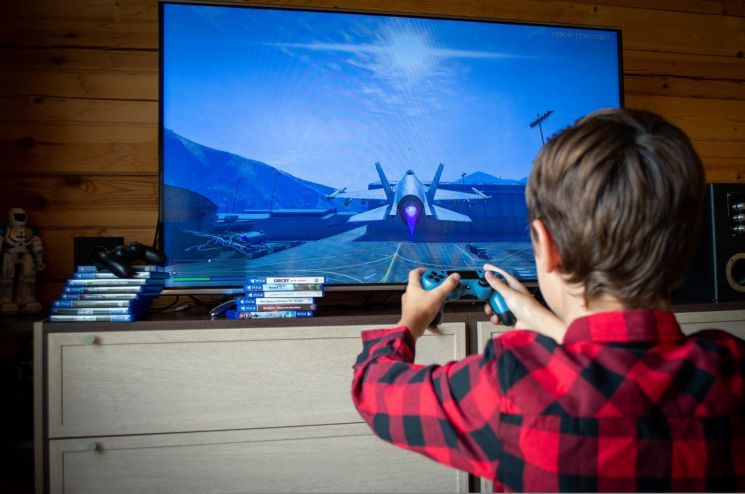
According to the "2020-2024 Game User Research Commentary" recently published by the Korea Creative Content Agency on December 24, a five-year longitudinal study tracking over 1,800 participants-including more than 1,000 children and adolescents, and 700 adults (including parents)-found no cases of individuals remaining continuously in the excessive immersion group.
The research team determined that for gaming to be considered addictive, individuals would need to remain persistently in the excessive immersion group without leaving, the only influencing factor would have to be gaming itself, and the issue would need to be resolved solely through medical intervention.
However, the study found that the number of people in the excessive immersion group decreased over time, and no participants remained in this group continuously. Among children and adolescents, only 9.4% maintained the same specific gaming behavior type from the first to the fifth year. The number of people at risk of excessive immersion and those in the borderline group also decreased from 334 to 198 and from 88 to 41, respectively.
Among adults, only 10.0% maintained a specific gaming behavior type over five years, and there were no respondents who remained in either the excessive immersion or borderline groups. The researchers stated, "It can be inferred that excessive preoccupation with gaming is likely to resolve naturally over time due to developmental processes or changing circumstances."
No correlation was found between gaming hours and excessive immersion. For children and adolescents at risk of excessive immersion, average gaming time decreased from 2.78 hours in the first year to 2.48 hours in the fifth year. The report noted that although gaming time increased somewhat during the COVID-19 pandemic due to more indoor activities, it subsequently declined again.
The research team also stated, "In terms of academics and grades, there was no significant difference in academic performance or social skills between groups that played games for two to three hours a day and those that played for one hour. Rather, children who have no outlet for stress and play games excessively may be more likely to experience excessive immersion. Ultimately, the relationship between studying and gaming is a matter of attitude, not time."
The researchers further pointed out that the term "gaming addiction" is a misnomer. "Gaming behavior was not significantly different from the use of other media such as social networking services (SNS) or over-the-top (OTT) video platforms," they said. "Since temporary excessive immersion in gaming cannot be classified as a disease, it is important to consider the possibility of comorbid conditions such as depression or attention-deficit hyperactivity disorder (ADHD)."
© The Asia Business Daily(www.asiae.co.kr). All rights reserved.
![Clutching a Stolen Dior Bag, Saying "I Hate Being Poor but Real"... The Grotesque Con of a "Human Knockoff" [Slate]](https://cwcontent.asiae.co.kr/asiaresize/183/2026021902243444107_1771435474.jpg)















