Inix has secured a new order to supply battery safety components for certain Hyundai Motor and Kia electric vehicle models, marking its full-scale entry into the finished vehicle supply chain.
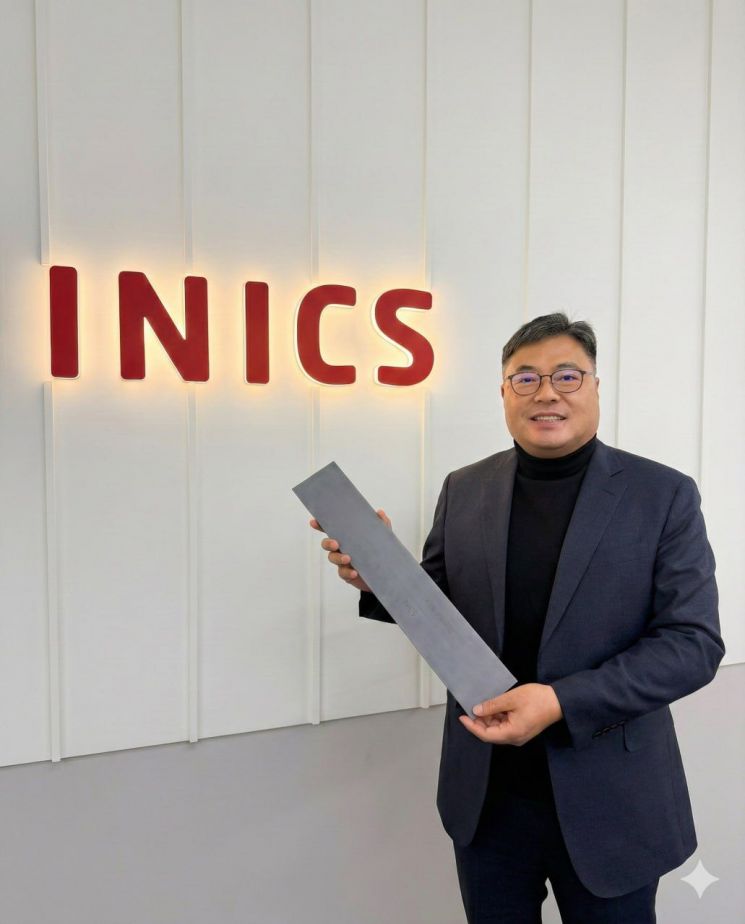
On December 23, Inix announced that it has won the contract to supply refractory pressure pads for the Hyundai Motor and Kia Porter 2nd generation and Purpose Built Vehicle (PBV) models.
This order was awarded through a bidding process by Hyundai Motor Company, and the actual delivery will be made via Hyundai Mobis, which assembles the battery systems.
The refractory pressure pads are scheduled to enter mass production starting in June 2027 and will be applied in stages over approximately 12 years. The company explained that the order volume is expected to reach a significant level in the medium to long term.
The supplied refractory pressure pads are characterized by their single foam structure, which offers excellent assembly properties, as well as high compressive resilience and fire resistance. The internal structure remains stable even under pressure caused by swelling between battery cells. Additionally, the pads have a low thermal conductivity at high temperatures, which actually enhances their insulation performance.
The company stated that the pads maintain their shape even in high-pressure environments, helping to suppress the risk of battery fires and prevent the spread of thermal runaway. This technology has been recognized as electric vehicle safety standards become more stringent.
This order marks the first time that the refractory pressure pads developed by Inix have been adopted for mass production models by Hyundai Motor and Kia. It is considered significant as it lays the foundation for Inix to register as a primary supplier to finished vehicle manufacturers in the future.
The company explained that this order is the result of comprehensive recognition of its refractory material technology, stable supply capabilities, financial soundness, and manufacturing technology and quality responsiveness.
Inix will sequentially proceed with validation and mass production preparations according to the client’s development schedule. Leveraging this order, the company plans to stabilize its production line through a capital expenditure (CAPEX) investment of about 10 billion won. In addition, by completing its second Busan plant by the end of the year, Inix will secure production facilities in advance and respond to future increases in order volume.
Founded in 1984, Inix has focused on developing materials and components to enhance electric vehicle secondary battery safety since 2015. It currently supplies a variety of electric vehicle safety solutions, such as battery cell pads and refractory barriers, to global customers. Based on its experience as the first to develop and exclusively supply both battery cell pads and refractory barriers, the company emphasized that the refractory inter-cell pad for this project was also developed with its own technology, leading to its successful bid and order win.
An Inix official stated, "Based on this project, we will expand the application of refractory inter-cell pads to various vehicle models and continuously secure differentiated competitiveness in the electric vehicle safety component sector by advancing material technology and strengthening manufacturing competitiveness. We also expect long-term improvements in profitability."
Meanwhile, this order does not meet the requirements for fair disclosure or ad-hoc disclosure, so no separate public announcement was made.
© The Asia Business Daily(www.asiae.co.kr). All rights reserved.
![Clutching a Stolen Dior Bag, Saying "I Hate Being Poor but Real"... The Grotesque Con of a "Human Knockoff" [Slate]](https://cwcontent.asiae.co.kr/asiaresize/183/2026021902243444107_1771435474.jpg)















