Four Out of Twenty Districts Designated as Female Competitive Electoral Districts
Incumbent Council Members Publicly Protest, Calling It "Retaliatory Cut-Off"
Party Branch Stresses Commitment to "Mandatory 30% Female Candidate Nomination"
The Gwangju branch of the Democratic Party of Korea has decided to designate four out of twenty Gwangju City Council electoral districts as female competitive electoral districts (female special districts) ahead of next year's local elections. The branch explained that this measure is intended to fulfill the mandatory 30% female candidate nomination rule. However, as current city council members and preliminary candidates have voiced opposition, controversy has arisen regarding the overall candidate nomination system.
According to local political sources on the 23rd, the Gwangju branch of the Democratic Party of Korea convened an operations committee, where it resolved to designate four female special districts and to implement restricted competition for proportional representation in those districts. The branch sought an official interpretation from the party headquarters regarding whether the designation of female competitive districts and the implementation of restricted competition for proportional representation in metropolitan council districts required approval from the party's Supreme Council. The response they received clarified that such measures do not require Supreme Council approval.
Accordingly, for next year’s local elections, the branch designated Nam-gu District 2 (currently Im Miran), Seo-gu District 3 (currently Lee Myungno), Buk-gu District 3 (currently Shin Sujeong), and Gwangsan-gu District 5 (currently Park Sugi) as female competitive electoral districts.
The method for selecting proportional representation candidates was also finalized. The selection of proportional representation candidates for metropolitan councilors will be divided into the fields of people with disabilities and youth. Given the requirement that the first proportional representation candidate must be a woman, the gender of the candidate in the field of people with disabilities will be determined first, and then the gender of the youth candidate will be allocated accordingly. For basic councilors, restricted competition for proportional representation candidates will be conducted among women and youth.
The branch stated that the female competitive electoral district system has been implemented since the 6th local election to expand women's political participation and will continue to be applied in the 9th local election. In contrast, the youth competitive electoral district, which was introduced once during the 8th local election, will not be implemented this time as it did not meet the designation requirements. However, to prevent a decline in youth political participation, the branch has established a supplementary measure by implementing restricted competition for youth in the selection process for both metropolitan and basic council proportional representation candidates.
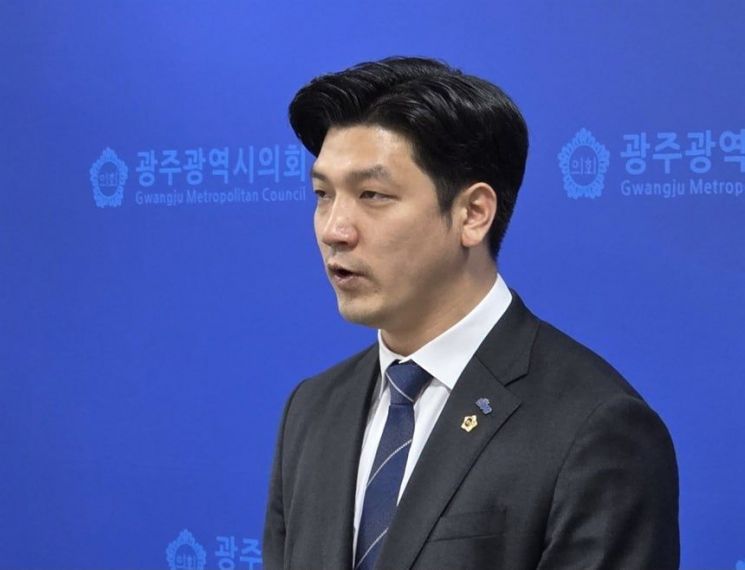 On the 21st, Lee Myungno, a Gwangju City Council member, held an emergency press conference in opposition to the Democratic Party of Korea Gwangju Metropolitan City Party's resolution to designate a female competitive electoral district (female special district) at the Gwangju City Council.
There has also been backlash regarding the designation of these female special districts. Lee Myungno, a Gwangju City Council member, argued, "Designating my district as a female special district because I did not provide support during the last general election primary is a retaliatory cut-off." Kim Gwangjin, former Deputy Mayor of Gwangju, also criticized via social media, stating, "Designating a district as a female special district before the evaluation of incumbents is complete amounts to a political cut-off."
In response, Yang Bunam, head of the Gwangju branch of the Democratic Party of Korea, stated, "We simply cross-designated districts based on those that were previously designated as female special districts in past local elections, and there is absolutely no political motive. Interpreting the designation of female special districts as a means to exclude specific candidates or as a cut-off is not reasonable." He added, "Assemblyman Lee Myungno can still run for office by changing districts." Yang also stated that, starting with the next election, he will propose to the party headquarters that the designation of strategic electoral districts be finalized one year before the election as part of institutional reforms.
Within the local political sphere, there are also critical views regarding the process of designating these female special districts, regardless of the original intent to expand women's political participation. One local political figure commented, "The issue is not with the female special districts themselves, but rather with whether there was sufficient prior explanation and collection of opinions during the process of designating certain districts as restricted competition areas. There is a sense that the controversy over the legitimacy and fairness of the decision has not been resolved, which has contributed to growing conflict."
© The Asia Business Daily(www.asiae.co.kr). All rights reserved.
![Clutching a Stolen Dior Bag, Saying "I Hate Being Poor but Real"... The Grotesque Con of a "Human Knockoff" [Slate]](https://cwcontent.asiae.co.kr/asiaresize/183/2026021902243444107_1771435474.jpg)
















