Project Timelines in Subsequent Districts Expected to Be Shortened by Over Two Years
Relaxed Criteria for District Designation... Year-End Carryover Concerns Addressed
Regular Council Launched by Ministry, Local Governments, and Boards of Education
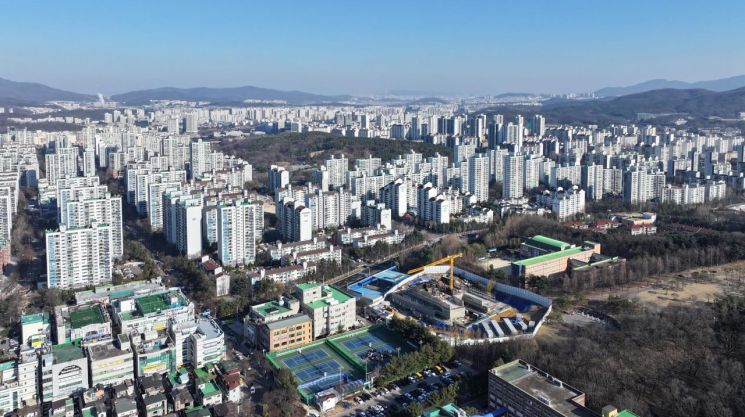
The Ministry of Land, Infrastructure and Transport has launched a full-scale acceleration of redevelopment projects across all districts of the first-generation new towns. The ministry is expanding the special redevelopment plan fast-track, previously applied only to pilot districts, to all areas. It is also easing the criteria for recognizing annual district designations, aiming to reduce delays caused by administrative procedures that push projects into the following year.
On December 23, the ministry announced that it would launch the “Housing Supply and Educational Environment Council” and hold its first meeting in Seoul with Gyeonggi Province, the Gyeonggi Provincial Office of Education, and the five local governments of the first-generation new towns-Goyang, Seongnam, Bucheon, Anyang, and Gunpo. The meeting will be chaired by Kim Itak, the First Vice Minister of the Ministry of Land, Infrastructure and Transport. This initiative is a follow-up measure to achieve the goal of starting construction on 63,000 housing units by 2030, as outlined in the September 7 policy package.
The core of the plan is the comprehensive expansion of the fast-track system. Previously, the fast-track for establishing special redevelopment plans was applied only to 15 pilot districts. With this new measure, subsequent project areas will also be able to form resident representative groups and designate preliminary project implementers. The ministry explained that the involvement of local governments and experts in advance consultations will accelerate project procedures. In fact, 8 out of the 15 pilot districts have reduced the district designation review process-which typically takes 30 months-to about six months through this system, shortening the overall project period by more than two years.
The criteria for managing annual project quotas will also be revised. Local governments’ master plans include phased implementation schedules, within which annual caps for new redevelopment projects are set. The ministry stated that it would clarify that the official recognition of these quotas will be based on the date when the special redevelopment plan is substantively finalized by passing the review of the Urban Planning Committee. This measure is intended to resolve the issue of year-end quotas being carried over to the next year due to administrative procedures that take one to two weeks between the review’s approval and its official announcement.
In the area of educational environments, a regular council will be established with participation from the ministry, local governments, and boards of education. When large-scale redevelopment projects begin, student numbers increase and demands for school facility improvements also rise. If conflicts over cost-sharing arise at this stage, projects can be delayed. To prevent this, the ministry will hold quarterly meetings involving the ministry, Gyeonggi Province, the board of education, and the city, as well as monthly meetings between the city and the local education support office. The aim is to share updates on redevelopment progress and educational issues in real time, resolving bottlenecks early.
Measures to ease the burden on residents have also been introduced. Concerns have been raised at redevelopment sites about having to pay both public contribution fees under the Urban Regeneration Act and school site charges under the School Site Act. The ministry confirmed at the council that public contribution fees can be used for improving educational environments, and that redevelopment projects under the Urban Regeneration Act are not subject to school site charges.
Kim Itak, the First Vice Minister, stated, “In order to ensure an adequate supply of quality housing in the Seoul metropolitan area, it is essential to accelerate the redevelopment of first-generation new towns. Through the comprehensive expansion of the fast-track system and the use of public contribution fees for educational environment improvements, as discussed in this council, we will ensure the achievement of the goal to start construction on 63,000 housing units by 2030 without setbacks.”
© The Asia Business Daily(www.asiae.co.kr). All rights reserved.
![Clutching a Stolen Dior Bag, Saying "I Hate Being Poor but Real"... The Grotesque Con of a "Human Knockoff" [Slate]](https://cwcontent.asiae.co.kr/asiaresize/183/2026021902243444107_1771435474.jpg)
















