Metropolitan Subway Lines 1, 3, and 4 to Operate at 90% During Rush Hour
Ministry of Land Activates 24-Hour Emergency Strike Response Headquarters
Seoul, Gyeonggi, and Incheon Prepare Emergency Transport Measures
Labor and Management United in Calling for Full Restoration of Performance Bonus Standards
The National Railway Workers' Union will begin an indefinite general strike at 9 a.m. on December 23. KTX trains and metropolitan and regional commuter trains operated by Korail will run on a reduced schedule.
As the strike coincides with both the morning commute and year-end travel, passengers are strongly advised to check train operations before departure.
Which trains will be reduced?
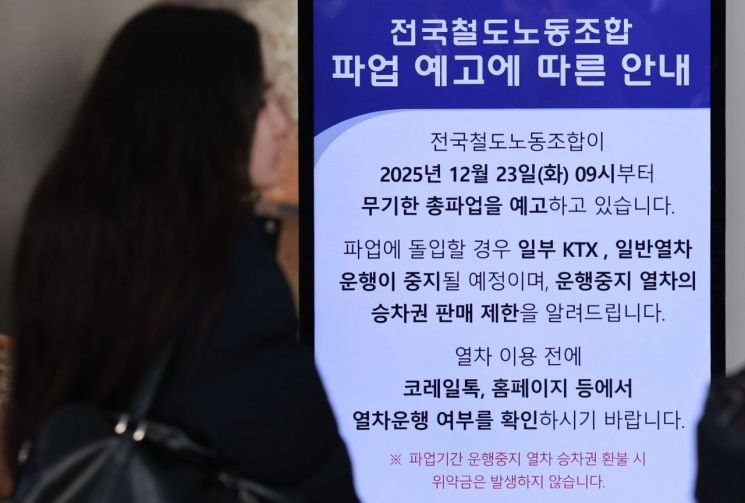 According to the Railroad Workers' Union on the 22nd, as the Ministry of Economy and Finance proposed a 90% standard instead of fully restoring the performance bonus to 100%, about 12,000 workers scheduled to participate in the strike plan to join a general strike at 9 a.m. on the 23rd. The photo shows a related notice installed at Seoul Station on the 22nd, one day before the general strike. Photo by Yonhap News Agency
Korail-operated trains will be reduced to 66.9% for KTX, 75.4% for metropolitan commuter trains, 59% for Saemaeul-ho, and 62% for Mugunghwa-ho. Freight trains will operate at only 21.5% of normal levels, focusing on export, import, and emergency goods.
Korail operates sections of the metropolitan subway including Seoul Subway Lines 1, 3, and 4, the Suin-Bundang Line, the Gyeongui-Jungang Line, and the Gyeonggang Line. Even during the strike, metropolitan commuter trains will operate at around 90% during rush hour, while the Daegu-Gyeongbuk Line and the Donghae Line in Busan-Gyeongnam will each operate at 78.6%.
Some routes may experience even greater inconvenience. Outside of rush hour, intervals between trains on certain lines such as the Gyeongui-Jungang Line (74%), Gyeonggang Line (73%), Daegu-Gyeongbuk Line (76.3%), and Donghae Line (70.3%) may increase to between 40 minutes and one hour.
According to relevant laws, the minimum required operation rate for metropolitan commuter trains during a railway union strike is 63%, but Korail plans to increase this to 75.4% by deploying additional internal substitute staff and military personnel.
Korail will deploy a total of 15,317 personnel, including 10,440 essential staff and 4,877 substitute workers, and will assign 212 order maintenance personnel to 34 major stations where congestion is expected during rush hours.
Korail tickets will be automatically refunded... Check the app
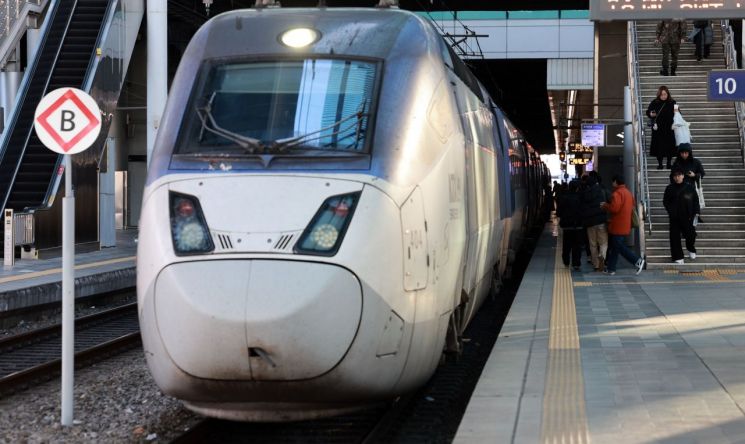
Korail explained that trains suspended from operation will be displayed as "service suspended" on the Korail Talk app and website. Passengers holding tickets for trains scheduled to be suspended are being notified individually via SMS and push notifications through the Korail Talk app.
Tickets for suspended trains will be automatically refunded without any cancellation fee, even without a separate request. Tickets purchased with cash can be refunded at any nearby station within one year.
Korail has established a 24-hour emergency response headquarters, led by the acting president, and has prepared comprehensive measures to respond to the railway union strike, mobilizing all available resources to minimize inconvenience to passengers.
A Korail representative said, "During the strike, train schedules may change frequently, so we ask busy customers to use alternative transportation such as buses."
Government emergency system in operation... Seoul City increases subway and bus service, SRT operates normally
The Ministry of Land, Infrastructure and Transport activated a joint government 24-hour emergency transportation response headquarters on this day, with Kang Heeup, the Second Vice Minister, as the head.
Vice Minister Kang presided over an emergency transportation measures inspection meeting, stating, "With high travel demand at the end of the year, we are particularly concerned about public inconvenience. We will concentrate substitute personnel on metropolitan commuter trains and KTX to maintain the highest possible operation rates, and supplement any shortfall in transportation capacity with alternative means such as buses and flights."
The emergency transportation response headquarters includes Korail, Korea Airports Corporation, the Korea Bus Transport Business Association, the Express Bus Operators Association, and the city governments of Seoul, Incheon, and Gyeonggi Province.
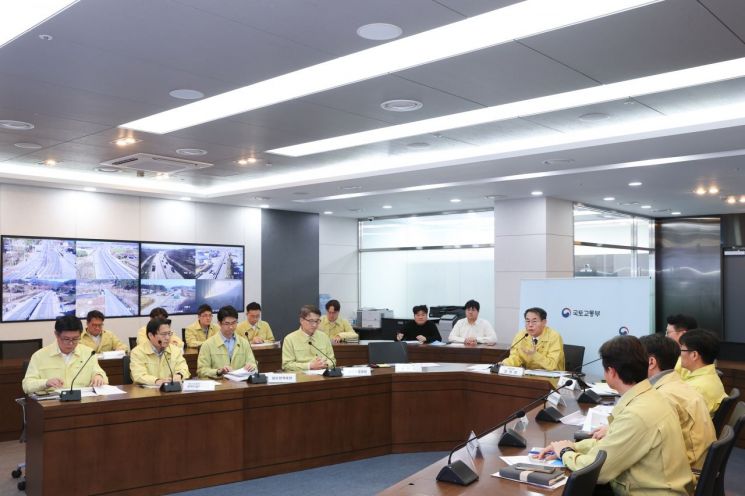 Kang Heeup, Vice Minister of the Ministry of Land, Infrastructure and Transport, is presiding over an emergency transportation measures inspection meeting in preparation for the railway union strike on the 22nd. Ministry of Land, Infrastructure and Transport
Seoul City will operate 18 additional services on Korail sections of Line 1 (Seoul Station to Cheongnyangni), Line 3 (Gupabal to Ogeum), and Line 4 (Dangogae to Sadang), transporting an additional 36,000 passengers per day. Subway Lines 1 to 8, Line 9, the Sillim Line, and the Ui-Sinseol Line, all operated by Seoul Metro, will run as usual.
Seoul City will extend concentrated bus dispatch times for 344 bus routes by one hour during rush hour. The Ministry of Land, Infrastructure and Transport will also deploy additional express, intercity, and metropolitan buses, as well as domestic flights.
SR, the operator of Suseo High-Speed Rail (SRT), also aims to operate at 100%. Although SR is a separate corporation and its employees are not participating in the strike, there may be disruptions in outsourced work such as train maintenance, cabin crew, and station guidance services, which are entrusted to Korail. In response, SR has also activated a 24-hour emergency transportation response headquarters and plans to review its cooperation system with Korail to prevent passenger inconvenience due to disruptions in outsourced services.
Why are they striking? ... Not a 'bonus increase,' but 'restoring payment standards'
The core issue of this strike is the "management performance bonus." This is different from the incentives given to employees in private companies when profits are made.
Currently, Korail employees are subject to less favorable performance bonus standards compared to other public enterprises. Typically, public enterprises calculate performance bonuses based on "100% of the monthly base salary." However, Korail is only recognized for 80% of this standard. Even with the same rating, the base amount used for calculation is smaller, resulting in lower bonuses for Korail employees.
This disparity originated from changes made to the wage system in 2010. In 2009, the Lee Myung-bak administration promoted public institution reforms (including the reduction of starting salaries for college graduates), which led to intense conflict between Korail management and the union. As a result, Korail concluded its wage agreement a year later than other public enterprises, in 2010.
As a penalty, the Ministry of Economy and Finance set Korail's performance bonus calculation standard at 80% of the monthly salary, instead of 100%. This 80% standard was maintained throughout the 2010s, briefly raised to 100% through labor-management agreement from 2018 to 2021, but reverted to 80% following an audit by the Board of Audit and Inspection and a decision by the Public Institutions Management Committee.
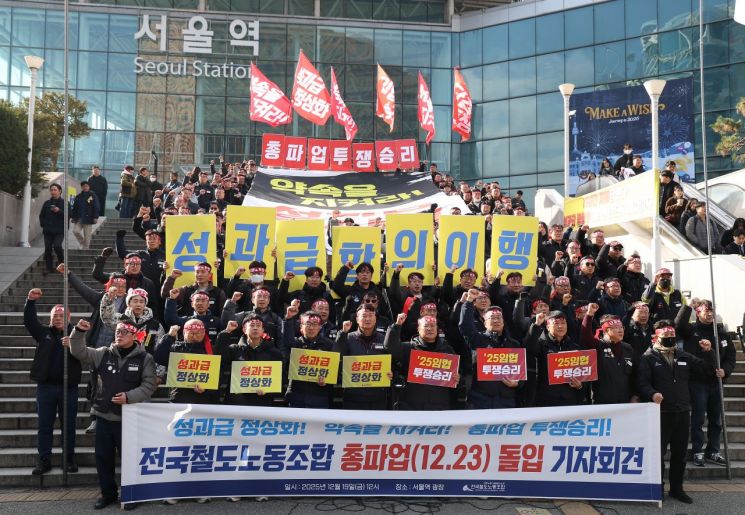 Union members are shouting slogans at the emergency press conference held by the National Railway Labor Union in front of Seoul Station on the 19th, announcing the start of a strike. Photo by Yonhap News Agency
To resolve this situation, labor and management have been engaged in intensive negotiations this year. In talks on December 10, labor and management reached a tentative agreement to restore the payment standard to 100%, the same as other public enterprises. However, the Ministry of Economy and Finance, which controls the budget, insisted on allowing only up to 90%, leading to a breakdown in last-minute negotiations.
Korail management stated in an appeal on this day, "For the past 15 years, we have suffered from a discriminatory performance bonus standard, resulting in a decline in real wages and lifetime income for all employees, simply because we reformed a year later than the government's 2010 guidelines." They added, "This year, the government commissioned a study, and both labor and management have worked to ensure fairness. It is urgent to restore the performance bonus standard, which has been an unresolved issue for 15 years."
The Railway Workers' Union plans to hold a large-scale general strike rally at 2 p.m. on December 23 in front of Donghwa Duty Free Shop in Gwanghwamun, Seoul, with union members from across the country participating. A union representative said, "There are currently no plans for further discussions with the government, nor has the government made any requests." He continued, "It is unprecedented for management to issue an appeal in unison with the union ahead of a strike. The government must take the unique nature of this issue seriously."
© The Asia Business Daily(www.asiae.co.kr). All rights reserved.
![Clutching a Stolen Dior Bag, Saying "I Hate Being Poor but Real"... The Grotesque Con of a "Human Knockoff" [Slate]](https://cwcontent.asiae.co.kr/asiaresize/183/2026021902243444107_1771435474.jpg)

















