- Close Collaboration with Accelerators Drives Mass Production, Investment, and Global Expansion
Beyond Simple Support, a Self-Sustaining Startup Ecosystem Takes Root
- New "Leading Company" Category to Be Introduced in 2026, Completing Full-Cycle Support
From Pre-Startup to Global Expansion, One-Stop Nurturing System Established
The perception of traditional culture as merely something to be 'preserved' is changing rapidly. Today, tradition is emerging as a high value-added future industry that must be boldly 'invested in' and systematically 'nurtured.' The results of the "Today Traditional Startup" program, promoted by the Ministry of Culture, Sports and Tourism (Minister Choi Hwi-young, hereinafter referred to as MCST) and the Korea Craft & Design Foundation (President Jang Donggwang, hereinafter referred to as KCDF), have proven this proposition with concrete numbers this year.
This year, Royal Heritage Co., Ltd., which received the MCST Minister's Award for outstanding business performance, proved the potential of "premium K-desserts" by successfully launching pop-up stores at the main branch of Hyundai Department Store and five-star hotels in its very first year. Additionally, a food tech company founded by a 23-year-old university student achieved annual sales of 1.8 billion won with rice cake-based products (The Barun Company Co., Ltd.), and a pottery brand that had faced stagnation reached 100 million won in daily sales through entry into home shopping (Mujagi), among other remarkable, almost dramatic, achievements. These successes go beyond simple financial support-they are the result of a systematic "business nurturing system" that discovers young people with ideas, helps them cross the "valley of death," and develops them into small but strong companies with global competitiveness.
The "Today Traditional Startup" program is a flagship startup incubation initiative of the MCST that discovers promising startups in the field of traditional culture and provides up to three years of commercialization funding and customized nurturing. Rather than simply distributing grants, the program offers one-stop support for the entire process required for business growth, from business model development to prototype production and market entry, fundamentally transforming the structure of the traditional culture industry.
Lee Jeongwoo, Director General for Culture and Arts Policy at MCST, stated in his congratulatory remarks at the 2025 Today Traditional Startup Awards Ceremony, "Seeing the exhibition of the Today Traditional Startup program, I was impressed by how our traditional culture-hanbok, hanji, and goods-is no longer a fossilized legacy, but is being commercialized and industrialized in everyday life. If your dedication and efforts are the engine that drives the vehicle called K-culture, then the MCST will play the role of building the 'road' for that engine to run unimpeded, through legal, institutional, and financial support," expressing his commitment to supporting industrialization.
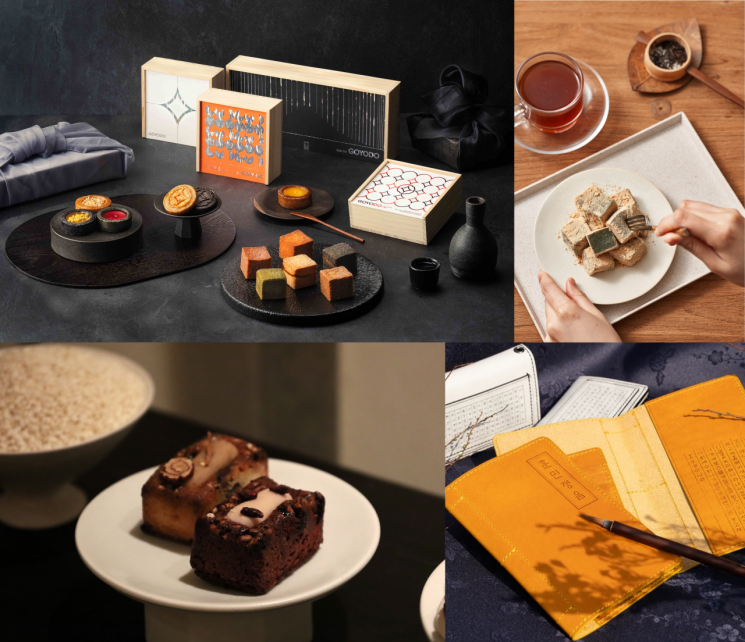 Traditional Startup in 2025 'Early Startup Companies' Representative Products (Top left to right: Royal Heritage Co., Ltd., The Barun Company Co., Ltd. / Bottom left to right: Eum, MSR Co., Ltd.)
The most significant achievement of this year's "Today Traditional Startup" program is that the structural improvements made by the companies have led to tangible increases in key indicators. From early-stage startups to leap-stage companies, those that received support recorded double-digit or higher average sales growth rates, proving their market viability.
In particular, Mimi Design Co., Ltd., which won the Presidential Award at this year's Tourism Souvenir Contest, achieved 2.5 times year-on-year sales growth with practical designs. Eum became a must-visit shopping destination for Japanese tourists, confirming its global market potential. Old Things Never Die Co., Ltd., which reimagined traditional knots as hip fashion items, experienced a vertical surge in sales, showing explosive growth. MSR Co., Ltd., which introduced products that reinterpret tradition as modern fashion accessories using eco-friendly materials, also posted a 76% increase, drawing a steep upward curve.
This growth was underpinned by close collaboration with professional startup planners. Traditional businesses, which had previously operated as small-scale cottage industries, solved supply issues by establishing mass production systems with the help of planners, and focused on attracting investment and developing sales channels, thereby adopting a corporate structure. Lee Jaehwa, Team Leader at KCDF, analyzed, "By going beyond simple production support and establishing a stable production base where consumers can buy products 'anytime and in any quantity,' we created a system that enables companies to be sustainable, leading to simultaneous growth in both sales and employment."
The effect on job creation is also clear. On average, 2 to 3 new hires were made per company, and the range of positions expanded beyond production staff to include designers, marketers, and overseas sales specialists. This is a positive sign that the structure of the traditional culture industry is evolving from a focus on small, one-person startups to corporate entities with specialized talent.
Most encouraging of all is the "global scalability" made possible after establishing a solid business structure. Traditional cultural products, once considered the domain of expatriate communities or niche enthusiasts, are now entering the global mainstream market, riding the K-content wave.
This year, participating companies achieved remarkable results in major global hubs such as Paris, New York, and Tokyo. The traditional fashion brand Danha received high praise from locals in Milan, the home of fashion, while Shellang Korea opened new export avenues by entering a Dutch online mall. As the "K-premium" image is being established across categories including hanbok, Korean desserts, and crafts, interest from overseas buyers is increasing rapidly.
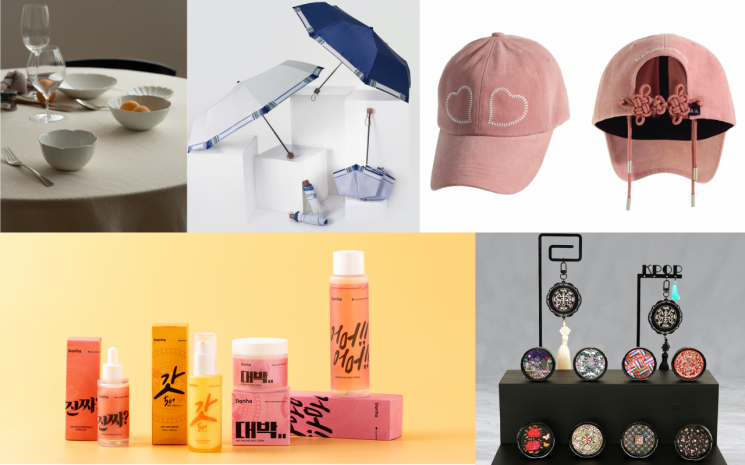 2025 Today Traditional Startup 'Leap Company' Representative Products (Top left to right: Mujagi, Mimi Design Co., Ltd., Old Things Never Die Co., Ltd. / Bottom left to right: Danha, Shellang Korea)
Building on these achievements, MCST and KCDF plan to make next year "the inaugural year of a major leap forward in traditional culture startups." In particular, starting in 2026, a new "leading company" category will be established to help top-tier companies in the traditional culture industry establish a firm foothold in the global market.
This will complete a seamless, full-cycle growth ladder: from pre-stage (discovery) to early-stage (nurturing), leap-stage (growth), and leading-stage (global expansion). Leading companies will receive direct support for overseas expansion, including participation in pop-ups and fairs and the establishment of overseas branches. In addition, companies that have achieved outstanding results through the Today Traditional Startup program will be connected to follow-up investments to help them secure self-sustainability and grow into globally competitive enterprises.
Jang Donggwang, President of KCDF, emphasized in his remarks at the 2025 Today Traditional Startup Awards Ceremony, "These achievements prove that the value of tradition does not remain in the past, but can pioneer new markets when combined with creative business. We will firmly establish an ecosystem for startups, distribution, and investment so that today's tradition can become tomorrow's innovative startup and, ultimately, a future industry representing the nation."
Meanwhile, recruitment for companies to participate in the 2026 Today Traditional Startup program is scheduled for February to March next year. The call for applications will be announced on the KCDF website, and any company in the traditional culture sector with creative ideas and growth potential is eligible to apply.
© The Asia Business Daily(www.asiae.co.kr). All rights reserved.
![Clutching a Stolen Dior Bag, Saying "I Hate Being Poor but Real"... The Grotesque Con of a "Human Knockoff" [Slate]](https://cwcontent.asiae.co.kr/asiaresize/183/2026021902243444107_1771435474.jpg)
















