Continuous Implementation of Policies for Corporate Attraction, Settlement, Marriage, Childcare, and Elderly Welfare
Daejeon-Chungnam Administrative Integration...Becoming the Nation's Third-Largest Metropolitan Government with a Population of 3.6 Million, Following Gyeonggi Province and Seoul

With only a few months remaining until the local elections, the Daejeon-Chungnam administrative integration has emerged as a major issue following President Lee Jaemyung's decisive action.
The integration discussions, which began with the declaration of "Daejeon-Chungnam Administrative Integration" by Jangwoo Lee, Mayor of Daejeon, and Taehum Kim, Governor of Chungnam Province, are rapidly gaining momentum. Should the integration be realized, it is expected to bring about a seismic shift across the Chungcheong region, affecting the structure of local autonomy, fiscal allocation, administrative authority, and regional identity.
The two governors have consistently argued for integration, citing the negative effects of the over-concentration in the Seoul metropolitan area, the risk of local extinction, and the need for balanced national development.
Mayor Lee has consistently expressed his conviction that the Daejeon-Chungnam administrative integration must be achieved, not for political gain or loss, but as a matter of national interest and for the revival of the Chungcheong region.
If the "Daejeon-Chungnam Integration Bill," scheduled for February next year, passes the National Assembly, the historic "Daejeon-Chungnam Special Mayor" position, encompassing both Daejeon and Chungnam, will be established in the June 3 local elections.
If the integration is realized, the population will reach approximately 3.6 million, making it the third-largest metropolitan government in the country after Gyeonggi Province and Seoul. This is expected to create synergy by combining Daejeon's advanced science and technology infrastructure with Chungnam's solid manufacturing base.
Since taking office as mayor on July 1, 2022, Mayor Lee has tirelessly promoted the vision of "Daejeon, Korea's Science Capital and a World-Class Economic City."
In particular, Daejeon has transformed from a "boring city" to an "exciting city," and now, beyond being a science city, it is clearly emerging as the most dynamic and rapidly growing city in Korea.
The number of listed companies has reached 67, with a market capitalization approaching 90 trillion won. Although the population had been declining since peaking at 1.54 million in 2014, this year, for the first time in 12 years, it has begun to increase again.
This is evidenced by Daejeon's economic growth rate, which has climbed to 3.6%-the second highest in the country-and the fact that about 60% of new residents are young people in their 30s or younger, indicating a transformation in the city's economic structure.
In addition, Daejeon now ranks first nationwide in both the number of marriages per 1,000 people (5.6) and the marriage growth rate (55.6%), reinforcing its reputation as a desirable and livable city.
With the birth of the Daejeon-Chungnam Special City just around the corner next year, we spoke with Jangwoo Lee, the Mayor of Daejeon from Cheongyang, Chungnam, who is attracting significant attention as the prospective integrated mayor, about his achievements in city administration and his plans for the coming year.
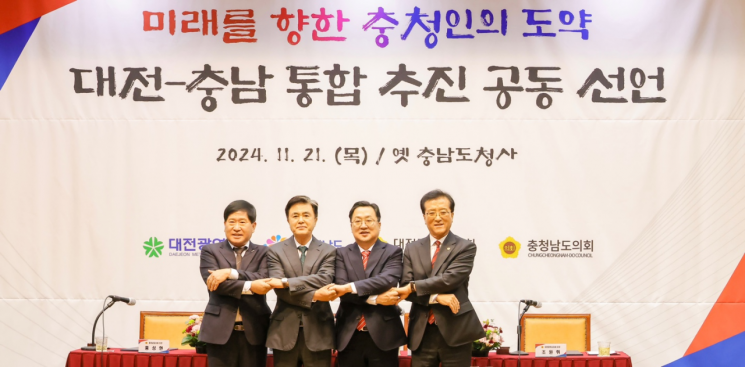 From the left, Seonghyun Hong, Chairman of Chungnam Provincial Council; Taehum Kim, Governor of Chungnam Province; Jangwoo Lee, Mayor of Daejeon; Wonhui Jo, Chairman of Daejeon City Council
Daejeon-Chungnam Administrative Integration: Addressing the Harms of the Seoul-Centric System and Local Population Decline...Reorganizing into the 'Three Major Metropolitan Axes'
Regarding the Daejeon-Chungnam administrative integration, Mayor Lee stated, "The harms of the Seoul-centric system, local population decline, and industrial hollowing-out are severe. To overturn this, it is essential to create a competitive metropolitan area on a broad scale. That is the core goal of integration."
He continued, "If Daejeon and Chungnam are combined, the population alone will reach 3.6 million, and the GRDP will approach nearly 200 trillion won. The Chungcheong region will become a major axis of Korea's growth, expanding the economic sphere of the capital region to a 150-kilometer radius. This will create an innovative ecosystem that unifies industrial, research, and manufacturing bases."
He added, "Looking at the details, Daejeon will serve as the research and administrative hub; Cheonan and Asan will be the manufacturing and industrial centers; and Seosan, Taean, and Dangjin will focus on energy, ports, and tourism. By reorganizing these into the 'three major metropolitan axes,' the functions of industry, tourism, and research can generate synergistic effects."
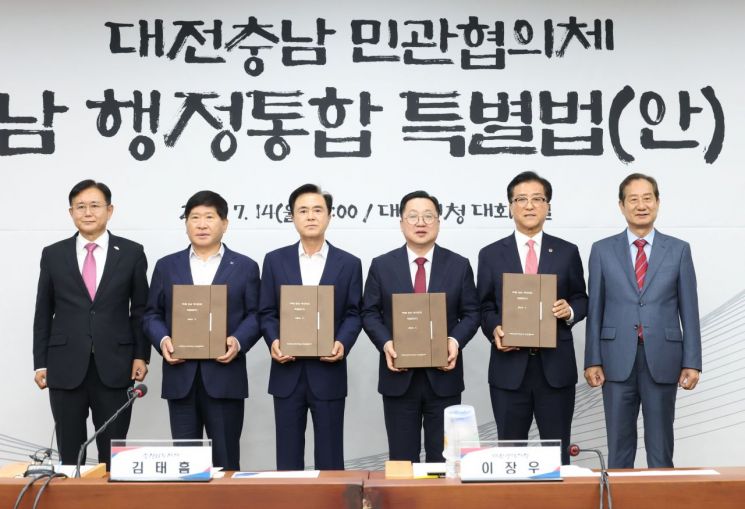 Scene of the finalization of the Daejeon-Chungnam Administrative Integration Special Act by the Daejeon-Chungnam Public-Private Council
Integration Effects: Elevating the Chungcheong Region to Compete on the Global Stage
Mayor Lee also discussed the efficiency gains expected from the integration.
He said, "For example, Daejeon currently has the lowest water rates in the country, and if shared with Chungnam, it will result in lower rates for both. Chungnam's electricity self-sufficiency rate is nearly 200%, so integrating with Daejeon would immediately resolve Daejeon's electricity shortage. Electricity is absolutely essential for the expansion of AI and advanced industries."
"The same applies to transportation. Administrative boundaries have made it difficult to connect urban railways and metropolitan roads. With integration, we can design a super-regional urban railway network connecting Okcheon, Geumsan, and Gongju, as well as high-speed rail from Daejeon to Taean and a circular expressway for the Chungcheong region," he predicted.
He also noted, "National research institutions like KAIST will expand their functions across the entire Chungcheong region, and universities and university hospitals in the Daejeon area will have a stronger foundation for development at the metropolitan level. If the integration succeeds, future generations will enjoy far greater opportunities in a much larger city. Ultimately, the goal is not to have regions competing against each other, but to have the Chungcheong region-and Korea as a whole-compete with the world by joining forces."
Since taking office, Mayor Lee has championed the vision of a "world-class economic city," stating, "I have always emphasized that Daejeon is the only city that can surpass the capital region. Now, beyond being a science city, Daejeon has clearly transformed into the most dynamic and rapidly growing city in Korea."
He added, "With 67 listed companies, Daejeon ranks third among metropolitan cities, and its market capitalization has soared past 80 trillion won, nearing 90 trillion won. The city's industrial competitiveness has risen to the top level nationwide, reflecting a fundamental transformation of its economic structure."
Mayor Lee explained, "Nine bio companies have achieved technology exports worth 13.2876 trillion won, and foreign direct investment reached 591 million dollars, ranking second among non-capital regions. German company Merck will also complete a new bio-processing production center this year."
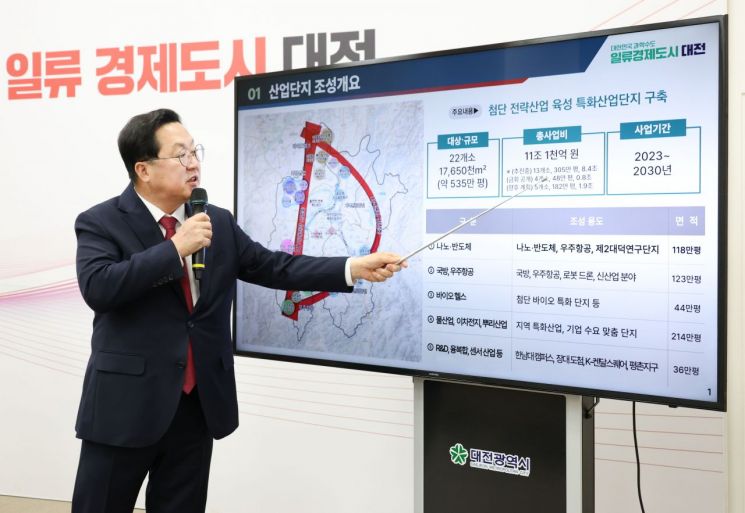
Daejeon Attracts Young People: Achieving Corporate Attraction, Settlement, Marriage, Childcare, and Elderly Welfare
Mayor Lee highlighted a notable achievement this year: "For the first time in 12 years, Daejeon's population has started to increase. Among new residents this year, those in their 20s and 30s accounted for 60.2%, the largest proportion."
He continued, "The main reasons for the influx of the 20s and 30s generation were employment, marriage, education, and housing, in that order. This indicates that Daejeon's policies for attracting companies, supporting settlement, marriage, childcare, and elderly welfare have been implemented in a continuous and effective manner."
He added, "Daejeon's average age is 44.3 years, making it the youngest city in the country. We are implementing comprehensive policies that link economic growth and welfare, including the creation of industrial complexes, company listings, large-scale corporate investments, job creation, and housing supply. These efforts are yielding positive results, such as population growth."
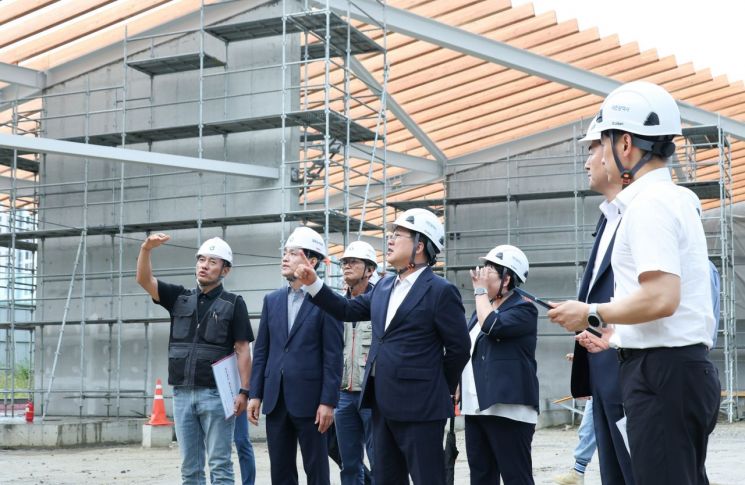 Lee Jangwoo, Mayor of Daejeon, is inspecting the construction site of the Daejeon Yuseong Complex Terminal.
Mayor Lee's Determination: Resolving Long-Standing Projects
Mayor Lee's determination has unlocked solutions to long-standing projects.
The Daejeon Urban Railway Line 2 tram project began construction after 28 years and will begin operation in 2028. The Daejeon Hanwha Life Ballpark, reborn after 61 years, was completed quickly, enabling the opening game of this season and providing the foundation for the Hanwha Eagles' runner-up finish in professional baseball.
Additionally, the Yuseong Complex Terminal broke ground after 15 years and is set for completion by the end of this year.
The Sajunggyo-Hanbatdaegyo road project became feasible after passing the preliminary feasibility study in 18 years, and the Daejeon Marshalling Yard, a 50-year-long wish, was selected as a national leading project for integrated urban railway development, accelerating its progress.
The selection of a developer for the Daejeon Station Area Complex Development, a project pending for over 20 years, and the rapid progress of the Gapcheon Ecological Lake Park, which was completed in just 11 years, have turned these areas into popular new attractions for citizens.
Other achievements include the nation's first hydrogen tram, a pilot project for a three-car articulated new transit system, selection as the first non-capital region for metropolitan express railway (CTX), the nation's first urban convergence special zone, and the confirmation of a future-oriented transfer center at Daejeon Station, all of which outline Daejeon's blueprint for the future.
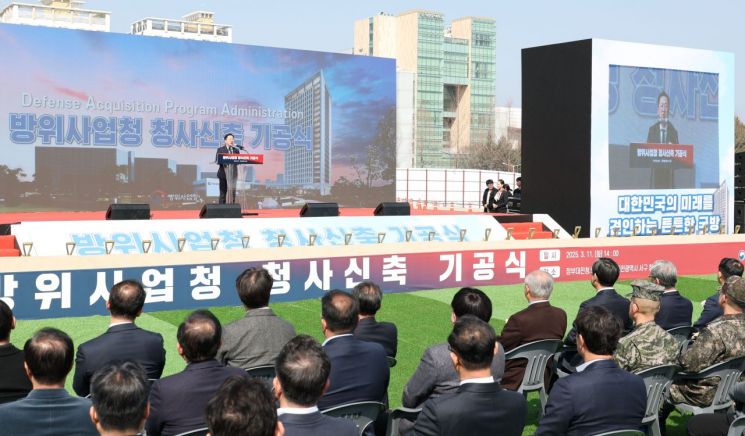 Lee Jangwoo, Mayor of Daejeon, is delivering a congratulatory speech at the groundbreaking ceremony for the new Defense Acquisition Program Administration building.
Restructuring Daejeon's Industrial Landscape: Six Strategic Industries as Future Growth Engines
Mayor Lee has focused on completely transforming Daejeon's industrial structure.
He stated, "We have proposed six strategic industries as future growth engines: aerospace, bio, semiconductors, defense, quantum, and robot drones. By concentrating on these industries, Daejeon's six strategic industry companies have grown to 925, employing 35,000 people, with annual sales reaching 35 trillion won."
He continued, "In aerospace, Daejeon has been designated as a space industry cluster and a regulatory free zone for space technology research and utilization. The city has also been selected for the Innovation Research Center (space services and manufacturing), and is playing a central role globally by hosting international space conferences and operating the Korea Pavilion at the International Astronautical Congress."
He added, "In the bio sector, Daejeon has been designated as a bio-specialized complex, selected for a global leading research center, and chosen for a bio-health specialized vocational high school. The Korean Society for Molecular and Cellular Biology (KSMCB) annual conference is also held here, making Daejeon the nation's top bio research and industry hub. Of the 67 listed companies, 28 are bio firms, including leading companies like Alteogen and Ligachem Bio. I expect Daejeon to dominate Korea's bio industry within five to ten years."
Furthermore, "In semiconductors, we have enacted a semiconductor industry promotion ordinance, launched the Defense Semiconductor Business Group, and been selected for the domestic AI semiconductor-based micro data center construction project. Advanced equipment has been established at KAIST's Graduate School of Semiconductor Engineering, a cleanroom for business support was completed at Hanbat University, and a joint semiconductor research institute will be built at Chungnam National University by 2027. With the establishment of a public defense semiconductor fab by 2030 and a new advanced semiconductor fab at the National Nano Fab Center by 2033, Daejeon will become the national hub for semiconductor R&D."
He also stated, "In defense, the number of defense companies in Daejeon has increased by 73% to 230, and sales have grown by 72%. The Defense Acquisition Program Administration has begun construction at the Government Daejeon Complex, and 26 local defense companies have been selected for the Defense Industry Innovation 100. The city is also promoting a defense innovation cluster specialized in drones, creating an industrial ecosystem that integrates defense, aerospace, and space."
Additionally, "In the quantum sector, Daejeon has established the nation's largest open quantum fab, the first commercial quantum computer, and a quantum graduate school led by KAIST and the Korea Research Institute of Standards and Science. Quantum-related startups such as Qunova, OAQ, and OQT are growing rapidly, and the demonstration ecosystem is expanding both domestically and internationally."
Finally, "In the robot drone sector, Daejeon boasts top-level research infrastructure and talent, including government-funded research institutes and KAIST. The city is dedicated to building an ecosystem for the growth of the robotics industry, with the establishment of the Robot Drone Support Center (worth 34.6 billion won), a joint 3D printing manufacturing center for defense and space components, selection as a demonstration city for drones by the Ministry of Land, Infrastructure and Transport, selection for the special drone liberalization zone for three consecutive years, and selection for the Deep Tech Scale-Up Valley project by the Ministry of Science and ICT. Daejeon is becoming a key hub for the robot drone sector."

'Daejeon Zero Hour Festival' and the Beloved 'Kkumssi Family'...Structurally Enhancing Daejeon's Urban Appeal
Mayor Lee has enhanced Daejeon's urban appeal through the "Daejeon Zero Hour Festival" and the Kkumssi Family.
He said, "'The Daejeon Zero Hour Festival' has attracted over 2 million visitors to Daejeon for two consecutive years. It is recognized nationwide as a 'three-zero' festival-free of litter, price gouging, and safety accidents. By leveraging Kkumdori, the city has promoted goods and space marketing such as ramen, Makgeolli, walnut cookies, taxi wraps, and pop-up stores, allowing citizens and tourists to naturally experience the Daejeon brand throughout the city. This has fundamentally changed perceptions of Daejeon."
He continued, "Whereas Daejeon was once considered a boring city, it is now recognized as the most dynamic and entertaining city in Korea. The city's brand reputation and resident satisfaction are both at the top nationwide. Daejeon has been selected as the best value travel destination in Asia, ranks first nationwide in travel destination share and festival participation rate, and has 10.5 million visitors to major tourist attractions, along with a net inflow of young people. These are not temporary phenomena but evidence of a structural rise in Daejeon's urban appeal."
He added, "With Daejeon's unique 'bread pilgrimage' featuring Seongsimdang and other famous local bakeries, the opening of Hanwha Life Ballpark, sports pilgrimage sites, and the hosting of international e-sports tournaments, Daejeon's appeal will continue to expand on multiple levels. Our goal is to further enhance this appeal and develop Daejeon's city brand to a level that resonates nationwide and globally."
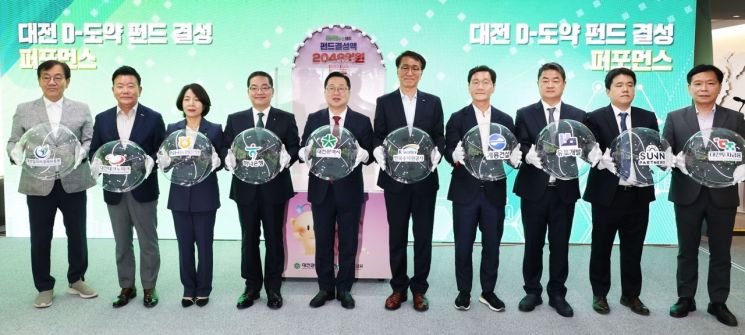
Revitalizing the Old Downtown: Preparing a Future Transportation System Linked to Tram, Metropolitan Railway, and CTX
Regarding the direction for the remainder of his term, Mayor Lee stated, "I will focus all efforts on ensuring that Daejeon's transformation is truly felt in the daily lives of citizens. We will complete the six strategic industries as a comprehensive industrial ecosystem and prepare a future transportation system by integrating the tram with metropolitan railways and CTX."
He continued, "We will accelerate the revitalization of the old downtown by redeveloping station areas, urban convergence special zones, and relocating public institutions to innovation cities, thereby reestablishing Daejeon's central axis. The Daejeon Zero Hour Festival, Kkumssi Family, and K-Content-based city marketing have completely changed Daejeon's image. Now, we will move to the next stage of developing these into a sustainable city brand and industry."
Mayor Lee added, "I will accelerate efforts on daily life policies such as safety, childcare, youth support, and small business measures during the remainder of my term. I am determined to lay the foundation for Daejeon's leap forward, knowing that how I conclude my term will determine the city's next 100 years. I will do my utmost to ensure that citizens can truly feel that Daejeon has changed."
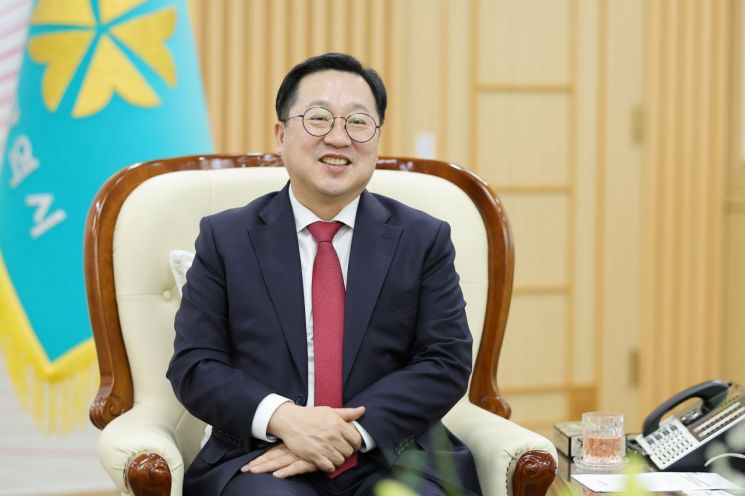
Meanwhile, Jangwoo Lee, Mayor of Daejeon, was born in 1965 in Cheongyang, Chungnam. He graduated from Namyang Elementary School and Dongyeong Middle School in Cheongyang, Daejeon High School, and earned bachelor's, master's, and doctoral degrees in public administration from Daejeon University. He completed his military service as a sergeant in the Army's 2nd Logistics Support Command. He served as Mayor of Dong-gu, Daejeon, in 2006 and as a member of the 19th and 20th National Assembly. During his tenure as a lawmaker, he held various positions, including party spokesperson, deputy floor leader, floor spokesperson, supreme council member, secretary of the Education, Culture, Sports and Tourism Committee, and chairman of the Daejeon City Party Committee.
© The Asia Business Daily(www.asiae.co.kr). All rights reserved.
![Clutching a Stolen Dior Bag, Saying "I Hate Being Poor but Real"... The Grotesque Con of a "Human Knockoff" [Slate]](https://cwcontent.asiae.co.kr/asiaresize/183/2026021902243444107_1771435474.jpg)


















