Commission Requests Additional Data... To Be Resubmitted on December 30
Multiple Construction Halts Due to Nuclear Phase-Out Deliberations and Other Factors
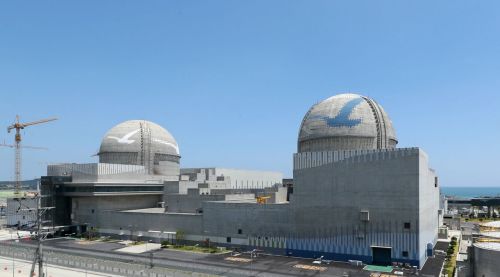
The agenda for the operation license of Saeul Nuclear Power Plant Unit 3 (formerly Shin-Kori Unit 5), located in Ulju County, Ulsan, has been brought before the Nuclear Safety and Security Commission for review after nine years since construction began, but the review has been postponed.
On December 19, the Nuclear Safety and Security Commission held its 227th meeting and began reviewing the application submitted by Korea Hydro & Nuclear Power for the operation license of Saeul Unit 3. The Commission received reports on the review and inspection results from the Korea Institute of Nuclear Safety (KINS).
However, the Commission was unable to reach a conclusion on this day and decided to resubmit the agenda after supplementing the requested materials, including detailed accident scenarios and evaluation results in the accident management plan. The Commission members also requested additional data on the interpretation of the Passive Autocatalytic Recombiner (PAR) and international trends regarding aircraft impact-resistant design.
The next meeting of the Commission is scheduled for December 30.
Construction of Saeul Unit 3, a Korean-type nuclear power plant (APR1400) with a generating capacity of 1,400 MW, began in June 2016. Korea Hydro & Nuclear Power applied for the operation license for both Saeul Units 3 and 4, which are twin reactors, on August 5, 2020. The units were originally named Shin-Kori Units 5 and 6 but were renamed Saeul Units 3 and 4 in 2022 to unify them with the plant headquarters' naming convention.
KINS began the operation license review in March 2022, and the review process has taken three years and nine months. KINS conducted pre-operation inspections and reviews up to November this year. The Nuclear Safety Expert Committee conducted a total of ten preliminary reviews through December 2024.
The construction of Saeul Unit 3 was initiated as part of the 4th Basic Plan for Long-term Electricity Supply and Demand, finalized in December 2008. Doosan Enerbility supplied the reactor and turbine generator, while Samsung C&T, Doosan Enerbility, and Hanwha Ocean were responsible for the main equipment construction.
Saeul Unit 3 faced numerous challenges, including multiple construction halts due to the nuclear phase-out policy of the Moon Jae-in administration and the Gyeongju earthquake.
Former President Moon Jae-in announced at the permanent shutdown ceremony for Kori Unit 1 in June 2017 that the government would completely review its nuclear policy and seek social consensus on Saeul Units 3 and 4. A public deliberation committee and a citizens' participation group were formed, and after three months of discussions, the decision was made in October 2017 to resume construction of Saeul Units 3 and 4.
In March 2021, the construction period was extended as seismic design was reinforced following the Gyeongju earthquake. In 2022, the project duration was further extended due to design changes in wastewater treatment facilities following amendments to environmental laws.
As a result, the total project period for Saeul Units 3 and 4, which was 127 months since September 2014, has been extended to 148 months, with completion now expected by November 2026.
Korea Hydro & Nuclear Power planned to begin commercial operation around the middle of next year after receiving the operation license, loading fuel, and conducting a six to eight month commissioning period.
Meanwhile, Saeul Unit 3 is the first nuclear power plant in Korea to be redesigned to counter aircraft terrorism. Its containment wall is 137 cm thick, 15 cm thicker than previous Korean-type reactors. The auxiliary building surrounding the reactor is 180 cm thick, an increase of 30 cm.
The spent nuclear fuel storage capacity has also been expanded to accommodate 60 years’ worth of fuel, three times that of previous plants, allowing storage for the entire design lifespan of the reactor.
Saeul Unit 3 has drawn attention as its timeline coincides with the scheduled shutdown of Hanbit Unit 1 on December 22. Korea Hydro & Nuclear Power has applied for continued operation of Hanbit Unit 1, but with reviews for continued operation of nine reactors currently pending, it is difficult to reach a conclusion in the near future.
© The Asia Business Daily(www.asiae.co.kr). All rights reserved.
![Clutching a Stolen Dior Bag, Saying "I Hate Being Poor but Real"... The Grotesque Con of a "Human Knockoff" [Slate]](https://cwcontent.asiae.co.kr/asiaresize/183/2026021902243444107_1771435474.jpg)















