Seogwipo City Cracks Down on Direct Sales of Non-Standard Mandarins, Plans to Impose Fines
"Ugly Mandarins" and Other Parcel Transactions Also Violate Local Ordinance
Seogwipo City has advised both farmers and consumers to exercise caution after cases were uncovered of direct sales of non-standard mandarins through social media platforms, often marketed with phrases such as "ugly mandarins."
On December 18, Seogwipo City announced that it had detected farms directly selling non-standard mandarins via social media and plans to impose administrative penalties, including fines. The city received complaints about online direct sales of non-standard mandarins under labels like "ugly mandarins" and "home-use mandarins," and upon inspecting a delivery site the previous day, identified violations of local ordinances.
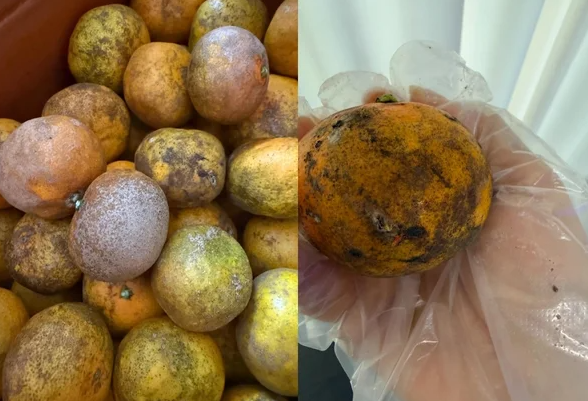 An influencer sold 10kg of Pachigul for around 30,000 won through social media, sparking a quality controversy. Screenshot from social media
Jeju mandarins are regulated under the "Ordinance on the Production and Distribution of Mandarins," which manages quality standards. The shipment of non-standard mandarins that do not meet these standards is strictly restricted because it negatively affects both the overall price and the reputation of Jeju mandarins.
According to the ordinance, not only size and sugar content but also factors such as rot, spoilage, sunburn, pest damage, or physical injury can render mandarins non-marketable. Even if these non-standard mandarins are sold directly via courier, social media, or blogs, such transactions constitute a violation of the ordinance and are subject to fines.
Yoo Jiho, Director of the Agriculture, Fisheries, and Livestock Economy Bureau of Seogwipo City, stated, "There is a clear distinction between mandarins that are simply less visually appealing and those whose distribution is outright illegal," emphasizing, "We will root out dishonest practices that deceive consumers and damage the reputation of Jeju mandarins, ensuring that only quality mandarins that consumers can trust are distributed."
Previously, an influencer sparked a quality controversy after selling so-called Pachigul (mandarins with diminished market value) on social media, with issues such as mold being reported. The influencer, identified as A, promoted the group purchase of mandarins on a social media thread, describing them as "home-use mixed varieties with thin peels and full flesh," and claimed, "Each fruit is hand-selected," "Sugar content above 14 Brix. Ugly but delicious."
The influencer sold 10 kg of Pachigul for 33,000 won, including delivery, but the actual condition of the mandarins received by consumers was severe. The shipments contained mandarins that were moldy, rotten, shriveled, or infested with insects. As a result, many buyers demanded refunds, and administrative authorities reportedly recommended that A issue refunds independently.
© The Asia Business Daily(www.asiae.co.kr). All rights reserved.
![Clutching a Stolen Dior Bag, Saying "I Hate Being Poor but Real"... The Grotesque Con of a "Human Knockoff" [Slate]](https://cwcontent.asiae.co.kr/asiaresize/183/2026021902243444107_1771435474.jpg)















