Personal Information Protection Act Amendment Prioritizes Speed
Includes Higher Fines, Excludes Class Action System
To Be Reintroduced After Receiving Feedback from the National Court Administration
The Democratic Party of Korea is set to push again for the introduction of a class action system, which was omitted from the recent amendment to the Personal Information Protection Act. The party plans to expedite the passage of the revised bill that increases fines for personal data breaches, prompted by the recent Coupang incident.
On December 18, Park Beomgye, a Democratic Party lawmaker who proposed an amendment to the Personal Information Protection Act including the class action system, told The Asia Business Daily, "We intend to reintroduce the class action provision after receiving feedback from the National Court Administration."
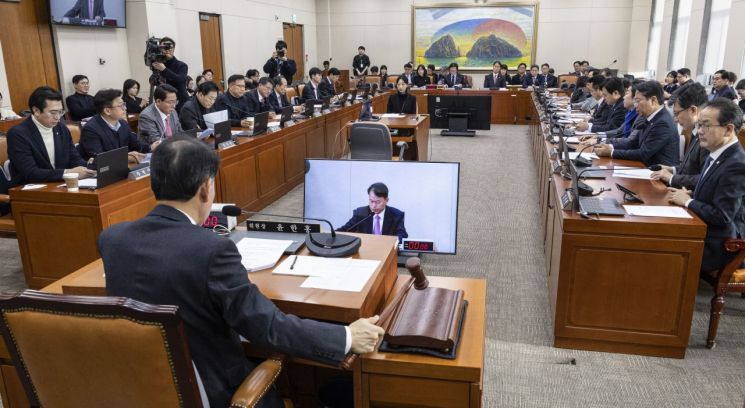
The previous day, the National Assembly's Political Affairs Committee held a plenary meeting and passed a revised Personal Information Protection Act that consolidated and coordinated proposals from lawmakers Park Beomgye and Kim Sanghoon (People Power Party), among others. The main provision is to raise the maximum fine for serious personal information violations by companies from the current 3% to up to 10%. The class action system was excluded. Park's proposal had included expanding the class action system, currently limited to the securities sector, to the personal information sector, allowing victims to receive compensation without filing individual lawsuits.
Initially, the Political Affairs Committee's subcommittee had discussed including the class action system as a supplementary provision. This would have allowed class actions for personal information disputes filed up to three years before the implementation of the amendment. In this scenario, companies such as Coupang and SK Telecom, which would not be subject to retroactive application of the increased fines, could be included.
However, in the final discussions, the class action system was excluded, considering that it would be difficult to pass within the year. The opposition party's concerns about excessive regulation were also reflected. A member of the Political Affairs Committee stated, "There are already other bills related to the class action system pending in the Legislation and Judiciary Committee, and including it in this amendment would delay the process," adding, "The People Power Party also felt that the amendment itself was being pushed too quickly and suggested further deliberation."
It is highly likely that the class action system will be pursued again through a subsequent amendment of the Personal Information Protection Act, as it is considered the most effective way to provide relief for victims of personal information breaches. A lawmaker from the Political Affairs Committee said, "If victims are compensated through the class action system, it could be considered a mitigating factor when imposing fines," adding, "We can address any shortcomings through a comprehensive review." However, it appears unlikely that the bill will be reintroduced within the year, as the opposition party needs to be persuaded and the chairmanship of the Political Affairs Committee is also held by the opposition.
© The Asia Business Daily(www.asiae.co.kr). All rights reserved.
![Clutching a Stolen Dior Bag, Saying "I Hate Being Poor but Real"... The Grotesque Con of a "Human Knockoff" [Slate]](https://cwcontent.asiae.co.kr/asiaresize/183/2026021902243444107_1771435474.jpg)















