Analysis by U.S. Think Tanks
Declaration of 'Allies First' Principle
Divergent Security Perspectives from the Trump Administration
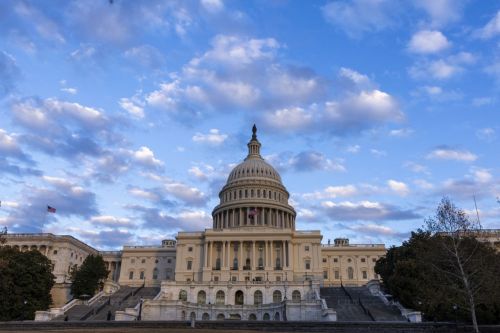
The US Congress passed next year's National Defense Authorization Act (NDAA) on the 17th (local time), despite opposition from the Donald Trump administration, including provisions to limit the scale of US Forces Korea (USFK) reductions. This move is interpreted as Congress's intention to publicly declare that, unlike the administration, it prioritizes 'allied nations.' US think tanks have analyzed that this is one of the few policies where the Trump administration, which has pushed through most of its core policies, has been checked by Congress.
"A Measure Reflecting the Senate's Strong Concerns"
Once the NDAA, which now only awaits President Trump's signature, officially takes effect, the US government will not be able to use the defense budget approved by Congress to reduce the number of USFK troops below the current level of approximately 28,500. In addition, the government will not be able to use the budget to complete the transition of wartime operational control (OPCON) in a manner different from the plan agreed upon by South Korea and the United States.
There is an exception clause that allows the restriction to be lifted after 60 days if it is reported to the relevant standing committee that such limitations serve US national security interests or that sufficient consultations have been held with allied nations that have made military contributions to South Korea, Japan, and the United Nations Command. However, these extensive reporting requirements are expected to function as a safeguard.
The reduction of USFK troops is closely linked to the Trump administration's military and security policy of 'strategic flexibility.' Strategic flexibility is the logic that, in the event of an emergency anywhere in the world, US forces stationed globally, including USFK, should not be tied to a specific region but should be able to transform into a mobile strike force. In fact, prior to the Senate's passage of the NDAA, the US government issued a statement expressing 'opposition' to the relevant provision, arguing that it restricts the president's authority as commander-in-chief.
Adam Kozlowski, Senior Fellow at the Atlantic Council, explained, "The passage of the bill in the Senate reflects the Senate's strong or legitimate concerns that the Trump administration may push for an excessive reduction of USFK troops," adding, "The intent is to reaffirm Washington's commitment to the US-South Korea alliance through the bill."
However, the Atlantic Council added that this provision is criticized for hindering the ability of USFK and the US Indo-Pacific Command to flexibly adjust their force posture in response to a rapidly changing security environment. It is pointed out that the provision blocks a 'requirements-based' approach to adjusting troop levels and deciding on modernization as circumstances dictate. Senior Fellow Kozlowski also noted, "A 'reassurance signal' based on troop numbers could sacrifice regional readiness and operational efficiency."
For similar reasons, US forces stationed in Europe cannot be reduced below 76,000 troops. However, as with South Korea, an exception is allowed if the Department of Defense consults in advance with NATO allies and demonstrates to Congress that the reduction does not threaten US national security.
"US Congress and Administration Part Ways on Security Perceptions"
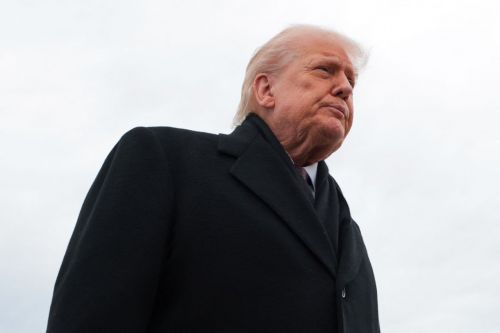 Donald Trump, President of the United States, is talking with reporters at Andrews Air Force Base on the 17th (local time). Photo by AFP Yonhap News
There is also analysis that this NDAA starkly highlights the differences in national security perspectives between the Trump administration and the US Congress.
Previously, in the National Security Strategy (NSS) announced on December 5, the Trump administration declared, "The era when the United States upheld the world order like Atlas is over," stating that the US would pursue a 'balance of power' rather than global hegemony against China and Russia. The administration harshly criticized European allies, even using the term 'civilizational erasure,' but showed a relatively conciliatory attitude toward Russia by refraining from mentioning responsibility for the war in Ukraine, which drew backlash from European Union (EU) countries.
The Institute for Policy Studies commented on this day, "Congress is clearly parting ways with the administration's security perception," and summarized, "While the strategic direction of Congress-prioritizing alliances, containing Russia, and supporting Ukraine-is clear, its actual enforcement power is limited."
The institute also interpreted the NDAA's provision to expand defense industry and industrial resilience cooperation with Indo-Pacific allies such as Japan, South Korea, and Australia in a similar context. Along with the restriction on reducing US forces in Europe, the explicit prohibition against relinquishing the post of Supreme Allied Commander Europe (SACEUR) was positively evaluated as serving as a kind of 'guardrail.'
Unlike the administration, the explicit designation of China and Russia as 'hostile nations' also stood out. The NDAA prohibits recognition of Russian sovereignty over Ukrainian territory and mandates annual reporting on Russian military activities. It also includes provisions to restrict US overseas investment that contributes to the military modernization of countries such as China, Russia, Iran, and North Korea, in order to cut off links with these nations.
© The Asia Business Daily(www.asiae.co.kr). All rights reserved.
![Clutching a Stolen Dior Bag, Saying "I Hate Being Poor but Real"... The Grotesque Con of a "Human Knockoff" [Slate]](https://cwcontent.asiae.co.kr/asiaresize/183/2026021902243444107_1771435474.jpg)
















