Passed Both Houses of Congress
Restrictions Also Imposed on U.S. Troop Reductions in Europe
On December 17 (local time), the United States Congress passed next year's National Defense Authorization Act (NDAA), which includes provisions restricting unilateral reductions of U.S. Forces Korea (USFK) personnel by the executive branch.
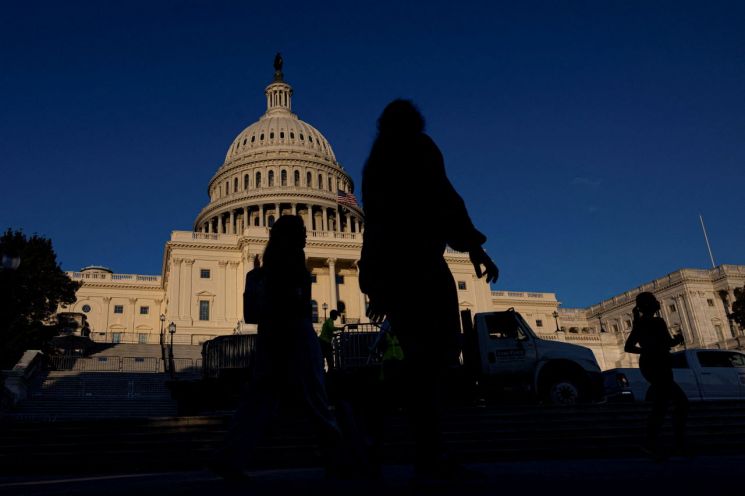
On this day, the U.S. Senate held a vote on the NDAA in a plenary session, approving it with 77 votes in favor and 20 against. Having already passed the House of Representatives on December 10, the bill will officially take effect once it is signed by President Donald Trump.
This year's NDAA includes a provision that prohibits reducing the number of U.S. troops stationed in South Korea below the current level of approximately 28,500, using defense funds authorized by Congress. It also stipulates that funds may not be used to complete the transfer of wartime operational control (OPCON) in a manner different from the transition plan agreed upon by South Korea and the United States.
However, an exception clause was also included, allowing for the lifting of these restrictions after 60 days if it is reported to the relevant standing committee that the action aligns with U.S. national security interests or that sufficient consultations have been held with allied nations that have made military contributions to South Korea, Japan, and the United Nations Command.
The NDAA is an annual bill through which Congress approves the Department of Defense's policies and budget. The provision restricting the use of defense funds for reducing USFK personnel was excluded during the administration of former President Joe Biden, but has been reinstated five years later with the start of Trump’s second term.
The NDAA passed during the Biden administration included language to maintain approximately 28,500 USFK personnel based on the U.S.-ROK Mutual Defense Treaty, but did not contain a provision directly linking budget use to restrictions on troop reductions.
In addition, the bill includes restrictions on the executive branch's ability to unilaterally reduce the number of U.S. troops stationed not only in South Korea but also in Europe.
According to the New York Times, the bill principally prohibits Secretary of Defense Pete Hegseth from reducing the number of U.S. troops stationed or deployed in Europe below 76,000 for more than 45 days. However, exceptions may be made if the Department of Defense consults in advance with North Atlantic Treaty Organization (NATO) allies and demonstrates to Congress that the reduction does not pose a threat to U.S. national security.
Furthermore, the NDAA authorizes an additional $800 million in military aid to Ukraine. It is also reported to include provisions for additional support, amounting to hundreds of millions of dollars, for allies or strategic partners such as Israel, Taiwan, and Iraq.
Meanwhile, the defense budget for the 2026 fiscal year included in this NDAA has been set at $901 billion, which is $8 billion higher than the government's original request.
© The Asia Business Daily(www.asiae.co.kr). All rights reserved.
![Clutching a Stolen Dior Bag, Saying "I Hate Being Poor but Real"... The Grotesque Con of a "Human Knockoff" [Slate]](https://cwcontent.asiae.co.kr/asiaresize/183/2026021902243444107_1771435474.jpg)















