Amendments to the Information and Communications Network Act,
Including Parental Consent and Algorithm Restrictions,
Remain Pending in the National Assembly
Debate Stalled over Age Criteria and Fundamental Rights
Australia Bans SNS Use for Und
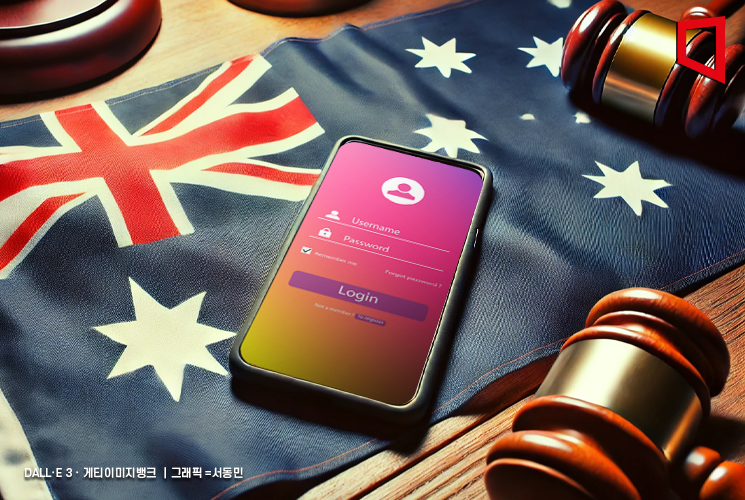
The remarks made by Kim Jongcheol, nominee for chairman of the Broadcasting, Media, and Communications Committee, during his confirmation hearing have reignited controversy over regulating social networking service (SNS) usage among adolescents. As Australia became the first country in the world to legally ban SNS use for those under 16, a consensus has emerged domestically on the need for related regulations to protect youth. However, there is also considerable opposition to a blanket restriction on usage itself, leading to calls for a more cautious approach. Although relevant bills have been introduced in the National Assembly, they have remained stalled for an extended period and have not gained momentum.
During the confirmation hearing held by the National Assembly’s Science, ICT, Broadcasting, and Communications Committee on December 16, Kim responded to references to the Australian government’s legal restrictions on SNS use for children and adolescents under 16, saying that it was “certainly an issue that should be examined.” However, as the debate over pros and cons intensified, he later issued a statement clarifying that his remarks were not based on a premise of prohibition, but rather on considering a range of alternatives for protecting adolescents.
The current policy direction of the Broadcasting, Media, and Communications Committee, the responsible ministry, is focused more on phased protection than outright prohibition. Practical alternatives being discussed include strengthening parental (legal guardian) consent and oversight, and expanding platforms’ responsibilities for youth protection-so-called “managed regulation.” However, it is believed that sufficient social consensus has not yet been reached. A committee official stated, “While we recognize the seriousness of adolescent SNS issues, whether a blanket restriction on usage itself is appropriate for the domestic context requires careful consideration.”
This cautious approach is also evident in the legislative situation at the National Assembly. Several amendments to the Information and Communications Network Act, introduced last year by lawmakers Kim Jangkyum (People Power Party), Cho Junghoon (People Power Party), and Yoon Kunyoung (Democratic Party), remain pending. These bills focus not on a total ban of SNS use by adolescents, but on restricting algorithm-based content recommendations and strengthening parental consent requirements. However, after initial discussions in the subcommittee of the Science, ICT, Broadcasting, and Communications Committee, there has been no further progress.
Typically, when a bill is introduced, the relevant government ministry submits a review opinion to the National Assembly. For bills related to protecting adolescent SNS use, the Broadcasting, Media, and Communications Committee already submitted a first review opinion last year, but as the standing committee has not proceeded to substantive discussions, these bills are being described as “ghost bills.” This is due to the complex interplay of technical and institutional issues such as methods of age verification, parental authentication procedures, platform terms of service revisions, and personal data protection concerns, making it difficult to establish a comprehensive roadmap. A committee official explained, “SNS can also have positive effects on academic or social activities, so a comprehensive approach is necessary.”
In contrast, Australia amended its “Online Safety Act” last year to fundamentally prohibit SNS account ownership for those under 16 and imposes heavy fines on platforms that fail to properly enforce the ban. The existence of a dedicated regulatory agency for online safety is cited as a key factor behind the law’s implementation. The National Assembly Research Service noted, “Even in Australia, there was criticism during the legislative process regarding the legitimacy of the law’s objectives, infringement of fundamental rights, and ambiguity in legal definitions,” adding, “If the necessity for such legislation is recognized domestically, these factors should be carefully considered.” The analysis also pointed out the need for multifaceted review of issues such as the arbitrariness of age criteria, personal data protection during age verification, and the potential infringement of fundamental rights in relation to the bills introduced domestically.
© The Asia Business Daily(www.asiae.co.kr). All rights reserved.
![Clutching a Stolen Dior Bag, Saying "I Hate Being Poor but Real"... The Grotesque Con of a "Human Knockoff" [Slate]](https://cwcontent.asiae.co.kr/asiaresize/183/2026021902243444107_1771435474.jpg)















