140 Billion KRW to Be Invested from Next Year to 2028
Artificial Wetlands to Be Created on 60,000 Square Meters Near Yongdu Bridge and Sandong Bridge
Aiming to Improve Water Quality and Expand Ecological Spaces
Gwangju City will invest 14 billion KRW from next year until 2028 to create artificial wetlands aimed at improving the water quality of the Yeongsan River and expanding ecological spaces. The plan is to enhance water purification functions while also increasing the number of waterfront ecological spaces available for citizens.
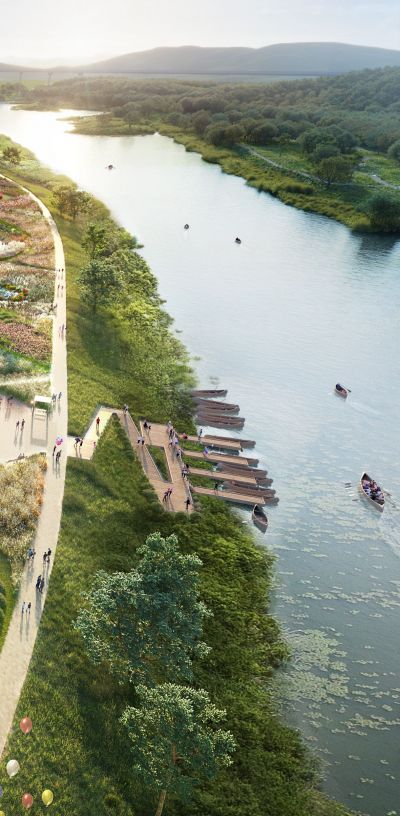 Gwangju City will invest 14 billion KRW from next year until 2028 to create artificial wetlands to improve the water quality of the Yeongsan River and expand ecological spaces. Photo by Gwangju City
On the 17th, Gwangju City announced that it has secured 500 million KRW in national funding for next year and will launch the artificial wetland project on a site of approximately 65,570 square meters near Yongdu Bridge and Sandong Bridge. By 2028, Gwangju City will invest a total of 14 billion KRW to gradually strengthen both water purification capabilities and nature-friendly ecological spaces.
Gwangju City has completed a feasibility study and, based on the secured national funding, will proceed with follow-up steps such as detailed design. The artificial wetlands are being promoted as a key project to reduce pollutants flowing into the Yeongsan River and to expand waterfront leisure, tourism, and cultural spaces.
Alongside this, the city is also pursuing the "Yeongsan River Water Circulation System Establishment Project" to improve the river’s water quality and create an urban space centered around the waterfront. For this project, a total of 140 billion KRW will be invested by 2030 to improve the water quality of an approximately 11-kilometer section from Deokheungbo in Seo-gu to Wolsanbo in Buk-gu, raising it from the current Grade 3-4 to Grade 2.
The core of the project is to secure 100,000 tons of purified water per day by utilizing some of the river water and treated sewage. The purified water will be supplied as maintenance water for the river during normal times to help restore the aquatic ecosystem and establish a water-friendly environment, and will serve as an alternative drinking water source during droughts.
Gwangju City is promoting this project as a strategic water management measure in response to abnormal climate conditions and decreasing rainfall. As the project is linked to the national agenda of "Strengthening National Climate Adaptation Capacity," the likelihood of securing additional national funding has increased.
From July last year to September this year, Gwangju City worked with specialized agencies to conduct on-site surveys of the Yeongsan River and analyze predicted changes in water quality, establishing the project’s feasibility and basic plan. In particular, the city is strengthening its linkage with the national agenda by participating in the Ministry of Environment’s "Water Circulation Promotion Zone" contest, and is refining its plans to meet the competition in March next year.
Lee Seungkyu, Director of the New Vitality Promotion Headquarters of Gwangju City, said, "Since the Yeongsan River is a national river, government support is essential for smooth project implementation. By linking with the national agenda, we will secure national funding and steadily promote the creation of artificial wetlands, transforming the Yeongsan River into a space where waterfront, tourism, and culture come together."
© The Asia Business Daily(www.asiae.co.kr). All rights reserved.
![Clutching a Stolen Dior Bag, Saying "I Hate Being Poor but Real"... The Grotesque Con of a "Human Knockoff" [Slate]](https://cwcontent.asiae.co.kr/asiaresize/183/2026021902243444107_1771435474.jpg)















