"Platform Powered by Gemini 3 Model"
"Easily and Conveniently Create Your Desired Apps"
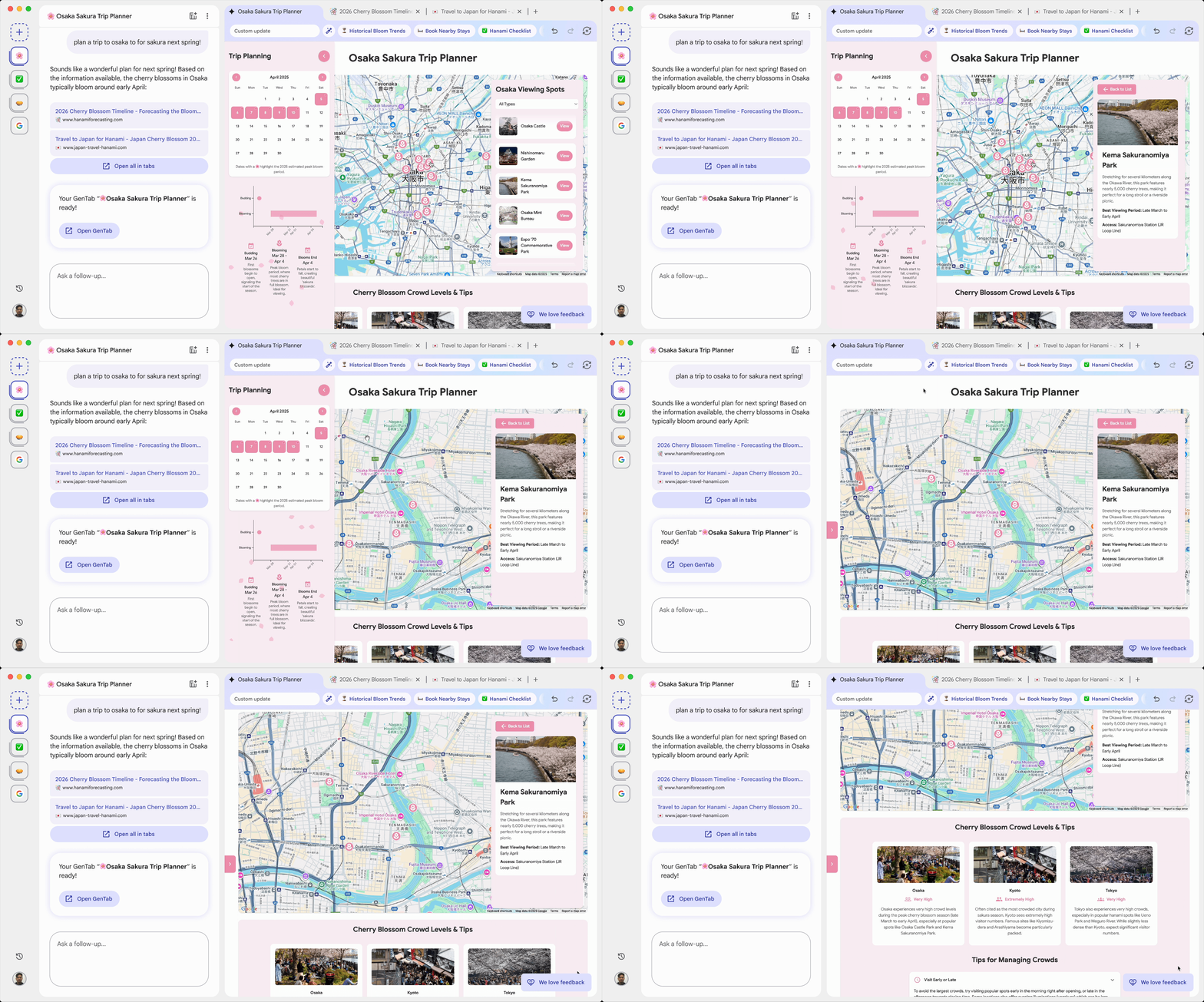
Google has introduced a new concept web browser called 'Disco,' which combines coding tools with artificial intelligence (AI) assistant features. Disco is distinguished by its built-in AI coding tools, allowing users to create their own web applications. This move signals Google's full-fledged entry into the global AI browser competition, joining companies like OpenAI and Perplexity.
On December 11 (local time), Google unveiled the Disco platform, which utilizes the Gemini 3 model. The Disco platform features 'GenTabs' technology, which automatically analyzes the web browsers opened during a user's conversation with the AI and creates personalized web apps.
For example, if a user asks Disco AI to "create a cherry blossom travel itinerary for Osaka, Japan," the AI will guide the user to websites containing information such as cherry blossom blooming periods and popular viewing spots. Users can then create an app that displays a map and calendar showing cherry blossom locations and travel dates, as well as the weather for those days.
Similarly, if a user says, "I want to study the solar system," Disco can generate a 3D interactive learning solution showing moving planets. If a user requests, "Create a one-week meal plan for managing cholesterol," the AI will search for helpful websites and provide a week’s meal plan along with recipes.
Disco is expected to enable the general public, even those without any coding education, to create their desired apps more easily and conveniently than with existing AI coding specialist apps like Cursor or Replit. However, as Disco is still in its early stages, users must register on a waitlist through Google Labs to access it, and currently, only U.S. residents aged 18 and over are eligible.
OpenAI and Perplexity Announce AI Browsers in Succession
OpenAI also released its AI browser 'Atlas,' which is equipped with ChatGPT, in October. By opening a ChatGPT window on the right side of a webpage, users can ask and answer questions about the page without the need for copying and pasting. ChatGPT also remembers the sites users have visited, so users can request, "Find all the job postings I viewed last week, summarize industry trends, and help me prepare for interviews." OpenAI stated that the content users browse is not used for model training, and parental controls can be set. Atlas is currently available for download for Mac operating system (OS) users.
Perplexity, which entered the web browser market early on, recently announced the release of the Android OS version of its AI browser 'Comet.' Comet is capable of conversing with users based on webpage content and can complete tasks on behalf of users directly on the page. For example, if a user requests, "Find a scarf in the 30,000 won range suitable for women in their 40s on Gmarket and add it to my shopping cart," the AI will automatically open the Gmarket homepage and add the relevant item to the cart. Previously, Comet was only available for PC OS, making it inaccessible on smartphones and other mobile environments, but the Android version has now been released.
In this way, AI developers are moving beyond generative AI services to enter the internet browser market. This is aimed at increasing user engagement and securing data on users' internet usage patterns. Lee Kyunghoon, Korea Representative of Global Brain, the largest venture capital (VC) firm in Japan, commented, "If Atlas and Comet demonstrate a future where AI acts like a human, Disco showcases a future where AI creates for humans," adding, "On the same stage of browsers, two slightly different directions of innovation are unfolding simultaneously."
© The Asia Business Daily(www.asiae.co.kr). All rights reserved.
![Clutching a Stolen Dior Bag, Saying "I Hate Being Poor but Real"... The Grotesque Con of a "Human Knockoff" [Slate]](https://cwcontent.asiae.co.kr/asiaresize/183/2026021902243444107_1771435474.jpg)















