Boiling and Discarding Water 10 Times Halves Microplastic Release
Glass and Stainless Steel Are Safer Than Plastic
A new study has drawn attention by revealing that the so-called "conditioning" process-boiling and discarding water several times when first using a new electric kettle-can significantly reduce microplastic exposure.
On December 14, the Seoul Institute of Health and Environment released the results of an experiment in which water was boiled up to 200 times in 11 different electric kettles made of plastic, stainless steel, and glass. The analysis utilized a Fourier-transform infrared spectrometer (FT-IR), which can detect microplastics larger than 20 micrometers (μm).
The study found that all types of electric kettles released the highest amount of microplastics during their first use after purchase. However, as the process of boiling and discarding water was repeated, the amount of microplastics released decreased rapidly. After 10 uses, the quantity dropped to about half of the initial level; after 30 uses, it fell to around 25%, and after more than 100 uses, it was reduced to less than 10%. In most products used for over 200 cycles, fewer than 10 microplastic particles per liter were detected.
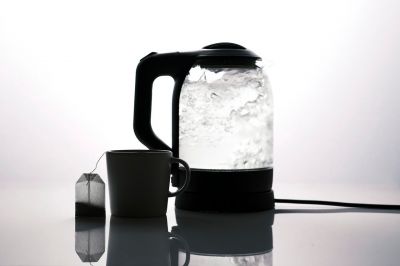
By material, plastic electric kettles had the highest average microplastic release at 120.7 particles per liter, followed by stainless steel at 103.7 particles and glass at 69.2 particles. In particular, polyethylene (PE) particles were predominantly detected in plastic products, with a high proportion of particles smaller than 50 μm, which are considered to pose greater health concerns.
The institute explained that, considering the typical amount of microplastics detected in drinking water ranges from 0.3 to 315 particles per liter, it is crucial to manage the initial usage stage carefully.
The institute recommended that when purchasing a new electric kettle, users should fill it to its maximum capacity and boil and discard the water at least 10 times before regular use. Additionally, it advised choosing products made of heat-resistant glass or stainless steel, and selecting products with minimal plastic in parts that come into direct contact with water, such as lids or filters.
Park Jusung, Director of the Seoul Institute of Health and Environment, emphasized, "Since electric kettles are household appliances used daily, simply understanding the properties of the materials and properly managing the initial usage stage can greatly reduce microplastic exposure."
© The Asia Business Daily(www.asiae.co.kr). All rights reserved.
![Clutching a Stolen Dior Bag, Saying "I Hate Being Poor but Real"... The Grotesque Con of a "Human Knockoff" [Slate]](https://cwcontent.asiae.co.kr/asiaresize/183/2026021902243444107_1771435474.jpg)















