Difficulties Persist for Petrochemicals, Steel, and Machinery
The industry outlook for next year, likened to a weather forecast by sector, predicts clear skies for industries such as semiconductors, batteries, and displays, following the widespread adoption of artificial intelligence (AI). However, industries like petrochemicals, steel, and machinery, which face intense competition from China and are significantly affected by U.S. tariff policies, are expected to continue experiencing difficulties.
According to a recent analysis by the Korean Chamber of Commerce and Industry, conducted in collaboration with 11 major industry associations, the "2026 Industry Outlook" forecasts "clear" conditions for semiconductors and displays; "mostly clear" for batteries, bio, automobiles, shipbuilding, and textile/fashion industries; and "cloudy" for machinery, petrochemicals, steel, and construction. With next year being the "Year of the Red Horse," growth is anticipated in the so-called "RED" sectors-semiconductors (DRAM), energy storage systems (ESS), and displays-that are benefiting from AI.
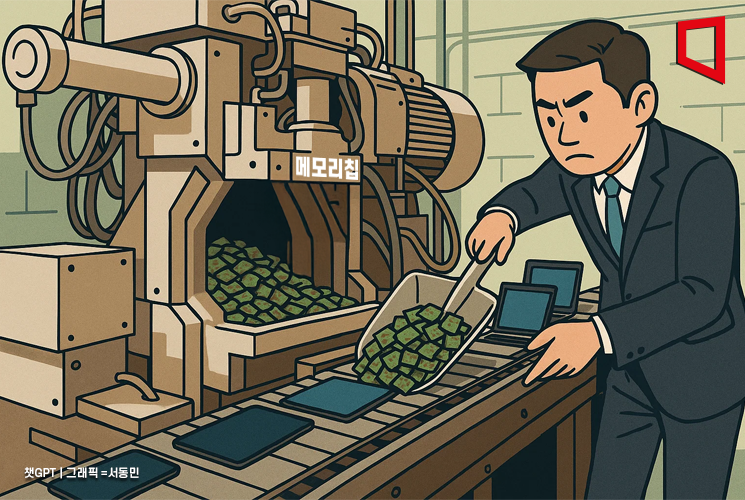
For the semiconductor industry, exports this year are estimated to have grown by 16.3% to reach 165 billion dollars, with next year's exports projected to grow by 9.1% to 180 billion dollars. The global big tech companies' race to build AI infrastructure is expected to drive up demand for high-value-added DRAM products such as high bandwidth memory (HBM). In fact, major big tech firms like Microsoft, Amazon, and Alphabet are planning to invest 100 billion dollars next year alone, with even greater investments expected in the future.
The outlook is also bright for displays. The standardization of higher specifications for electronic devices driven by AI adoption has increased demand for organic light-emitting diode (OLED) panels, which are more energy-efficient. Next year's exports are forecast to rise by 3.9% to 17.67 billion dollars compared to this year. Growth is also expected in new markets. The Korea Display Industry Association predicts that, due to the trend toward larger in-vehicle displays and the expansion of the extended reality (XR) market, global OLED shipments for automotive and XR applications will increase by 83.3% and 238.5%, respectively, next year.
Batteries, another AI-related downstream industry, are also expected to see "mostly clear" conditions. The growing power consumption of AI data center servers is set to boost demand for energy storage systems (ESS), with exports next year projected to increase by 2.9% compared to this year. In the electric vehicle sector, the launch of models equipped with "K-batteries" by Hyundai, Kia, and BMW is expected to be concentrated next year, which should help EV battery demand rebound after a period of sluggishness. However, the reduction in benefits from the U.S. Advanced Manufacturing Production Credit (AMPC) and the rising market share of Chinese-made batteries are cited as risk factors. This year, Chinese battery companies surpassed a 77% share of the global market, and even when excluding the Chinese domestic market, their share grew to 46.5%, overtaking Korea's share in non-Chinese markets (38.7%) for the first time.
The shipbuilding industry is expected to see exports grow by 8.6% next year to 33.92 billion dollars, driven by demand for liquefied natural gas (LNG) carriers and container ships. The trend toward replacing fleets with eco-friendly vessels is expected to keep container ship orders robust, with 375 new orders projected next year. Additionally, up to 100 additional LNG carriers may be ordered due to increased U.S. LNG exports and Qatar's fleet replacement needs. However, uncertainty about the demand for eco-friendly ships has risen due to the International Maritime Organization (IMO) delaying greenhouse gas emission reduction measures, which is a cause for concern.
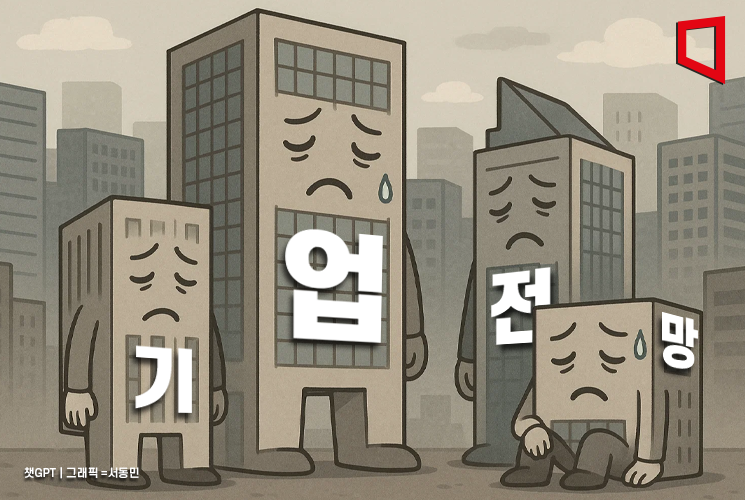
Industries such as machinery, petrochemicals, steel, and construction are forecast to face cloudy conditions due to increased domestic and international uncertainties.
In the petrochemical sector, exports are projected to decrease by about 6.1% compared to this year, due to oversupply from China and falling prices of petrochemical raw materials such as naphtha resulting from low oil prices. However, the recent expansion of business restructuring is expected to lead to a recovery in operating rates, and the global trend of closing petrochemical facilities should somewhat ease the oversupply situation.
The steel industry is also expected to be "cloudy," not only because of oversupply from China but also due to strengthened import regulations in the United States and the European Union. The Korea Iron & Steel Association noted, "Although exports have recently increased, particularly to emerging markets in Latin America, export volumes to traditional markets are declining due to U.S. trade protection measures and the EU's steel import regulations (TRQ)."
Lee Jongmyung, Head of the Industrial Innovation Division at the Korean Chamber of Commerce and Industry, stated, "China's manufacturing competitiveness is rising rapidly," adding, "It is important for the government to pursue regulatory innovation and incentives so that companies can continue their aggressive experiments centered on AI."
© The Asia Business Daily(www.asiae.co.kr). All rights reserved.
![Clutching a Stolen Dior Bag, Saying "I Hate Being Poor but Real"... The Grotesque Con of a "Human Knockoff" [Slate]](https://cwcontent.asiae.co.kr/asiaresize/183/2026021902243444107_1771435474.jpg)
















