Backlash Over Social Security Contribution Hike Spreads
Political Instability Intensifies Ahead of Eurozone Accession
A protest led by Generation Z against the Bulgarian government's plan to increase social security contributions has shaken the political landscape, ultimately resulting in the resignation of the prime minister. This has drawn international attention as it marks the first case in Europe where a Generation Z movement has directly led to a change in leadership.
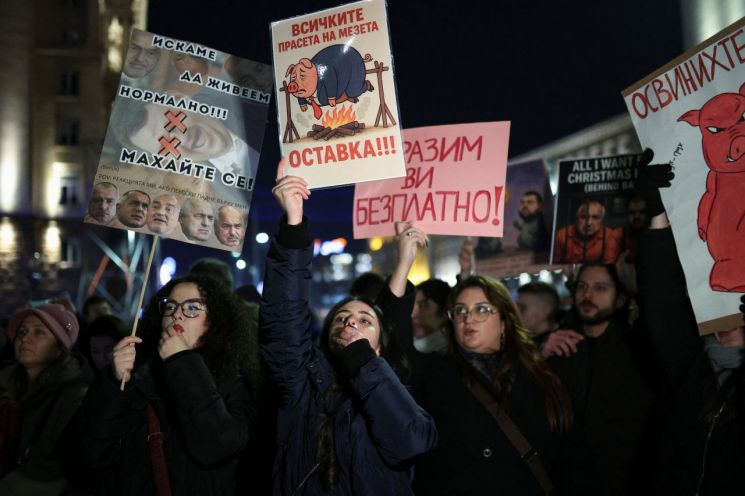
According to reports from AFP, Bloomberg, and other foreign media on December 11 (local time), Bulgarian Prime Minister Rosen Zhelyazkov announced his intention to step down ahead of a parliamentary vote on a no-confidence motion brought by the opposition, stating, "Citizens from all generations and diverse backgrounds are demanding my resignation." This is the first time in Europe that a leader has resigned as a result of a Generation Z protest.
The protests were triggered by the government's proposal to increase social security contributions included in next year's budget. Although the government withdrew the plan earlier this month in response to fierce opposition, public sentiment did not subside. The protests spread to major cities including the capital, Sofia, and tens of thousands gathered in front of the parliament building the previous day. Protesters waved placards featuring caricatures of politicians and shouted, "We are fed up."
Suspicions that the contribution increase was effectively a "tax hike" intended to cover up corruption within the government and public institutions also fueled the spread of the protests. Concerns over the adoption of the euro, scheduled to take effect in January next year, and the resulting inflation further stoked public dissatisfaction. Bulgaria joined the European Union in 2007 but has postponed joining the eurozone due to inflation concerns.
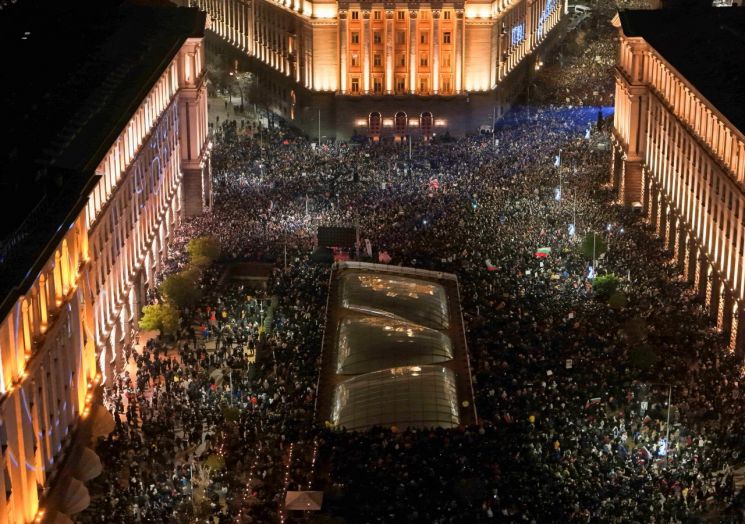 A street filled with Bulgarian citizens protesting against the government. Photo by Reuters-Yonhap News
This protest is particularly noteworthy because it is led by Generation Z, those born in the mid-to-late 1990s and early 2000s. In Bulgaria, which has consistently ranked at the bottom of Transparency International's Corruption Perceptions Index, young people who did not experience the chaos following the collapse of the communist regime have taken to the streets demanding sweeping political change.
Gathering through social networking services, they marched with slogans such as "Generation Z is coming" and "Generation Z vs. Corruption." Large screens in front of the parliament repeatedly played videos and memes mocking politicians. Influencers and actors also joined the protests, fueling participation both online and offline.
Martin Vladimirov, Director of the Center for the Study of Democracy (CSD) in Bulgaria, commented, "This protest demonstrates that the energy of the younger generation is sufficient to challenge the deeply entrenched practices of the ruling elite that have gripped the country."
The Generation Z protests fueled by anger at the establishment are not unique to Bulgaria. Similar movements by young people protesting corruption and inequality have spread in Nepal, Madagascar, Morocco, Mexico, and Tanzania, with some countries experiencing changes in leadership as a result.
Mario Bikarski, an analyst at the UK crisis analysis firm Verisk Maplecroft, stated, "Bulgaria, which is just entering the eurozone, is being shaken by an incident related to fiscal policy," adding, "This will create reputational risks for Europe."
© The Asia Business Daily(www.asiae.co.kr). All rights reserved.
![Clutching a Stolen Dior Bag, Saying "I Hate Being Poor but Real"... The Grotesque Con of a "Human Knockoff" [Slate]](https://cwcontent.asiae.co.kr/asiaresize/183/2026021902243444107_1771435474.jpg)
















