Consumers Seek Decaffeinated Options
Global Decaffeinated Market Projected to Reach 6 Trillion Won by 2030
"Excessive Caffeine Intake Can Cause Insomnia and Nervousness"
Ms. Park (30, female) has recently started going to cafes in the evening. Drinking coffee late at night can interfere with a good night's sleep, but she feels less burdened because she can choose decaffeinated options. Park said, "I always try to choose decaffeinated coffee for better sleep," adding, "The taste of decaffeinated coffee has improved so much that it now rivals regular coffee."
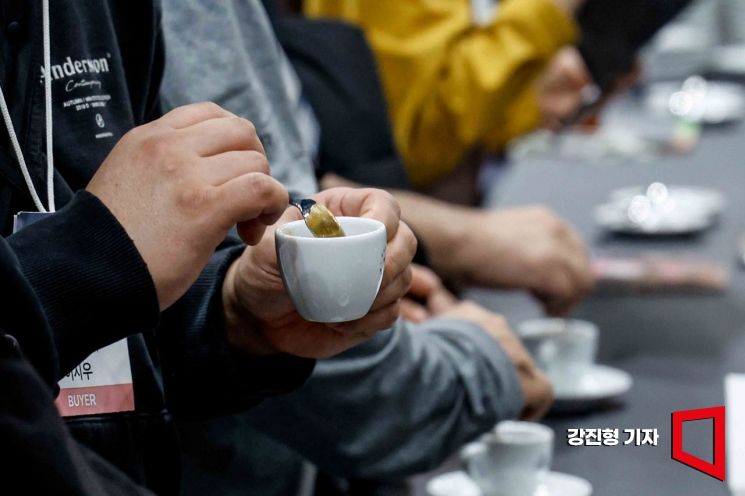 On April 2, visitors attending the '2025 Seoul Coffee Expo' held at COEX in Gangnam-gu, Seoul, are tasting coffee. 2025.4.2. Photo by Kang Jinhyung
More and more consumers are seeking decaffeinated beverages to avoid excessive caffeine intake, which can lead to insomnia and other issues.
According to global market research firm Mordor Intelligence, the global decaffeinated market is expected to grow from approximately $3.1 billion (4.5601 trillion won) this year to around $4.2 billion (about 6 trillion won) by 2030. The average annual growth rate is projected at 6.6%, with health and wellness consumption trends driving the decaffeinated market. In Korea as well, demand for decaffeinated beverages is increasing. According to Starbucks, sales of decaffeinated coffee from January to October this year reached 36.5 million cups, a 35% increase compared to the same period last year. Dongseo Food, which sells stick coffee brands such as Kanu and Maxim, also reported that sales in the decaffeinated sector from January to September this year reached 29.2 billion won, up 19.5% from the same period last year.
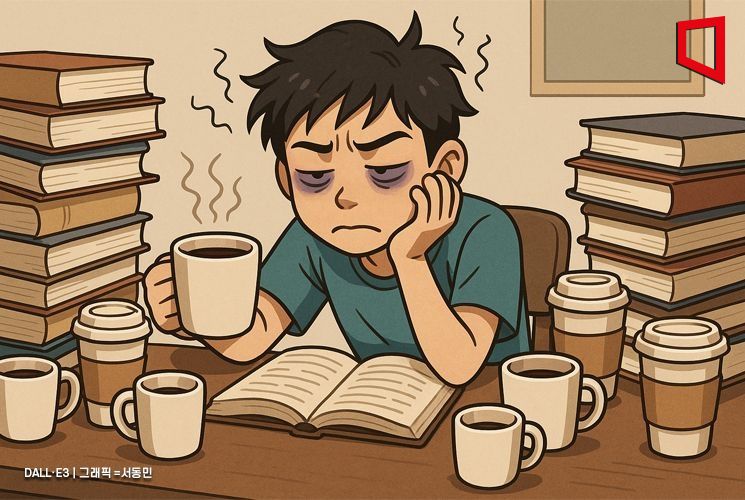
The most well-known effect of caffeine is alertness. Caffeine is a plant-based alkaloid, a nitrogen-containing active natural substance that acts as a stimulant, making you feel more awake and boosting memory when consumed. However, there are also side effects. Excessive intake can lead to nervousness and insomnia. Drinking too much coffee can cause heart palpitations and make it difficult to fall asleep due to caffeine. In addition, it stimulates gastric acid secretion and acts as a diuretic, increasing urine output and placing a burden on the stomach and kidneys. Even if you feel more alert immediately, greater fatigue can follow as time passes. In effect, you are borrowing energy from the future. For this reason, the Ministry of Food and Drug Safety recommends that adults consume no more than 400 mg of caffeine per day, and pregnant women no more than 300 mg.
However, it is difficult to avoid caffeine in daily life. Typically, a single 355 ml cup of Americano contains 100 mg to 200 mg of caffeine. Energy drinks also contain 80 mg to 160 mg of caffeine, providing a stimulating effect. In addition, beverages such as cola, green tea, black tea, matcha, cocoa, and even chocolate contain caffeine, so it is easy to exceed the recommended daily intake for adults.
Caffeine: Recommended intake is less than 400 mg per day... Revisions to decaffeinated-related regulations underway
Consumers are welcoming the increased options. In the past, visiting a cafe meant you had to consume caffeine, but now it can be avoided. There are even places that specialize exclusively in decaffeinated beverages. Mr. Song (33, male) said, "I've always had trouble drinking coffee because it upset my stomach, but when meeting people, I would inevitably go to cafes and end up drinking coffee, which was tough for me," adding, "Now, I can choose only decaffeinated drinks without worrying about what others think, so I tend to visit cafes that specialize in decaffeinated beverages."
As interest in decaffeinated products grows, the government is also working to revise related regulations. The Ministry of Food and Drug Safety plans to amend labeling standards for food and beverages by March next year so that only products with residual caffeine content of 0.1% or less can be labeled as decaffeinated. Previously, products could be labeled as decaffeinated if 90% or more of the caffeine was removed, but consumers have demanded more specific labeling of decaffeinated content. In the United States, the standard is 0.1% or less residual caffeine, while in the European Union (EU), it is 0.3% or less.
© The Asia Business Daily(www.asiae.co.kr). All rights reserved.
![Clutching a Stolen Dior Bag, Saying "I Hate Being Poor but Real"... The Grotesque Con of a "Human Knockoff" [Slate]](https://cwcontent.asiae.co.kr/asiaresize/183/2026021902243444107_1771435474.jpg)

















