9th Biohealth Innovation Committee Convened
Key Regulatory Reform Tasks Discussed
The government will expand its support for active pharmaceutical ingredient (API) manufacturers to increase the self-sufficiency rate of domestically produced pharmaceutical ingredients. It is also considering improvements to the drug pricing system for treatments that, despite being effective for various indications, are subject to a single price ceiling.
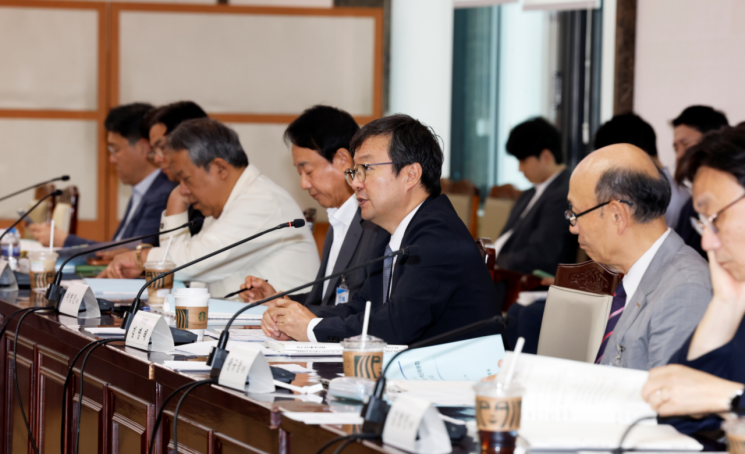 On September 30, Kim Youngtae, Vice Chairman of the Innovation Committee, spoke at the 8th Biohealth Innovation Committee meeting held at the Government Seoul Office Building. Ministry of Health and Welfare
On December 9, the government announced that it had held the 9th Biohealth Innovation Committee meeting at the Government Seoul Office Building and reviewed the tasks discussed at the "Bio Innovation Forum" chaired by the President last September, ultimately selecting a total of 69 tasks.
The committee also reviewed the progress and plans for next year regarding key projects and system improvement tasks that have been a focus of discussion, including the physician-scientist training program, the biohealth multi-ministry collaboration package, the introduction of decentralized clinical trials (DCT), improvements to the new medical technology evaluation system, drug pricing system reforms, and regulatory and review innovations by the Ministry of Food and Drug Safety.
In the fourth quarter of this year, a total of 348 regulatory improvement tasks were identified in the biohealth sector. Of these, 289 tasks were received after excluding simple civil complaints and duplicate items. Among them, 233 were designated as management tasks, and 139 were improved.
Additionally, the committee reviewed improvements for 12 tasks that had been finalized by relevant ministries since the 8th meeting, and among them, designated five as key (killer) regulatory reform tasks.
In response to criticism that there have been no substantial benefits for domestic API manufacturers, the Innovation Committee expanded the definition of national essential medicines through an amendment to the Pharmaceutical Affairs Act last month. Starting next year, a total of 15.8 billion won will be provided to support API manufacturers in stockpiling raw materials and to expand production facilities and equipment at supply institutions for medicines with unstable supply.
For invasive innovative medical technologies, which previously required sequential approval and usage notification to transition to clinical practice, the administrative guidelines will be clarified to allow both notifications to be processed simultaneously, thereby shortening administrative periods.
Until now, invasive innovative medical technologies could only transition to clinical practice once 100% of the targeted clinical research patient enrollment was completed. Going forward, for less invasive medical technologies, the committee plans to allow early transition to clinical practice after review, taking into account the risk level and the enrollment completion rate.
Policy research will also be conducted to establish a drug pricing system for multi-indication drugs. Overseas, a system is already in place where drugs developed for multiple indications receive additional reimbursement benefits for each added indication. In contrast, Korea currently applies a single price ceiling to multi-indication drugs regardless of the specific indication. To address this, the need to introduce an indication-based drug pricing system will be comprehensively reviewed.
In addition, to increase the predictability of development for "phage therapeutics," which are used to treat intractable bacterial infections, regulatory uncertainties will be eliminated. As there are currently no phage therapeutics with global product approval, the government plans to support domestic commercialization by establishing quality and non-clinical guidelines for clinical trials through collaboration between developers and academia.
The first term of the Biohealth Innovation Committee, which was launched as a joint government-private sector governance body on December 22, 2023, held its final meeting on this day. Kim Youngtae, Vice Chairman of the Biohealth Innovation Committee and Director of Seoul National University Hospital, stated, "For the biohealth industry to achieve breakthroughs in technology development and secure a competitive edge in the global market, the government must boldly expand its support and continue regulatory innovation that can be felt in the field. I hope that, based on the achievements discussed by the committee, the government will further strengthen its close cooperation with the private sector so that field-oriented policy outcomes will continue to expand as Korea aims to become one of the world’s top five biohealth powerhouses."
© The Asia Business Daily(www.asiae.co.kr). All rights reserved.
![Clutching a Stolen Dior Bag, Saying "I Hate Being Poor but Real"... The Grotesque Con of a "Human Knockoff" [Slate]](https://cwcontent.asiae.co.kr/asiaresize/183/2026021902243444107_1771435474.jpg)
















