Goo Hara Law Reflected in Pension System
Full Restriction on Pension and Lump-Sum Payments for Parents Who Fail in Their Duty of Support
The practice of parents who have neglected their child-rearing responsibilities receiving survivor pensions after the death of their children is expected to disappear completely. This is a result of the so-called "Goo Hara Law," a revision to the Civil Act, being reflected in the pension system as well.
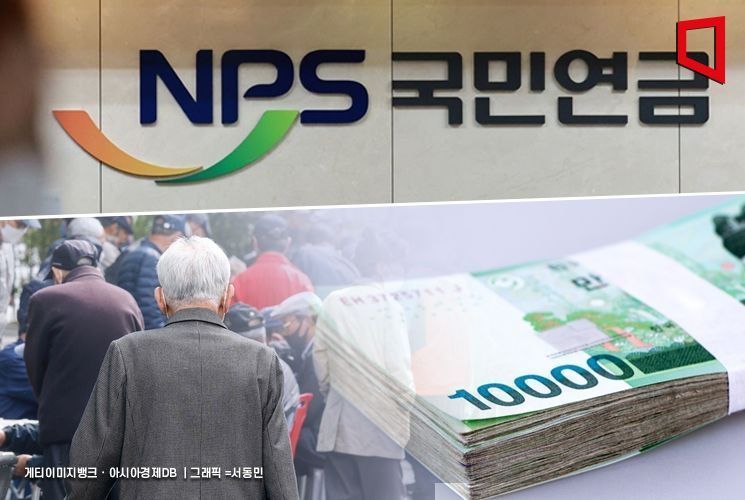
According to the Ministry of Health and Welfare and the National Pension Service on December 7, a revision to the National Pension Act that restricts survivor pension benefits for parents who have violated their duty of support has recently passed the National Assembly's plenary session.
The main point of this amendment is that parents who have not fulfilled their duty of support for minor children will no longer be eligible to receive various survivor benefits from the National Pension Service in the event of their child's death. Previously, even if parents neglected their child-rearing responsibilities, their legal inheritance rights were often maintained under the pretext of family ties. Cases of parents who did not raise their children still receiving their child's insurance payouts or pension have caused public outrage. However, with this legal revision, such opportunistic claims will now be restricted.
This amendment serves as a follow-up measure to the so-called "Goo Hara Law," a revision to the Civil Act that will go into effect the following year. In 2019, after Goo Hara, a former member of the group Kara, passed away, it became widely known that her biological mother, who had not been in contact for 20 years, attempted to claim her inheritance, sparking major controversy. This incident led to legislative discussions, and the bill passed the National Assembly last year. The law restricts the inheritance rights of statutory heirs who have failed in their duty of support to the deceased or who have committed crimes such as abuse, making them ineligible to inherit.
The revision to the National Pension Act is also based on inheritance rights. This amendment targets parents who have been ruled by the court to have lost their inheritance rights in accordance with Article 1004-2 of the Civil Act. If a family court determines that "these parents have abandoned or abused their child and are not qualified to inherit," the National Pension Service can also refuse to pay the pension on that basis.
The scope of restricted payments is broad. It includes the monthly "survivor pension," the "lump-sum refund" that returns paid premiums, the "lump-sum death benefit" for funeral expenses, and any "unpaid benefits" that have not yet been distributed.
This system will be implemented starting January 1, in line with the enforcement of the "Goo Hara Law."
The government expects that this measure will significantly help restore public trust in the National Pension system. It sends a signal to the majority of citizens who have diligently paid their premiums and raised their children that the system is being operated in accordance with common sense.
© The Asia Business Daily(www.asiae.co.kr). All rights reserved.
![Clutching a Stolen Dior Bag, Saying "I Hate Being Poor but Real"... The Grotesque Con of a "Human Knockoff" [Slate]](https://cwcontent.asiae.co.kr/asiaresize/183/2026021902243444107_1771435474.jpg)















