Only Serious Crimes to Be Verified and Disclosed in Election Materials
"Strengthening Morality for Top Public Offices"
On December 7, Na Kyungwon, a member of the People Power Party, announced that she would submit a bill to amend the law so that the state officially verifies and discloses to the public the juvenile serious crime records of key national officials and high-ranking public servants, including the President and members of the National Assembly. This measure reflects growing calls to strengthen the public ethics verification system, amid recent controversy over actor Cho Jinwoong's alleged juvenile criminal record.
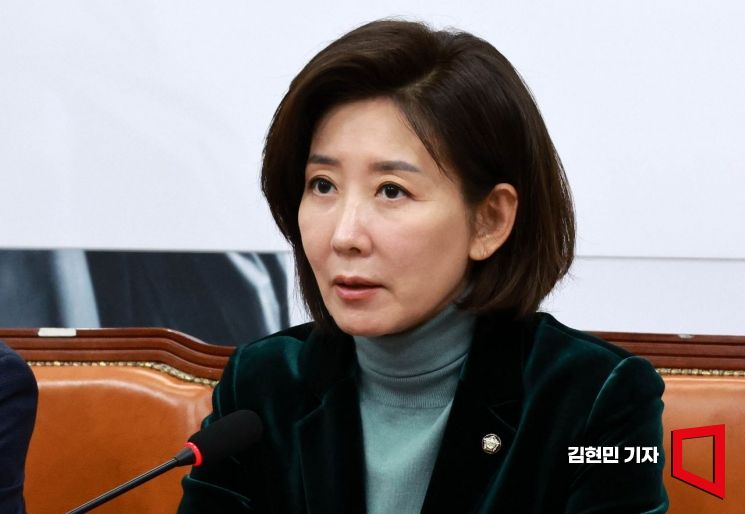 Na Kyungwon, a member of the People Power Party, announced that she will submit a bill to amend the law so that the state officially verifies and discloses to the public the juvenile serious crime records of key national officials and high-ranking public servants.
The core of this bill is to establish an official procedure for state agencies to verify whether there are protective measures or related verdicts (or rulings) for serious crimes committed during youth for the following individuals: candidates for President, National Assembly, and city or provincial governor; high-ranking public officials above a certain grade; and candidates or recipients of the nation's highest awards and honors.
For elected officials, the revised Public Official Election Act will require that, in addition to the existing criminal record certificate, the existence of any protective measures or verdicts related to serious crimes under the Juvenile Act must be disclosed in election materials. The National Election Commission will be tasked with conducting pre-verification by requesting factual inquiries from the police, courts, and other relevant bodies.
The amendment to the Juvenile Act also specifically defines the scope of "serious crimes." Acts such as simple theft or minor juvenile delinquency will be excluded from verification to reduce unnecessary stigmatization, ensuring that the verification process is limited to heinous crimes only.
In addition, the bill establishes a legal basis to allow access to juvenile serious crime verdicts solely for the purpose of public office verification. It also introduces strong safeguards, including criminal penalties, for any use beyond this purpose or provision to third parties.
The supplementary provisions include transitional measures requiring the same verification and disclosure standards for sitting Presidents, lawmakers, heads of local governments, high-ranking public officials, and existing recipients of national honors at the time the law takes effect. For award recipients, a clause has been added to allow for the cancellation of honors if a serious juvenile criminal record is confirmed after the fact.
Regarding the purpose of this legislation, Na Kyungwon stated, "While respecting the Juvenile Act's intent of rehabilitation and reintegration, there is a strong demand that those holding the nation's highest offices and honors demonstrate even higher moral standards and accountability to the public." She emphasized, "Leaving a permanent blind spot for heinous crimes such as murder, robbery, sexual violence, arson, kidnapping, grievous bodily harm, and major drug offenses simply because the perpetrator was a 'juvenile' is neither fair nor reasonable."
© The Asia Business Daily(www.asiae.co.kr). All rights reserved.
![Clutching a Stolen Dior Bag, Saying "I Hate Being Poor but Real"... The Grotesque Con of a "Human Knockoff" [Slate]](https://cwcontent.asiae.co.kr/asiaresize/183/2026021902243444107_1771435474.jpg)















