"We Can No Longer Ignore Structural Flaws": Call for Clear Reform Direction
Intensified Reliance on Private Tutoring Since Introduction of Absolute Grading in 2018
Criticism Over Excessive Grade Volatility and Unreliable Evaluation Methods
With the percentage of students achieving the top grade in the English section of the 2026 College Scholastic Ability Test (CSAT) standing at only 3.11%, calls for a fundamental overhaul of the absolute grading system for English are intensifying, particularly within the education sector.
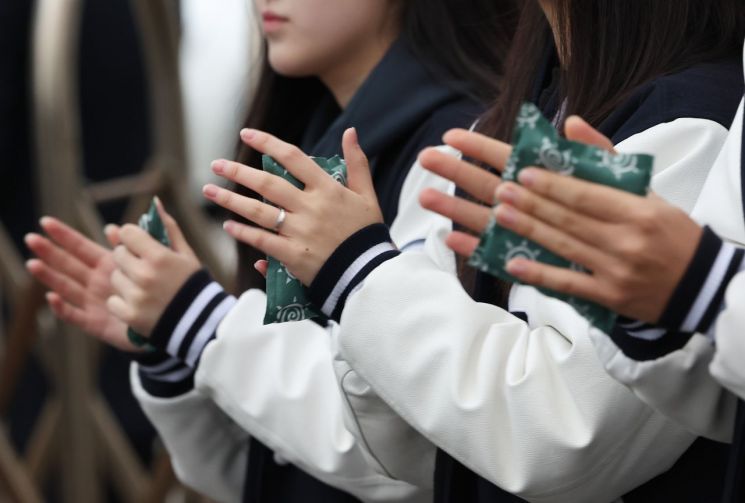
The Council of English-Related Academic Societies of Korea (hereinafter referred to as "the Council"), which includes 36 English-related academic associations such as the Korean Association of English Language and Literature, strongly criticized the current CSAT system in a joint statement released on December 5, stating, "The current CSAT system, where only English is graded on an absolute scale, is a clear policy failure," and added, "We can no longer ignore these structural flaws."
The Council pointed out, "In the mock test held in June this year, the percentage of students achieving the top grade in English was 19.1%, but this figure plummeted to 4.5% in September and fell to a record low of 3.11% in the actual CSAT," adding, "This indicates an excessively volatile and unreliable grading method."
In particular, the Council argued, "Since the introduction of the absolute grading system in the 2018 academic year, reliance on private education has intensified, while in schools, the number of English class hours and teacher appointments has decreased." The Council further asserted, "The current system, in which only the CSAT English section is graded on an absolute scale, undermines fairness in college admissions and shakes the very foundation of public education."
The Council also emphasized that the foundation of public English education has weakened since the adoption of the absolute grading system. In general high schools in Seoul, the English subject selection rate dropped from 92.7% in 2019 to 80.6% in 2023. The number of secondary English teacher appointments, which stood at 118.5% of math appointments in 2014, is projected to fall sharply to 77.7% by 2026.
Yoon Heecheol, co-representative of the Council, expressed concern, stating, "Since the full implementation of the high school credit system, subjects not directly related to college admissions have become unpopular among students." He continued, "Amid this trend, English is likely to become a subject that students avoid, which could soon lead to the collapse of public English education."
© The Asia Business Daily(www.asiae.co.kr). All rights reserved.
![Clutching a Stolen Dior Bag, Saying "I Hate Being Poor but Real"... The Grotesque Con of a "Human Knockoff" [Slate]](https://cwcontent.asiae.co.kr/asiaresize/183/2026021902243444107_1771435474.jpg)
















