Expansion of Robotics Industry Support in Major Countries Including the United States
Growth Expected Through Value Chain Utilization
Securities analysts have suggested that the automotive industry is likely to be re-evaluated as it aligns itself with the robot industry development policies of the United States and other major countries.
On December 5, Jang Moonsoo, a researcher at Hyundai Motor Securities, stated, "Given that China's robot supply chain is deeply involved with the electric vehicle value chain, and that the robot industry can contribute to the intelligent transformation of manufacturing sectors such as automotive, we can expect the strategic alignment of the automotive industry."
United States Prepares Executive Order to Promote Robotics Industry
Recently, there has been growing speculation in the United States about the possibility of the Trump administration preparing an executive order to promote the robotics industry next year. Robotics and advanced manufacturing are seen as playing a core role in revitalizing American manufacturing, and the U.S. Department of Transportation is reportedly considering the launch of a robotics task force, highlighting the administration's potential support.

Jang noted, "As the United States grows increasingly concerned about China's dominance in factory automation and the robot supply chain, it is considering the robotics industry as an extension of its policy support for artificial intelligence (AI). Since advanced robotics is an industry directly tied to national security, defense, and public safety, policy support from major countries is expected, and companies capable of responding to these trends are likely to see heightened growth expectations."
Humanoid Robots Enter Commercialization Phase
On December 3, Tesla, which is developing the humanoid robot Optimus, saw its stock price rise sharply. The following day, stocks of related companies within the domestic automotive sector-such as Hyundai Motor, Hyundai Mobis, Hyundai Glovis, and HL Mando-also showed strong performance.
Jang commented, "This year marks a significant inflection point for the humanoid robot industry. The sector is moving away from a paradigm focused on meeting basic technical specifications, which has dominated decades of R&D, and is entering a new era where commercial requirements-solving specific tasks in real-world environments and creating value-are shaping the industry's direction."
This transformation can be understood as a fundamental restructuring of the industry, driven by the combination of mature hardware, powerful AI foundation models, and strategic capital inflows. Externally, the focus will be on strategic partnerships to test real-world applications, while internally, efforts will be concentrated on building a supply chain ecosystem to secure commercial viability (mass production potential and economic feasibility).
Jang added, "Boston Dynamics is prioritizing the launch of commercially viable products and is continuously collecting and refining data through its service offerings. Through collaboration with Hyundai Motor Group, the company is working to achieve early scaling up and enhance the potential for generalization by gaining access to initial data and real-world deployment opportunities. It is also striving to secure cost competitiveness and reliability by leveraging the automotive supply chain, including Hyundai Mobis."
Spotlight on Boston Dynamics and Hyundai Motor Group Collaboration
Although a finalized single model has not yet been determined, investments are being made in reinforcement learning and synthetic data generation technologies to ensure reliability. The company has demonstrated strengths in the early stages, such as experience launching Spot, a history of data collection, and utilization within Hyundai Motor Group. Boston Dynamics expects generalization within approximately one to one and a half years, viewing this as the key to both the technology and its economic potential. After initial applications in logistics, machinery management, and general assembly within Hyundai Motor factories, further market expansion is anticipated once optimization, cost competitiveness, and reliability are secured.
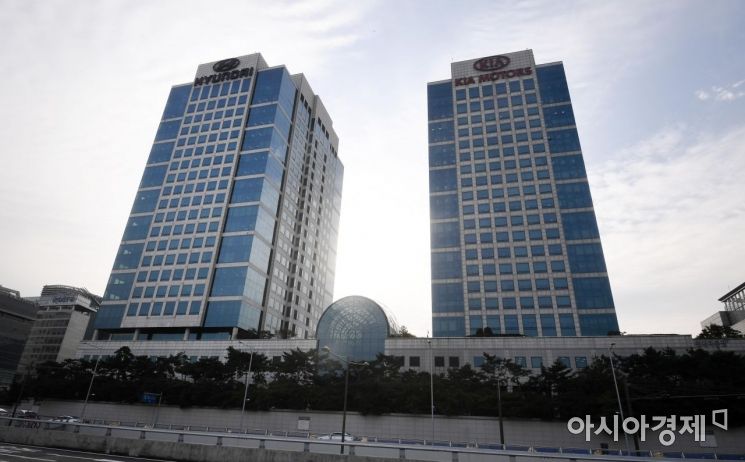
Recently, Hyundai Motor Group announced a domestic investment plan exceeding 25 trillion won per year on average from 2026 to 2030. This represents an increase of more than 40% compared to the previous five years, with planned investments in future strategic businesses such as AI, software-defined vehicles (SDV), electrification, robotics, and hydrogen.
Additionally, Jang identified shareholder returns (dividends, share buybacks), robotics, and autonomous driving/SDV (software-centered vehicles) as re-evaluation momentum factors for the automotive sector. He emphasized, "The company is particularly highlighting the construction of AI data centers, robot factories, and physical AI verification centers to foster the AI and robotics industries, which could enable it to participate in long-term growth strategies. In particular, as robotics policies and strategies become more concrete, the value of Boston Dynamics' stake and its role in the value chain are drawing attention. Interest within the sector is expected to intensify leading up to CES 2026, the world's largest electronics and IT exhibition."
© The Asia Business Daily(www.asiae.co.kr). All rights reserved.
![Clutching a Stolen Dior Bag, Saying "I Hate Being Poor but Real"... The Grotesque Con of a "Human Knockoff" [Slate]](https://cwcontent.asiae.co.kr/asiaresize/183/2026021902243444107_1771435474.jpg)

















