1. 190 Billion Won Allocated for Tram Construction, 54.7 Billion Won for Phase 1 of Chungcheong Metropolitan Railway
Budget Increased by 349.2 Billion Won (7.8%) Compared to This Year
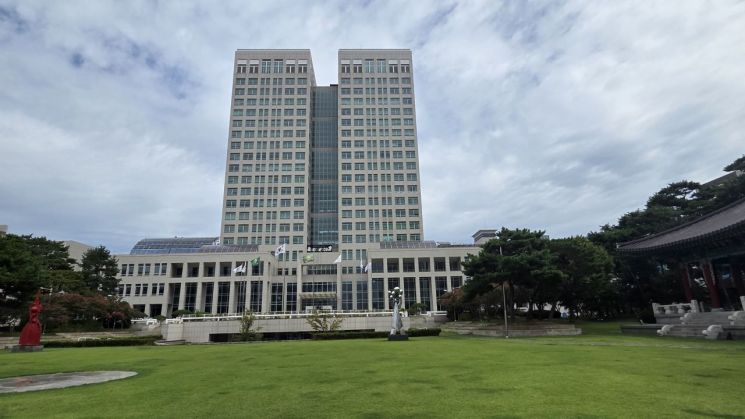
Daejeon City has secured 4.8006 trillion won in next year’s government budget, an increase of 349.2 billion won (7.8%) compared to this year.
As a result of multiple visits to central government ministries and the National Assembly by Mayor Lee Jangwoo and others, the city was able to secure substantial funding for key transportation infrastructure, future growth industries, and welfare projects closely related to daily life.
The most significant achievements include increased funding for the Urban Railway Line 2 tram project, operating expenses for the Public Children's Rehabilitation Hospital, and the 3.8 Democratic Movement Memorial Hall. This will reduce the city’s financial burden for major infrastructure and pending projects.
The Urban Railway Line 2 tram, a core transportation project for Daejeon, will span 38.8 km with 45 stations and one depot. With 190 billion won allocated for construction next year, the project is expected to be completed by 2028.
The first phase of the Chungcheong Metropolitan Railway, covering 35.4 km with 12 stations and 16 train cars, has a total project cost of 357.7 billion won, with 54.7 billion won allocated for next year’s construction.
Additionally, the connection road to the Hoedeok Interchange on the Gyeongbu Expressway (9.3 billion won for construction) and the eastern entrance road to the Daedeok Innopolis (13.2 billion won for construction) have also been included, accelerating the expansion of the transportation network.
For new transportation networks, the Sajunggyo-Hanbatdaegyo road construction project has been newly included, securing 3.5 billion won in national funding. This project, with a total cost of 258.7 billion won, will add a new 7.61 km, four-lane road to help alleviate urban traffic congestion.
Furthermore, the expansion of the Honam Expressway branch, which will widen the section from Seodaejeon Junction to Hoedeok Junction from four to six lanes at a total cost of 352.2 billion won, has received 2.4 billion won in next year’s budget.
Future growth industries also stand out. The Space Technology Innovation Talent Training Project (3.95 billion won), led by the Korea Aerospace Research Institute and KAIST, is expected to play a key role in nurturing the next generation of talent for the space industry.
In addition, 7.2 billion won has been allocated to the Innovation Academy Advancement and Expansion Project, which will use the Wolpyeong-dong Innovation Startup Hub as a base to foster advanced field-ready talent and expand software infrastructure.
Moreover, 200 million won has been allocated for a feasibility study on establishing the Daejeon Smart Agriculture Advanced Industry Valley. This project, with a total investment of 223.4 billion won, aims to create an agricultural innovation industrial complex integrating robotics, nanotechnology, and AI.
In the industrial and R&D sectors, the Innovative New Drug R&D Acceleration Platform Project (700 million won) will support the entire process from research to commercialization of new drugs, laying the groundwork for a specialized innovative new drug cluster.
The Regulatory Sandbox-Linked Technology Commercialization Promotion Study (500 million won) is a basic planning study to determine the specific functions and infrastructure scale needed to help companies commercialize and industrialize outstanding research outcomes from the R&D special zone.
Additionally, the Innovation Research Center (IRC) Support Project (5 billion won) is expected to serve as an advanced research hub, with the center located in the KAIST Meta-Convergence Building and conducting research on space station robotics and space resource retrieval.
In the green space and environment sector, which is directly linked to citizens’ daily lives, 30.5 billion won has been allocated to the electric vehicle supply project, supporting a total of 2,806 vehicles, including 2,551 passenger cars, 240 freight vehicles, and 15 vans.
The National Forest Disaster Safety Education and Training Center will be a specialized wildfire education facility with a total project cost of 42.4 billion won, including 900 million won for next year’s design expenses. The Daedeok Industrial Complex and Daedeok Technovalley buffer retention facility project has received 5.5 billion won, further strengthening the city’s eco-friendly urban infrastructure.
In the culture and tourism sector, 600 million won has been allocated for the design of the Webtoon IP Advanced Cluster Project, which is expected to play a central role in the local cultural industry by nurturing webtoon talent and supporting science-based startups.
Funding has also been allocated for the creation of a Convergence Special Visual Content Cluster (7.8 billion won), the development of the Oncheon Cultural Park (2.8 billion won), and support for the Integrated Culture Voucher Program (9 billion won), expanding cultural opportunities for citizens.
The city also achieved clear results in the administration, safety, and welfare sectors. Funding includes 900 million won for the operation of the Public Children's Rehabilitation Hospital, 200 million won for programs at the 3.8 Democratic Movement Memorial Hall, 3.4 billion won for the construction of the Daejeon National Safety Experience Center, 8 billion won for improvements in the Jeongnim Natural Disaster Risk Zone, and 1.7 billion won for the creation of the third natural burial site at the Daejeon Memorial Park, all contributing to enhanced safety and living infrastructure.
In the welfare sector, 298.8 billion won has been allocated for livelihood support and 510.8 billion won for the basic pension, providing 349,000 won per month for single-person households and 559,000 won per month for couples, thereby supporting vulnerable groups and stabilizing retirement living.
Lee Jangwoo, Mayor of Daejeon, stated, "This year’s government budget includes a wide range of projects that citizens can directly feel, such as the expansion of transportation networks, future growth industries, and the strengthening of safety and welfare. With the national funding secured for next year, Daejeon now has the momentum to successfully realize the goals set during the 8th popularly elected administration, and I will do my utmost to ensure the successful implementation of major projects."
© The Asia Business Daily(www.asiae.co.kr). All rights reserved.
![Clutching a Stolen Dior Bag, Saying "I Hate Being Poor but Real"... The Grotesque Con of a "Human Knockoff" [Slate]](https://cwcontent.asiae.co.kr/asiaresize/183/2026021902243444107_1771435474.jpg)















