96 Out of 112 Cases Occurred in Winter Over Five Years
93% of Infections Took Place at Daycare Centers and Schools
Emphasis on Prevention: Hand Washing and Thorough Cooking
As norovirus food poisoning continues to recur during the winter season, it has been confirmed that the majority of patients in the Gwangju area occurred between December and February. Gwangju City has urged citizens to follow basic hygiene practices, such as washing hands and thoroughly cooking food.
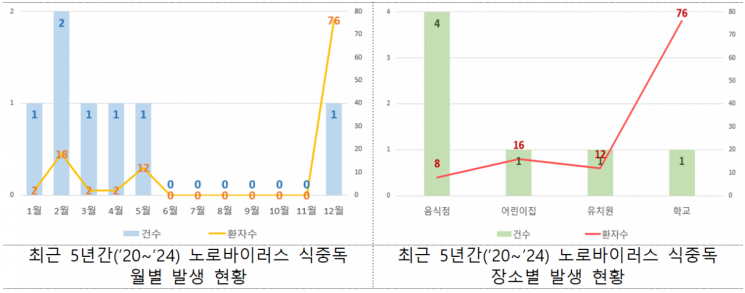 Graph showing the monthly and location-specific trends of norovirus food poisoning cases in the Gwangju area over the past five years (2020-2024). Provided by Gwangju City
According to data compiled by Gwangju City on December 2, 86% (96 out of 112) of norovirus food poisoning cases reported in the region over the past five years (2020-2024) were concentrated in the winter months. Only four cases (involving eight people) occurred at restaurants, but 93% of actual patients were infected simultaneously at group dining facilities such as daycare centers, kindergartens, and schools.
Norovirus survives at low temperatures and is highly contagious, making it prevalent in winter. Infection can occur through contaminated food, groundwater, or contact with an infected person's feces or vomit. Raw shellfish and vegetables are cited as the main food sources responsible for outbreaks.
To prevent infection during winter, Gwangju City emphasized the following measures: washing hands with soap for at least 30 seconds, cooking shellfish at 85°C or higher for at least one minute, thoroughly washing vegetables, drinking boiled water, using separate knives and cutting boards for different ingredients, and disinfecting cooking utensils. It is also a basic rule not to participate in food preparation if you experience symptoms such as vomiting or diarrhea.
Bae Kang-sook, head of the city's Health and Hygiene Division, stated, "The risk of infection is especially high in winter," and added, "Following preventive guidelines is the most reliable way to protect yourself."
© The Asia Business Daily(www.asiae.co.kr). All rights reserved.
![Clutching a Stolen Dior Bag, Saying "I Hate Being Poor but Real"... The Grotesque Con of a "Human Knockoff" [Slate]](https://cwcontent.asiae.co.kr/asiaresize/183/2026021902243444107_1771435474.jpg)















