No Cases of Human-to-Human Transmission Yet
Pandemic Risk Considered 'Very Low'
"Better Prepared Than for COVID-19"
Experts have warned that if the avian influenza (AI) virus mutates to become transmissible between humans, it could lead to a pandemic even more severe than COVID-19.
On November 27 (local time), Marianne Lamais-Belty, Director of the Respiratory Infection Center at the Pasteur Institute in France, said in an interview with Reuters, "What we are concerned about is the virus adapting to mammals, especially humans, and becoming capable of human-to-human transmission."
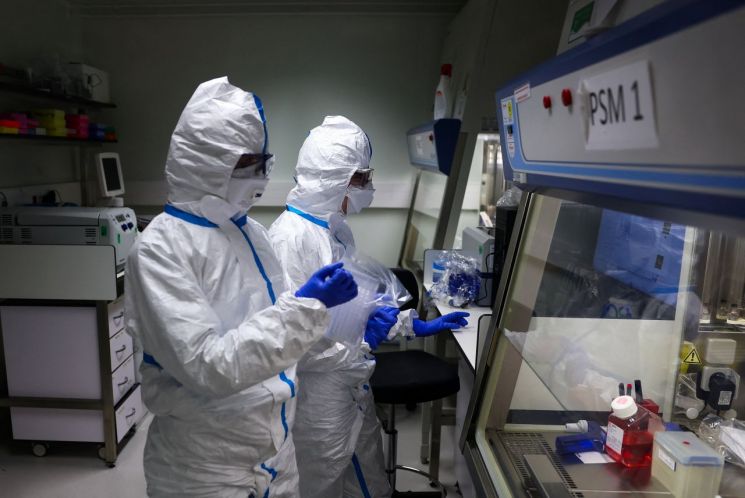
The Pasteur Institute was the first in Europe to develop a COVID-19 diagnostic kit and provided protocols to the World Health Organization (WHO) and research institutes worldwide.
Director Lamais-Belty explained that while humans have antibodies against common H1 and H3 seasonal flu viruses, they have no antibodies against H5 avian influenza, just as there were no antibodies when the COVID-19 pandemic began.
She expressed concern that, unlike COVID-19, which mainly affects vulnerable groups, influenza viruses can cause death even in healthy individuals, including children. "If an avian influenza pandemic were to occur, it could be more severe than any pandemic we have experienced," she warned.
However, Reuters reported that human infections with avian influenza viruses are rare, and there have been no documented cases of human-to-human transmission. Most human infections have occurred after close contact with infected animals. Recently, in the United States, the first human case of infection with the H5N5 variant of avian influenza was reported; the individual, who had underlying health conditions, died.
According to a WHO report, there have been about 1,000 cases of human avian influenza infection from 2003 to 2025. Most cases occurred in countries such as Egypt, Indonesia, and Vietnam, and 48% of those infected died.
Gregorio Torres of the World Organisation for Animal Health (OIE) stated that the risk of a pandemic caused by human-to-human transmission of avian influenza is very low. He said, "We must be prepared to respond early. However, people can enjoy life, walk in the woods, and eat chicken and eggs," adding, "While the risk of a pandemic exists, the likelihood of it occurring is very low."
Director Lamais-Belty also assessed that even if avian influenza mutations occur, the world is better prepared than before COVID-19. She said, "Compared to COVID-19, the positive aspect is that specific preventive measures are already in place. Vaccine candidates are ready, and we know how to rapidly manufacture vaccines. We also have stockpiles of certain antiviral drugs that are effective against avian influenza viruses."
© The Asia Business Daily(www.asiae.co.kr). All rights reserved.
![Clutching a Stolen Dior Bag, Saying "I Hate Being Poor but Real"... The Grotesque Con of a "Human Knockoff" [Slate]](https://cwcontent.asiae.co.kr/asiaresize/183/2026021902243444107_1771435474.jpg)















