Deliberations on Drug Pricing System Reform at Health Insurance Policy Committee... Implementation Set for Second Half of Next Year
Generic Drug Price Calculation Rate to Be Lowered from 53.55% to the 40% Range of Original Drugs
Establishing a C
The government has initiated a major overhaul of the drug pricing system, aiming to lower the price calculation rate for generic drugs from the current 53.55% of the original drug to around 40%. The goal is to improve patient access to treatment, alleviate the burden of medication costs, and promote innovation in the domestic pharmaceutical industry through comprehensive improvements to the drug pricing system, including structural reform and new drug development.
On the 28th, the Ministry of Health and Welfare held the "22nd Health Insurance Policy Deliberation Committee for 2025" and discussed measures to improve the drug pricing system, including these changes.
First, the government decided to reform the drug pricing system to manage medication costs systematically and predictably, reducing the burden on the public. The new system will be implemented from the second half of next year.
Lowering Generic Drug Prices and Incentivizing Innovation
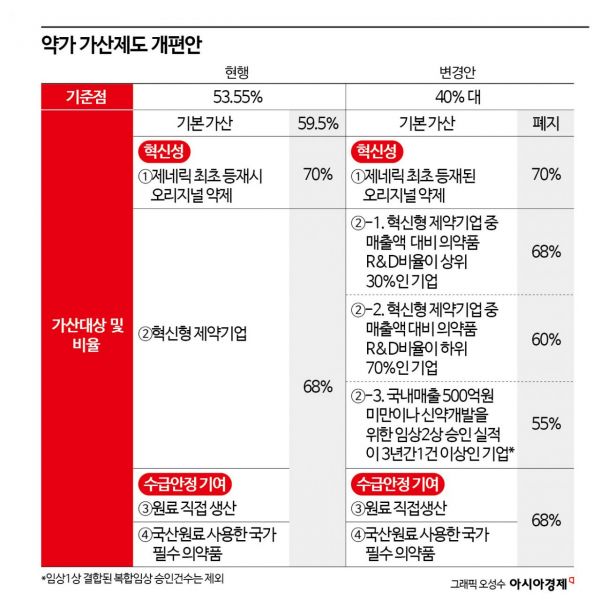
To this end, the government analyzed the structure of Korea's medication costs and case studies from major countries. Based on these findings, the price calculation rate for generics and off-patent drugs will be adjusted from the current 53.55% to the 40% range. Currently, the price of a generic drug is set at 53.55% of the original, with stepwise reductions of 15% based on assessments of innovation and supply stability. The revised plan maintains this framework but further refines the evaluation criteria.
For drugs already listed on the National Health Insurance, the government will sequentially adjust prices, taking into account the listing date and current price level for each drug. However, drugs that already receive additional incentives, as well as exit-prevention, low-cost, and rare disease drugs, will be excluded from these adjustments.
The uniform incentive previously granted at the time of first generic listing will be abolished. Instead, incentives will be applied differentially based on innovation and supply stability, allowing for a more tangible sense of policy preference. To prevent the indiscriminate proliferation of low-quality generics, the stepwise price reduction will be strengthened, with a 5 percentage point reduction for each generic beyond the 11th of the same active ingredient. If 10 or more generics are listed when the first generic is introduced, all products will be adjusted to the price of the 11th generic after one year, making the management of multiple listings more stringent.
Existing post-management systems will also be revised to improve the predictability of price adjustments and the effectiveness of system operation. The timing of price adjustments for expanded indications and volume-price linkage, which have been criticized for low predictability and increased social and administrative costs, will be aligned and regularized. From 2027, the actual transaction price survey will be reorganized into an incentive-based system linked to market competition. The reassessment of reimbursement appropriateness will be expanded to include drugs listed after selective registration, focusing on those for which a re-examination of clinical usefulness is necessary, thereby better aligning with the system's original intent. This revised system will be implemented from next year.
From 2027, the government will also introduce a comprehensive drug price evaluation and adjustment mechanism, to be applied every three to five years. This will increase the predictability of drug price management and establish a more rational system for controlling medication costs.
Flexible Drug Price Contracts to Improve Access to Rare Disease Treatments
At the same time, the government will strengthen institutional support to improve patient access to innovative therapies and encourage greater innovation in the domestic pharmaceutical industry.
To achieve this, from next year, the listing period for rare disease treatments will be dramatically shortened from the current maximum of 240 days to within 100 days. The cost-effectiveness evaluation system for severe and intractable disease treatments will also be gradually upgraded. To ensure that innovative drugs are introduced quickly in Korea and remain competitive in global markets, the scope of the "Flexible Drug Price Contract System" (provisional name)-which allows for separate contracts between the National Health Insurance Service and pharmaceutical companies-will be significantly expanded from the first quarter of next year to include newly listed new drugs, off-patent originals, drugs that have completed risk-sharing refunds, and biosimilars.
In addition, the compensation system for innovative pharmaceutical companies and those actively investing in research and development (R&D) will be refined to reflect the degree of innovation creation efforts, with full implementation scheduled for the second half of next year.
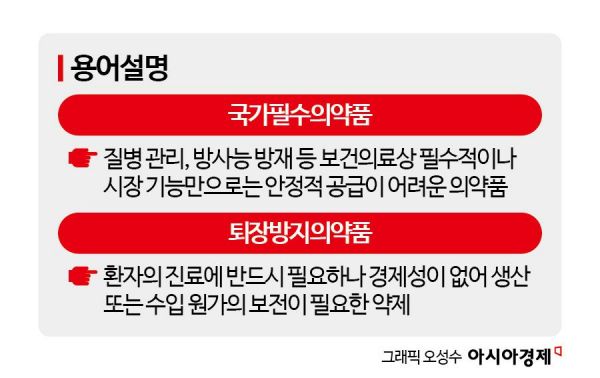
Measures will also be introduced to stabilize the supply of essential medicines. For exit-prevention drugs, which have been operated without improvement for a long time, the government will raise designation standards, introduce new policy incentives, and review cost calculation methods to reflect changes in the industrial environment. These multifaceted measures will be implemented from the second half of next year. Furthermore, drug pricing policies for national essential medicines will be improved to better support stable supply, with the scope of application expanded and the preferential period reliably guaranteed from the first quarter of next year.
The government plans to finalize these policy tasks after further public consultation and swiftly amend relevant regulations, implementing them sequentially from the first quarter of next year.
A Ministry of Health and Welfare official stated, "Through these comprehensive improvements, we will advance our drug pricing system to the level of major countries, significantly improving patient access to treatment and reducing medication costs. By establishing a rational compensation system that matches the level of investment in innovation and health security, we expect this to be an opportunity for the domestic pharmaceutical industry to take a significant step forward."
Meanwhile, at the committee meeting on this day, measures were also discussed to improve certain pilot projects, such as extending the "Primary Care Home Visit Fee Pilot Project," the "Home Management Pilot Project for Peritoneal Dialysis Patients," and the "Post-Compensation Pilot Project for Children's Public Specialized Medical Centers," all of which were set to end this year, for an additional three years until December 2028.
© The Asia Business Daily(www.asiae.co.kr). All rights reserved.