China has conveyed its position through a military dialogue channel with the United States, stating its opposition to any actions that threaten its sovereignty and security.
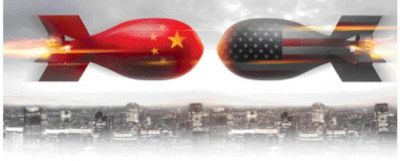
According to China's state-run Xinhua News Agency on November 22, military delegations from both countries held the second working group meeting of the 2025 Maritime Military Security Consultative Mechanism (MMCA) from November 18 to 20 in Hawaii, United States.
The Chinese military stated at the meeting, "Both sides agreed that the MMCA meetings help frontline maritime and air units from both countries interact more professionally and safely, avoid misunderstandings and misjudgments, and are beneficial for managing risks and crises."
The Chinese military also emphasized, "At the same time, China firmly opposes any actions that harm China's sovereignty and security under the pretext of freedom of navigation and overflight. China also resolutely opposes all sovereignty-infringing provocations and close-in reconnaissance or disruptive activities targeting China," adding, "China will steadfastly safeguard its territorial sovereignty and maritime interests in accordance with laws and regulations."
The two countries also "held candid and constructive exchanges" during the meeting, according to Xinhua News Agency. They exchanged views on the current maritime and air security situation between China and the United States, reviewed cases of maritime and air encounters between the two militaries, assessed the annual implementation of the 'China-U.S. Maritime and Air Encounter Safety Code of Conduct,' discussed ways to improve maritime military safety issues, and exchanged opinions on the agenda for the 2026 working group meeting.
This was the second working group meeting this year, following the one in April, and it took place amid escalating tensions between China and Japan over remarks by Japanese Prime Minister Sanae Takaichi suggesting possible intervention in the event of a Taiwan contingency.
After Prime Minister Takaichi indicated on November 7 that Japan could intervene militarily under the right of self-defense if Taiwan were attacked by China, China responded by dispatching coast guard vessels to the disputed Senkaku Islands (known as Diaoyu Dao in China) for a show of force, issuing advisories against travel and studying in Japan, and reimposing a ban on imports of Japanese seafood, among other economic retaliatory measures.
The United States has expressed its support for its ally Japan.
Tommy Pigott, Principal Deputy Spokesperson for the U.S. Department of State, stated via social media on November 20 (local time), "Our commitment to the U.S.-Japan alliance and the defense of Japan, including the Senkaku Islands (known as Diaoyu Dao in China), which are under Japanese administration, is unwavering."
George Glass, U.S. Ambassador to Japan, also described China's suspension of imports of Japanese seafood on November 19 as "typical economic coercion by China" and said, "We will support our ally Japan."
© The Asia Business Daily(www.asiae.co.kr). All rights reserved.
![Clutching a Stolen Dior Bag, Saying "I Hate Being Poor but Real"... The Grotesque Con of a "Human Knockoff" [Slate]](https://cwcontent.asiae.co.kr/asiaresize/183/2026021902243444107_1771435474.jpg)















