Thailand Imposes Heavy Fines for Alcohol Sales and Consumption in the Afternoon
Tourism, Alcohol, and Travel Industries Unite in Opposition to the Revised Law
"Tourism Is Our Lifeblood" -- Public Outcry Forces Thai Government to Reverse Policy
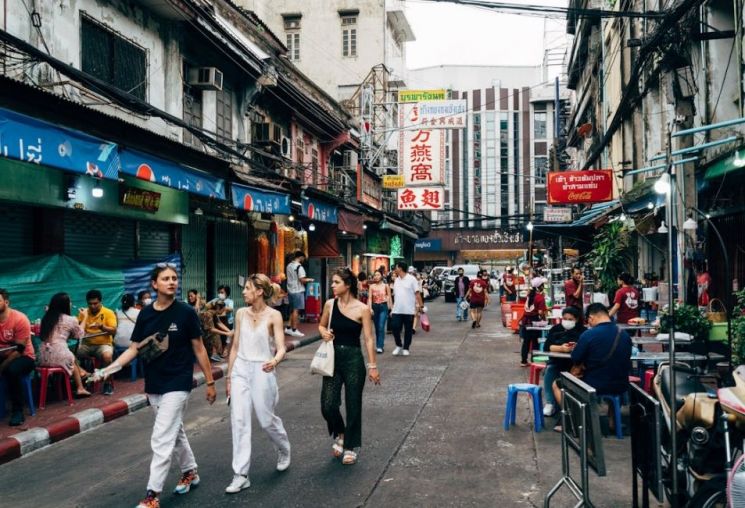
The Thai government has ultimately backed down after facing widespread backlash from various sectors over measures to impose fines for selling or consuming alcohol during daytime hours.
According to Thai media outlets such as the Bangkok Post on the 17th (local time), the National Alcohol Policy Committee of Thailand decided on November 14 to abolish the enforcement of the revised liquor law, which included a ban on the sale of alcohol and fines from 2 p.m. to 5 p.m. The decision was made out of the need to stimulate consumption and revitalize the economy during major holidays and festivals. Deputy Prime Minister Sophon Zarum explained after the committee’s second meeting held at the government complex on the 14th, “This measure is intended to boost tourism and economic activity during the peak seasons such as the year-end and Songkran.” He commented on the background of the previous ban, saying, “It was introduced long ago to prevent civil servants from drinking during working hours, but that era has passed. Nowadays, civil servants do not drink during work hours,” emphasizing the need to relax the regulation. The new lifting of the ban is expected to take effect around December 1, following a 15-day public hearing process. However, the plan is to review the measure again after a six-month trial period.
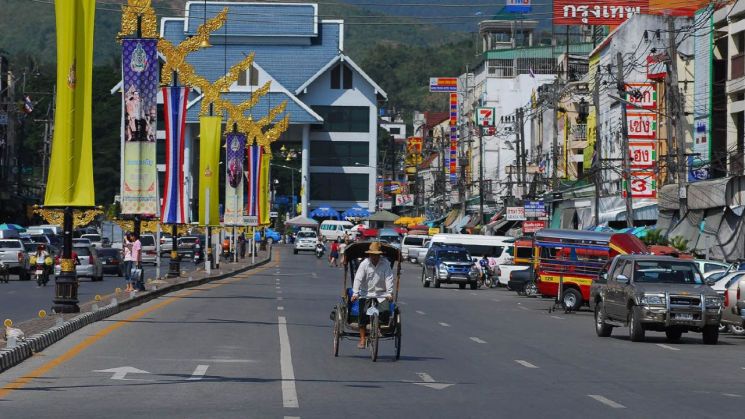
Controversial 'Revised Liquor Law'... Flood of Complaints on the First Day
The revised liquor law, which took effect on November 8, differs from the previous version in that it holds consumers who drink alcohol criminally liable. If caught, a fine of up to 10,000 baht (about 450,000 won) or more can be imposed, and tourists are not exempt. Under Thailand’s Liquor Control Act, the sale of alcohol at general retail stores or restaurants has been banned from 2 p.m. to 5 p.m. This rule was introduced in 1972 to reduce the social side effects of excessive drinking. As a result, tourists visiting Thailand have often experienced being unable to purchase alcohol at bars during the afternoon or after midnight, and finding refrigerators containing alcohol in convenience stores or supermarkets firmly locked.
Tourism accounts for about 20% of Thailand’s gross domestic product (GDP), both directly and indirectly, making it a significant part of the economy. The implementation of the revised law has therefore had a considerable impact on the travel and food service industries. A Thai restaurant owner told the media, “For example, if I sold alcohol at 1:59 p.m. and the customer drank it until 2:05 p.m., both the seller and the consumer could be fined,” expressing concern that it would hinder the growth of the food service sector. The controversy also spread to the political arena. A member of the People’s Party, which has consistently advocated for the liberalization of alcohol sales, pointed out, “The revised law is intended to achieve the goals of those who oppose alcohol sales. Alcohol should be available 24 hours a day, seven days a week, without interruption,” adding, “There is a risk of confusing foreign tourists.”
According to the Ministry of Tourism and Sports of Thailand, approximately 29.08 million foreign tourists visited Thailand last year, with total expenditures reaching 1.36 trillion baht (about 55.3 trillion won). By nationality, Chinese tourists were the largest group at 5.757 million, followed by Malaysia (4.187 million) and India (1.726 million). South Koreans ranked fourth, with about 1.54 million visitors.
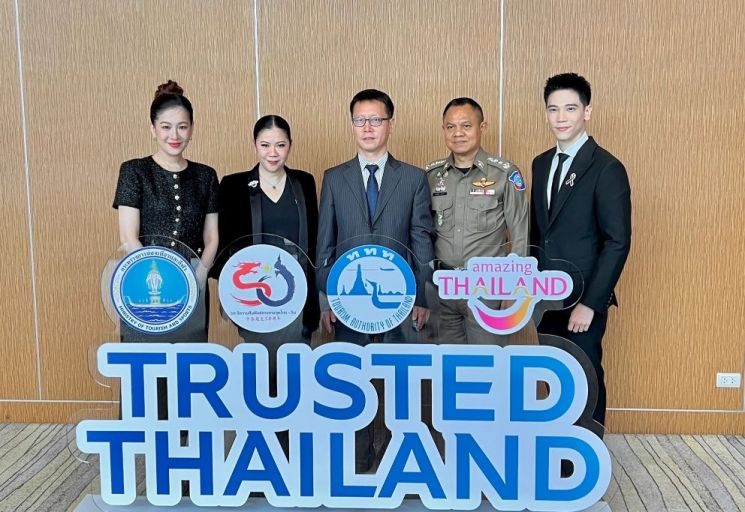 The Thai government, the Tourist Police Bureau, and the tourism industry are promoting the "Trusted Thailand" certification mark system on November 3 to restore trust among international travelers. Tourist Police Bureau of Thailand
The Ongoing Dilemma: Public Health or Tourism?
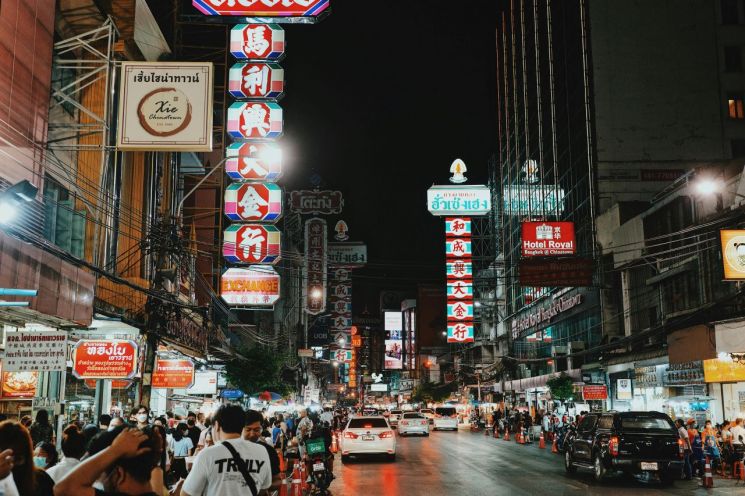
The fierce backlash triggered by the enforcement of the revised Liquor Control Act has once again exposed the recurring dilemma faced by the Thai government: balancing social order and public health with an economy centered on the tourism industry. As soon as the revised law took effect on November 8, the ban on alcohol sales from 2 p.m. to 5 p.m. and the prohibition of drinking after midnight (24:00) became especially controversial, delivering the most significant regulatory shock since the pandemic. The nightlife industry-including bars, restaurants, and entertainment venues-as well as tourist destinations, were immediately impacted. Bangkok’s major night tourism spots were hit especially hard by the revised law. Tourists were confused, reservations were canceled, and enforcement was applied inconsistently.
Khao San Road, a backpackers’ haven, is a prime example. The Khao San Business Association welcomed the government’s decision to withdraw the regulation, calling it “the repeal of an outdated and economically harmful restriction.” The association noted that the 2 p.m. to 5 p.m. ban had been in place since 1972 and no longer fit the current tourism and economic realities, as vacationing tourists do not operate according to working hour norms. While Khao San, where Europeans make up 80% of tourists, suffered relatively little, areas like Yaowarat (Chinatown) and Banthat Thong, which rely heavily on Chinese tourists, saw sales plummet. Some restaurants attempted to register as “entertainment venues” to benefit from eased restrictions, but due to complicated licensing procedures, only half succeeded, while the rest had no choice but to operate covertly, according to industry sources. Many business owners are hoping for the designation of “night zones” centered on tourist areas, the legalization and transparent operation of unlicensed venues, and a reduction in unnecessary crackdowns and “invisible costs” (such as bribes and favors) imposed by local officials. The service industry sees the six-month trial period as an opportunity to recover sales and create jobs.
Public Health Experts Sound the Alarm... Concerns Over WHO Standards Violation
In contrast, health experts have responded coldly, fearing that public health standards may be compromised by economic logic. Dr. Polathep Vichitkunakorn, director of the Thai Alcohol Research Center, described the easing of regulations as an “abnormal and concerning signal.” The most significant issue raised was the inclusion of private sector representatives on the National Alcohol Control Committee. This directly contradicts the World Health Organization (WHO) recommendation that “industry stakeholders should not be involved in public health policy.” The Thailand Development Research Institute (TDRI), a national research agency, stated that “a unified system, such as a blanket ban after midnight, would be more rational than outdated time-based regulations,” and opposed unlimited business hours (e.g., until 4 a.m.). The institute also noted that alcohol bans on major Buddhist holidays are effective in curbing binge drinking, and identified the essential risk factors as the sale of alcohol to minors, advertising targeting youth, and the need to strengthen crackdowns on drunk driving, rather than the time itself. The TDRI further suggested that if extended business hours are allowed, establishments should be required to provide transportation services (such as shuttles or designated drivers) to reduce drunk driving.
Despite the relaxation of regulations, both industry representatives and experts emphasize that the policy will fail without consistent enforcement. The Pattaya Entertainment and Tourism Association pointed out that each police station has different enforcement standards, foreign tourists are confused by the time-based ban, and businesses interpret the rules differently to avoid penalties. The association warned that the number of tourists in Pattaya is about 20% lower than two years ago and that if the negative image associated with alcohol regulations spreads, tourists may shift to Vietnam or Laos.
© The Asia Business Daily(www.asiae.co.kr). All rights reserved.
![Clutching a Stolen Dior Bag, Saying "I Hate Being Poor but Real"... The Grotesque Con of a "Human Knockoff" [Slate]](https://cwcontent.asiae.co.kr/asiaresize/183/2026021902243444107_1771435474.jpg)

















