Activist Camp Now Holds 26% Stake, Surpassing the Founder
Securing Allies with Treasury Shares Proves Difficult
Showdown Likely at the Annual General Meeting... Rumors of Yohwan Do's Resignation
Butterfly Effect of Delayed Leadership Succes
Stick Investment, a major domestic private equity fund (PEF) manager, is facing heightened governance risks as it clashes head-on with activist shareholders over the issue of treasury share cancellation. The conflict has intensified after Stick Investment officially rejected minority shareholders’ requests to convene an extraordinary general meeting and to put the cancellation of treasury shares on the agenda. With Chairman Yonghwan Do, the founder, nearing the end of his term in March next year, the question of whether he will defend his management control has also emerged as a key issue.
Activists Gain the Upper Hand in Shareholding... Greater Influence at the General Meeting
According to the investment banking industry on November 19, Stick Investment recently rejected minority shareholders’ requests to convene an extraordinary general meeting and their shareholder proposal to cancel treasury shares. The company argued that the cancellation of treasury shares falls exclusively under the authority of the board of directors, not the general meeting of shareholders. Stick Investment maintained its existing position to use the treasury shares in the future for executive bonuses and restricted stock units (RSUs), rather than canceling them.
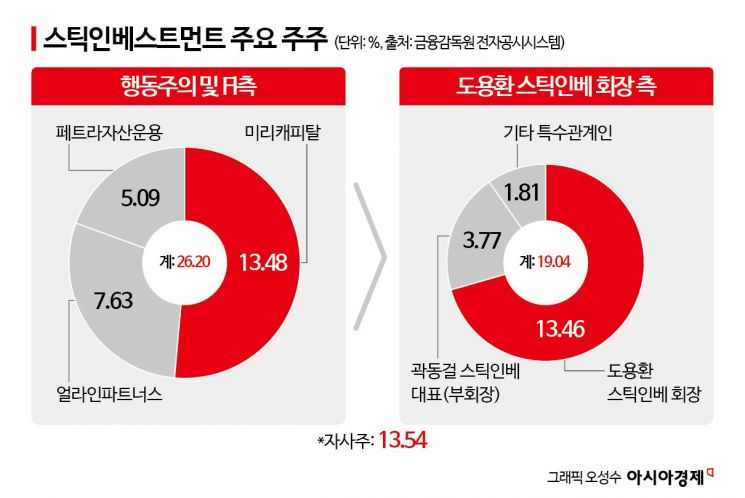
The growing attention to the conflict is due to the fact that Stick Investment’s shareholding structure has already shifted in favor of the activist camp. Currently, Chairman Do and his affiliates hold a combined 19.04% stake. Chairman Do himself holds the largest portion at 13.46%, followed by Vice Chairman Kwak Donggeol with 3.77%. In addition, Do’s two sons and partner-level executives collectively own 1.81% as special affiliates.
In contrast, the activist camp holds a significantly larger stake. Miry Capital increased its stake to 13.48% this month through additional open-market purchases. Align Partners, led by CEO Lee Changhwan, also raised its stake from 6.64% to 7.63% through open-market purchases last month. Furthermore, domestic Petra Asset Management holds 5.09%. Altogether, the activist camp controls 26.20% of the shares.
Difficulties in Securing Allies Using Treasury Shares... Rumors of Yonghwan Do’s Retirement
Industry sources say that Chairman Do’s side has considered using its 13.5% treasury shares to bring in an outside white knight, but even this is not an easy option. The government and the ruling party are pushing to pass the third amendment to the Commercial Act, which would mandate the cancellation of treasury shares, within this year.
In particular, if treasury shares are transferred to allies to restore their voting rights, there is likely to be strong public backlash for undermining value-up policies and distorting corporate governance. With government, policy, and public sentiment all firmly supporting the cancellation of treasury shares, using them to defend management control has become virtually off-limits.
Some speculate that Chairman Do may decide on his future before the general meeting in March next year. One PEF industry insider said, “There are even rumors that Chairman Do is preparing to step down by disposing of not only the treasury shares but also his own holdings for the greater good. This shows just how few favorable options are available to him right now.”
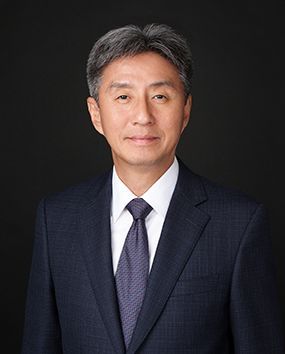 Yohwan Do, Chairman of Stick Investment
The 'Delayed Generational Shift' Butterfly Effect
The reason this issue has expanded beyond a simple demand for treasury share cancellation to encompass management control, generational change, and governance is due to Stick Investment’s structural characteristics.
Since its founding, Stick Investment has maintained a “one-top” structure centered on Chairman Do for over 20 years. Born in 1957, Chairman Do holds both the largest stake and practical control, while Vice Chairman Kwak, born in 1959 and a founding member, serves as Chief Investment Officer (CIO). Sa Jaehun, who recently joined as Head of External Affairs, was born in 1964. At the end of last year, Co-CEO Kwak Daehwan, born in 1962, stepped down and was replaced by Kang Shinwoo, Head of Risk Management and Strategy, who was born in 1960-making him even older than his predecessor.
Key decisions are still made mainly by owners and executives born in the 1950s and 1960s, leaving little room for new leadership to emerge. Unlike other PEF managers that have undergone generational shifts centered on those born in the 1970s, Stick Investment has been slow to transition. With friendly shareholdings at a low level, the company has become vulnerable to activists, and external financial investors have exploited weakened internal cohesion, creating a butterfly effect.
Industry observers emphasize that Stick Investment needs to strengthen its organizational capabilities through generational change and partnership restructuring. An investment banking industry source noted, “For the time being, the greatest risk for Stick Investment may not be investment performance, but the uncertainty surrounding what structure the company will adopt after the Do era.”
© The Asia Business Daily(www.asiae.co.kr). All rights reserved.