The Universality of the Survival Genre
Strategic Shifts After "Squid Game"
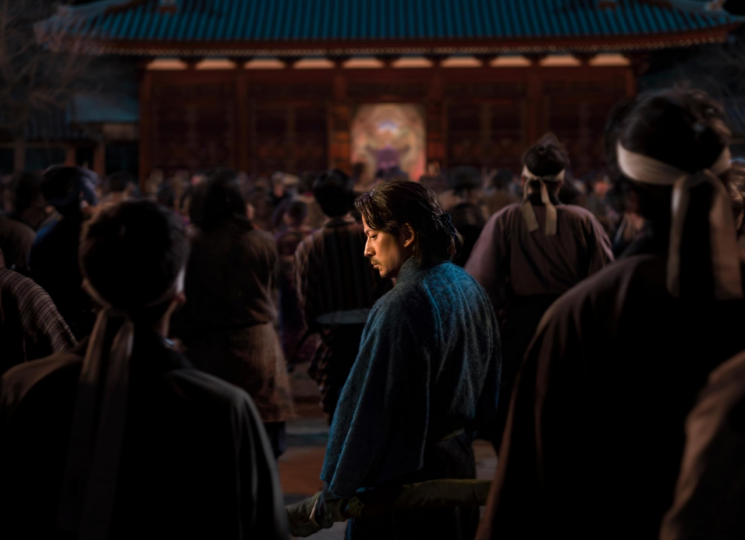
There are two main reasons believed to be behind Netflix's investment in the Japanese survival drama "Ikusagami": the global universality of the genre and the changes in the market following "Squid Game."
The survival game genre has a universal structure that transcends cultural contexts: fixed rules, limited resources, and competition among participants. With just these three elements, the concept is instantly understood anywhere in the world. No language or cultural background knowledge is required.
This is an extremely important value for global OTT platforms. The story can be fully conveyed with only subtitle translation, and there is no need for complex cultural explanations, which reduces marketing costs. Viewer engagement is also rapid. As long as the rules of the game are introduced in the first episode, viewers are immediately immersed.
"Squid Game" proved this point. After its release in 2021, it became a global hit and Netflix's most successful show. Despite being a Korean-language drama, it ranked number one across the United States, Europe, South America, and Asia. Because the rules, rather than the dialogue, were at the heart of the story, viewers around the world could instantly understand it.
"Ikusagami" also enjoys the same advantage. The rule is simple and clear: whoever reaches Tokyo after taking their competitors' wooden tiles wins the prize. While it is differentiated by incorporating Japan's historical sentiment, the basic structure of the game remains universal.

The record-breaking success of "Squid Game" appears to have led to important conclusions within Netflix. Survival games can be consumed across borders; non-Western content can dominate the global market; and combining local sentiment with a global genre can achieve both differentiation and universality.
In fact, Netflix is actively developing a strategy that combines unique local content with the survival game structure. In Korea, it has produced "Squid Game" seasons 2 and 3 as well as "Physical: 100." In Thailand, it released "The Influencer," and in India, it has introduced several reality survival shows.
"Ikusagami" can be seen as the Japanese model of this strategy. It captures four elements at once: the unique samurai mythology of Japan, the narrative of decline from the Meiji era, the tradition of the Japanese death game genre, and the global universality of survival games.
Another factor likely influenced Netflix's investment decision: samurai content has consistently maintained a fan base in the West. From Akira Kurosawa's "Seven Samurai" to the Tom Cruise film "The Last Samurai," samurai are a cultural code that is both familiar and exotic to Western audiences.
As Japanese animation and manga have been consumed worldwide, there is now a basic level of familiarity with Japanese content. Netflix already confirmed the global potential of Japanese death game dramas with "Alice in Borderland."

"Ikusagami" combines the samurai, one of Japan's most iconic cultural assets, with the survival game format. This is more than a simple blend. The historical sentiment of the samurai's downfall fits perfectly with the basic structure of a survival game.
A class abandoned by the state, standing at the crossroads of survival and honor, anger at social collapse, and a situation where every person must fend for themselves-these emotions closely mirror the despair of modern individuals depicted in "Squid Game." As a result, global viewers have no difficulty understanding this Japanese narrative.
Netflix is expanding its model beyond North American and European-centric content by combining local intellectual property (IP) from each region with global genres. "Ikusagami" is a work that demonstrates the potential success of this strategy.
By layering Japan's unique narrative of decline on top of the survival game formula that has become familiar to global audiences since "Squid Game," the show achieves both commercial appeal and artistic value. Although it is set against the unique backdrop of Japanese modern history, the universal emotions of class downfall and survival are easily translated, allowing global viewers to empathize. This is the moment when local history becomes the language of the world.
© The Asia Business Daily(www.asiae.co.kr). All rights reserved.
![Clutching a Stolen Dior Bag, Saying "I Hate Being Poor but Real"... The Grotesque Con of a "Human Knockoff" [Slate]](https://cwcontent.asiae.co.kr/asiaresize/183/2026021902243444107_1771435474.jpg)

















