Down 54% from Average Year... Now Cheaper than Geobong and Campbell Early
Rapid Expansion of Cultivation Area Triggers Oversupply and Quality Decline Cycle
The value of Shine Muscat grapes, once regarded as a symbol of premium grapes, is plummeting. Boasting high sugar content, aroma, and the convenience of being seedless, a 2kg box of Shine Muscat sold for between 30,000 and 50,000 won until 2020, earning it the nickname "the Hermes of fruits." However, it is now traded for between 10,000 and 20,000 won, making it one of the most affordable varieties on the market.
According to Yonhap News, citing data from the Korea Agro-Fisheries & Food Trade Corporation, the average retail price of a 2kg box of Shine Muscat stood at 11,572 won as of November 14, a 54.6% drop compared to previous years, as reported on November 16. This figure is also 19.1% lower than last year.
The daily price at one point fell below 10,000 won before rebounding slightly. Based on last month's average retail price (13,314 won), this is just one-third of the 2020 average price (34,000 won). The average price in October has sharply declined each year: 34,000 won in 2020, 33,000 won in 2021, 24,000 won in 2022, 21,000 won in 2023, 15,000 won in 2024, and 13,000 won in 2025.
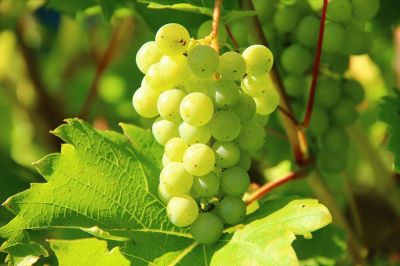
Shine Muscat used to be significantly more expensive than Geobong and Campbell Early grapes, but the situation has completely reversed. Based on last month's average retail prices: Shine Muscat at 13,314 won (2kg), Geobong at 22,952 won, and Campbell Early (converted) at 15,834 won, making Shine Muscat now the cheapest variety. This contrasts with 2021, when Shine Muscat was 43% more expensive than Geobong.
The Korea Rural Economic Institute forecasts that the wholesale price of Shine Muscat this month will remain around 7,000 won per 2kg, which is about 3,000 won lower than last year (9,900 won).
Industry experts point to the rapid expansion of cultivation areas as the main reason for the sharp drop in Shine Muscat prices. As its high profitability became widely known, many farmers rushed into cultivation, causing a sudden surge in supply. This oversupply, coupled with inadequate management, has also led to a decline in quality.
This is clearly illustrated by the proportion of cultivation areas by grape variety. Shine Muscat's share rose from 4% in 2017 to 22% in 2020, 41% in 2022, and 43.1% in 2023, far surpassing Campbell Early (29.3%) and Geobong (17.5%).
The Ministry of Agriculture, Food and Rural Affairs stated, "Excessive production of large-sized fruits actually lowers the sugar content," adding, "We plan to strengthen guidance at production and distribution sites so that consumers can choose products of appropriate size (600-650g) and high sugar content."
The issue of plummeting prices was also raised during the National Assembly audit. Lee Manhee, a member of the National Assembly's Agriculture, Food, Rural Affairs, Oceans & Fisheries Committee from the People Power Party, brought Shine Muscat grapes to the audit session and questioned the government about its countermeasures. In addition, the National Agricultural Cooperative Federation delivered 1 ton of Shine Muscat grapes to the 2nd Marine Division to support farmers struggling with falling prices.
© The Asia Business Daily(www.asiae.co.kr). All rights reserved.
![Clutching a Stolen Dior Bag, Saying "I Hate Being Poor but Real"... The Grotesque Con of a "Human Knockoff" [Slate]](https://cwcontent.asiae.co.kr/asiaresize/183/2026021902243444107_1771435474.jpg)















